Why a box fails its compression test
A box that misses its compression target is telling you something specific. Here are the five causes worth checking, in the order they usually appear.
A compression test that comes back short is often treated as bad news about the paper. Usually it is not. The paper is one of five things in the result, and it is rarely the one that changed.
If a box misses its target, work through these in order. Most failures are found in the first three.
1. Conditioning
Strength is measured after the board settles at a standard atmosphere — 23 °C and 50% relative humidity under TAPPI T402 and ISO 187.
A sample tested straight off a truck, in a humid room, or in a hurry reads low. This is the most common cause of a number that "cannot be right", and the most easily fixed: condition the boxes overnight in the same room as the tester, then test.
If the plant cannot condition, treat every result as a comparison between samples tested the same way, not as an absolute figure.
2. Board construction
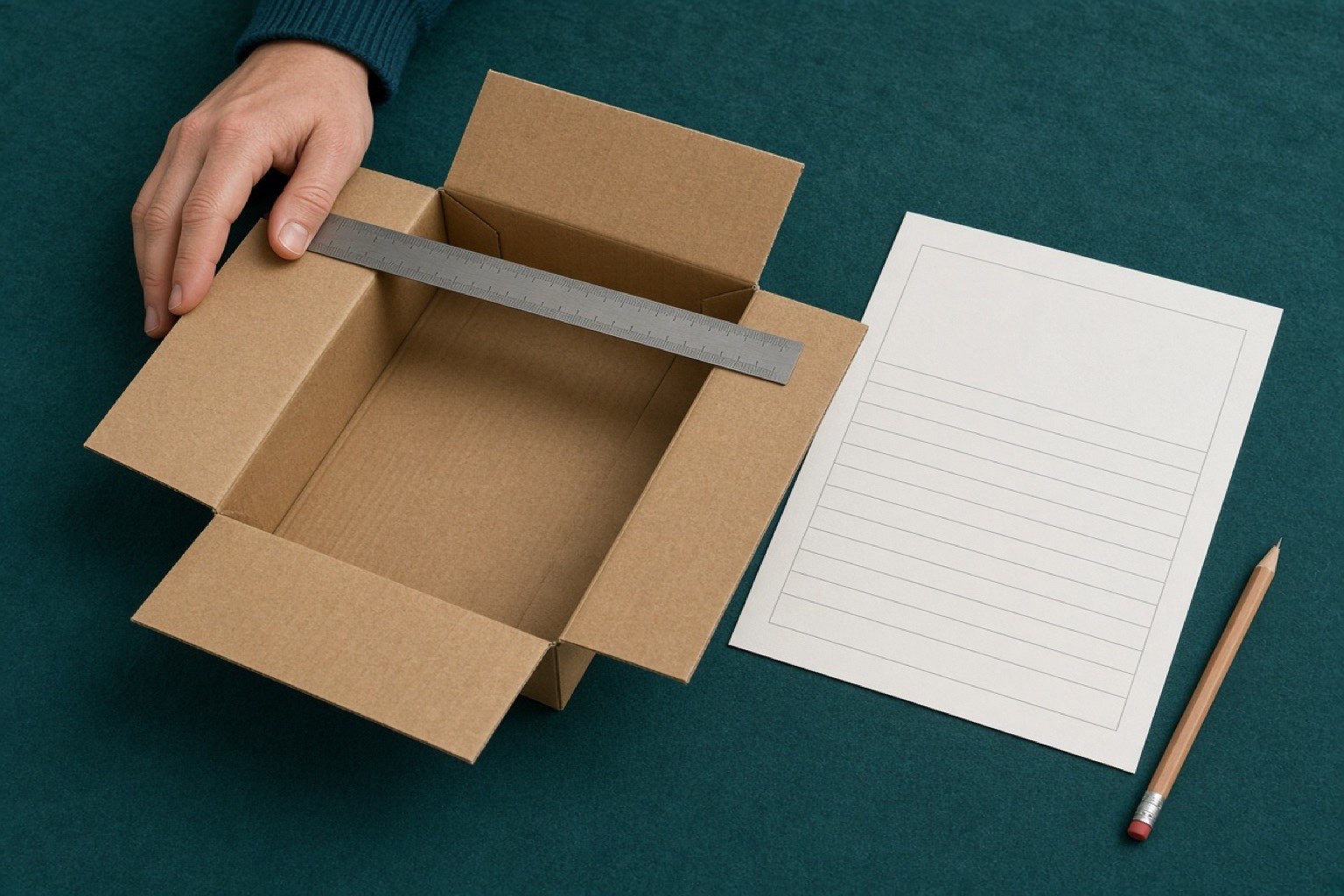
Next, confirm what is actually in the box. Not what the specification says — what the sheet is.
- Layer grammages, top to bottom.
- Flute profile and caliper.
- Whether the liner is the grade specified or a substitution.
Two boards that read the same on a purchase order can differ in ring crush, and ring crush is what feeds stacking. A substitution made to hold the price is the single most common reason a box that used to pass now does not.
3. Box geometry
Compression strength is not only a material property. It falls as a box gets taller on the same footprint, because a taller panel has more room to bow. It also depends on the perimeter and on how the load is shared across the four walls.
Two consequences worth knowing:
- A product change that adds height is a strength change, even if the board is untouched.
- A box that is narrow and tall is a harder engineering problem than one that is broad and low. If a design keeps failing, this is often why.
4. Joint, score and print
Three things that are invisible on a paper specification and visible on a box:
| Feature | What it does | What it looks like when wrong |
|---|---|---|
| Glue joint | Carries the corner, which carries the stack | A joint that peels or is starved of adhesive |
| Score | Sets where the panel folds | A score that cracks or sits off the fold line |
| Interrupts the liner surface | Heavy coverage across a panel that has to carry load |
A box with a good board and a bad joint fails like a box with bad board. Before changing paper, look at the corner.
5. The test itself
Last, and worth checking because it costs nothing: was the platen flat and parallel, was the box square, was the load applied evenly, and was the rate within the method? A box standing on a platen that does not sit flat loads one edge first and reads low.
What a failure actually tells you
The shape of the failure is more informative than the number:
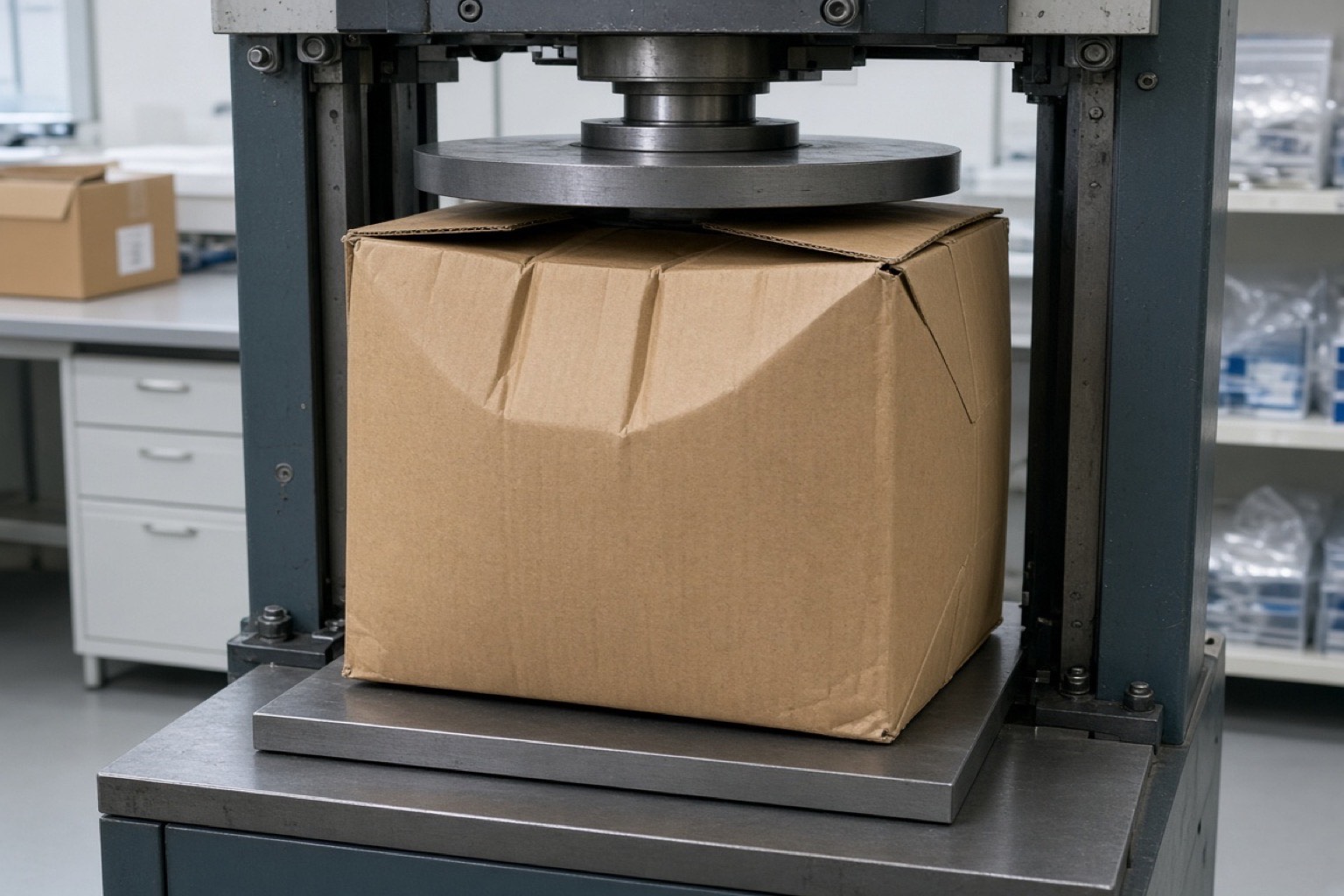
- Walls bowed, corners intact — the board's bending stiffness is short. Look at caliper and flute, or at box height.
- Corner crushed or joint open — the corner is the weak point, not the board.
- One panel collapsed first — print, a score, or an alignment problem on that panel.
- Numbers scattered widely across samples — a process problem in the plant, not a design problem.
What to do next
Fix the cause, then retest the same way. Changing paper first is expensive and often wrong: if the failure was a joint or a score, a heavier board buys you a passing test and an unnecessary cost for the life of the specification.
The useful question to a supplier is not "can you make it stronger" but "can you show me where this one failed, and what you changed".
Sources
- ASTM D642, Standard Test Method for Determining Compressive Resistance of Shipping Containers, Components, and Unit Loads.
- ISO 12048, Complete, filled transport packages — Compression and stacking tests using a compression tester.
- TAPPI T402 and ISO 187, standard conditioning atmospheres: 23 °C, 50% relative humidity.
- TAPPI T811 and ISO 3037, edgewise crush resistance of corrugated board.
- TAPPI T822 and ISO 12192, ring crush of paper and board.
- ASTM D5639, Standard Practice for Selecting Performance-Based Safety Factors for Corrugated Fiberboard Containers.
Test results are only comparable when the method and the conditioning match. Confirm a change with a fresh test rather than reusing an earlier figure.
Questions
- What are the most common reasons a box fails a compression test?
- Conditioning is first, then board construction, then box geometry, then the joint and the print, then the test itself. A box tested without settling at 23 degrees and 50 percent humidity, or tested on a platen that does not sit flat, will read low for reasons unrelated to the board.
- Can a box pass on paper and fail in the test?
- Yes, and it happens for reasons the paper cannot explain. A weak glue joint, a misaligned score, heavy print across a panel, or a box that is simply too tall for its footprint will all reduce compression strength even when the board is right.
- Does box height affect compression strength?
- Yes. A taller box on the same footprint is less stable under load, so height is a design variable for strength and not only a volume decision. This is one reason a box that was fine at one height can fail after a product change.
- How many boxes should be tested?
- More than one. Corrugated boxes vary, so a single result is a data point rather than a measurement. A small sample tested under the same conditioning gives you a range, which is what a safety factor should be applied to.
- Should I test the empty box or a filled box?
- Compression is normally measured on the empty box between platens. Testing a filled box tells you about the product and the pack as well, which can be useful, but it is a different measurement and should not be compared with an empty-box figure.
Check your own boxes, free
Send the spec sheet you already have. Results in about a day; you pay only for the boxes improved.
About the author

Ashish KD Mathpal (PackPrism | PackWares)
Founder, PackPrism · packaging cost advisory
Twenty-two years in packaging, most of it on paper and paperboard: how a board carries load, why a specification is what it is, and where the cost quietly leaks out.