Die-cutting, scores and the folds that fail first
Scores are where a box bends, and where it tears. The quality of a score is a small manufacturing detail with a large field effect.
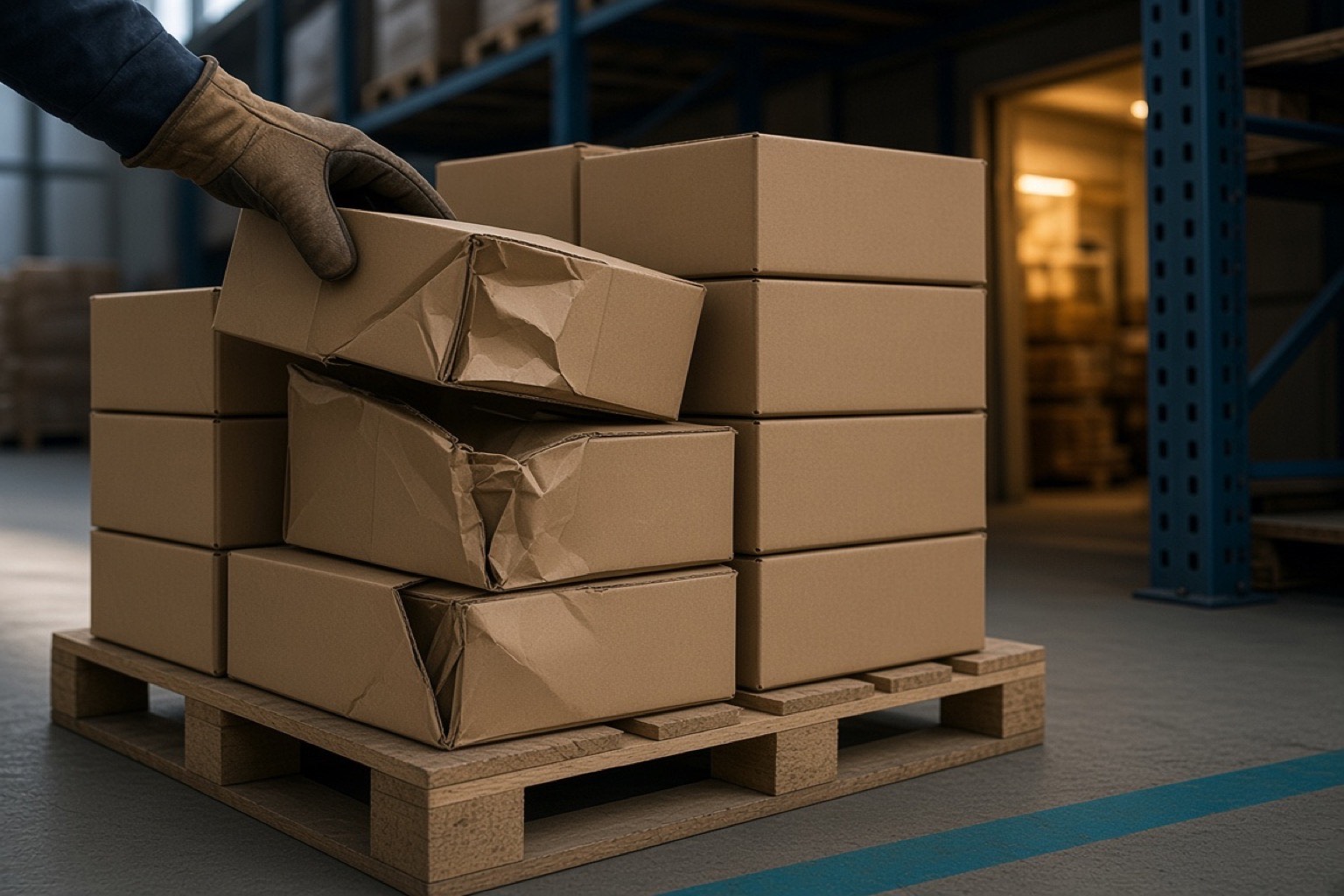
A box fails at its weak points, and the weak points are built in: the joint, the scores, and any cut. Two of those are decided by the die and the machine, which makes them a specification subject rather than a paper subject.
What a score is doing
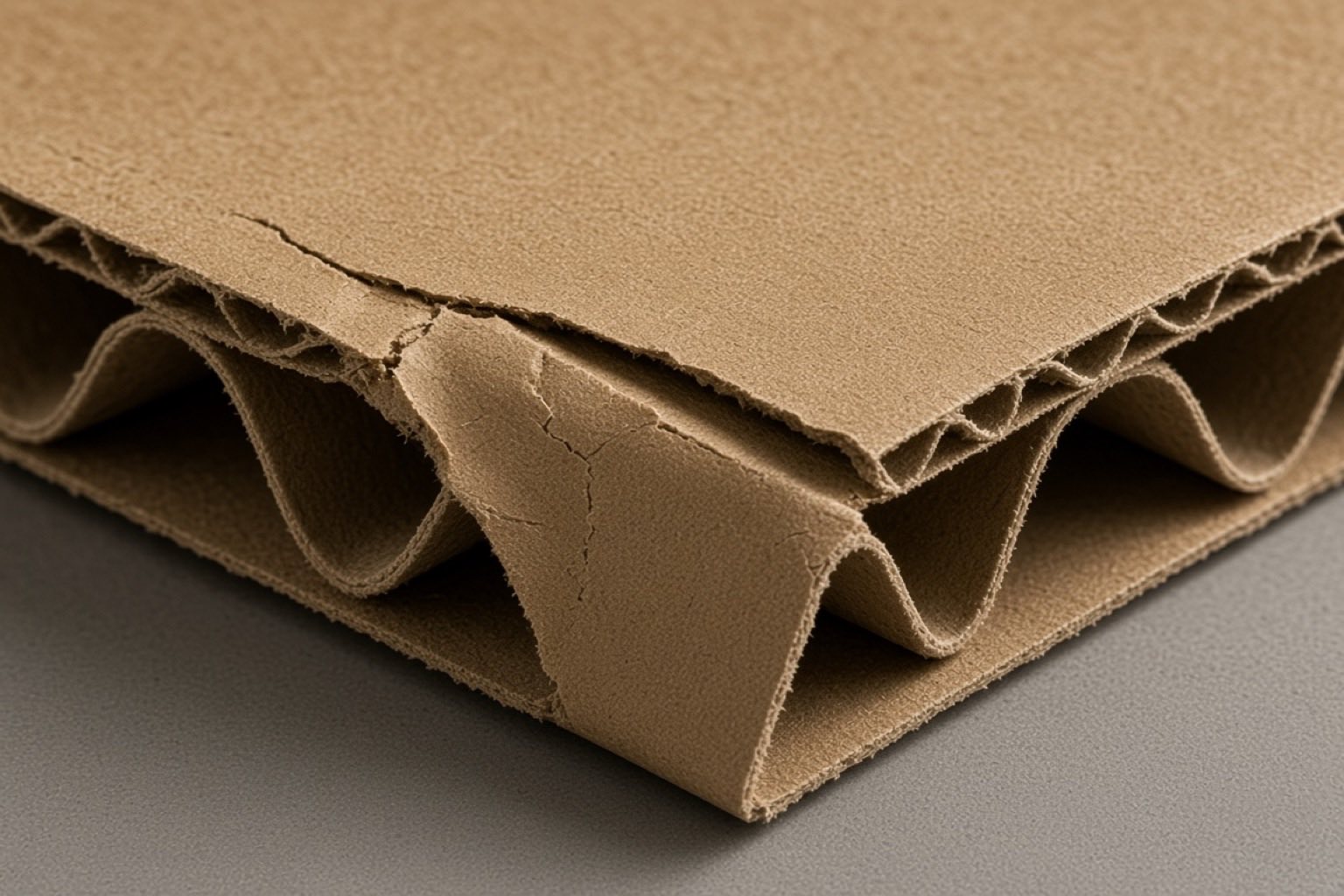
A score compresses the board along a line so it folds there. Done well, it flattens the flute at the crease and leaves the liners intact. Done badly, it cuts into the liner, and a cut liner is a tear waiting to propagate.
Three failure modes:
| What you see | What it means |
|---|---|
| Liner cracked along the fold | Score too deep, or board too dry |
| Fold springy, does not sit square | Score too shallow |
| Crease wandering off the panel edge | Score or sheet registration problem |
The first is the one that matters in the field. A cracked liner at the base of a side panel is a starting point for the panel to fail under load, and it will do so long after the sample was approved.
Dies: what they buy and what they cost
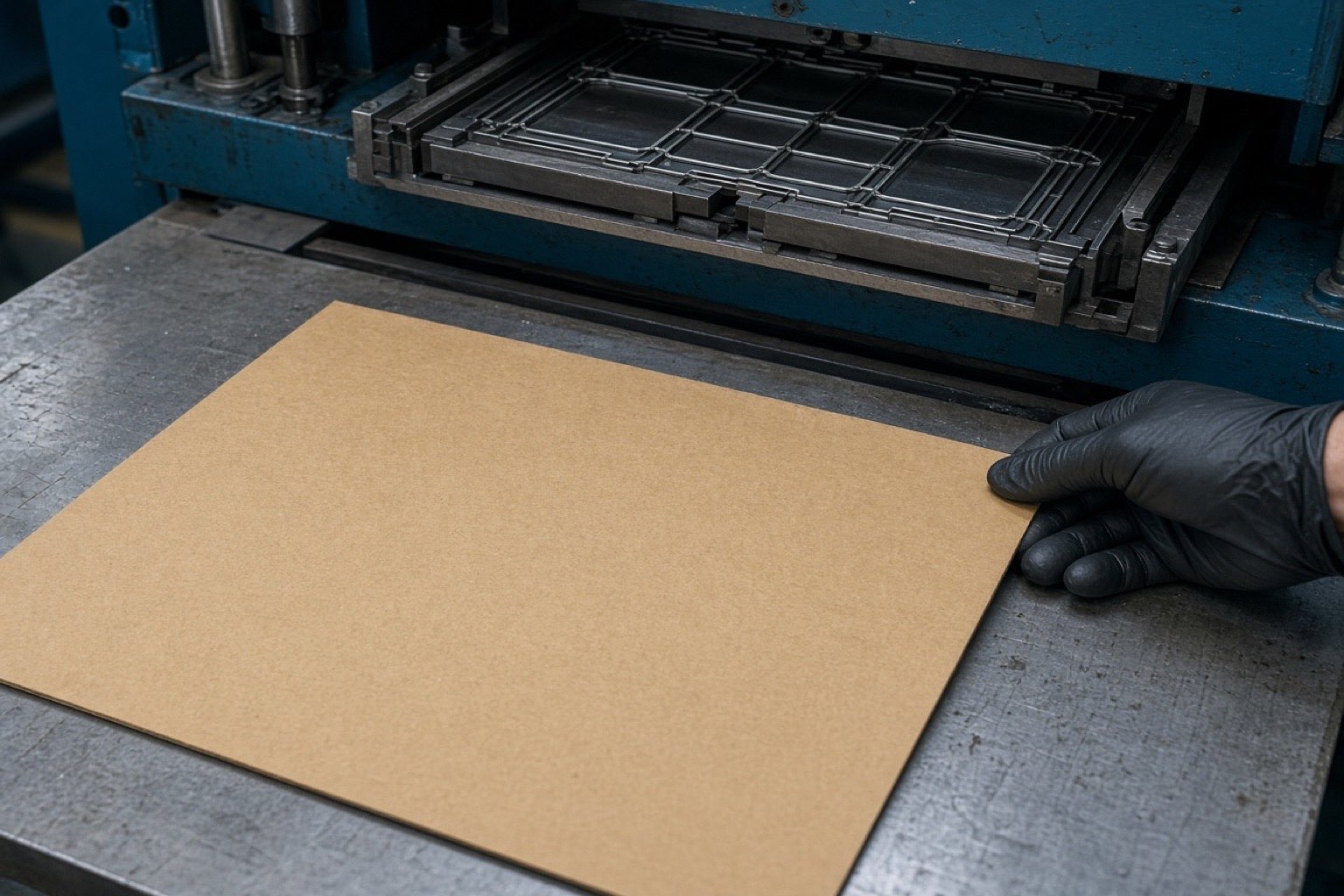
A die is tooling. It buys:
- shapes a slotted machine cannot produce;
- windows and cut-outs;
- self-locking or display forms;
- consistent, repeatable geometry at volume.
It costs:
- the die itself, once;
- set-up time on every run;
- a little board, because die layouts rarely nest as well as a rectangular blank;
- possibly some strength, because cuts are discontinuities.
The test is whether the thing the die buys is worth all four. Often it is — a display pack or a self-locking base earns its tooling many times over. The mistake is a die used for a plain rectangular box because that is how it has always been done.
Where cuts hurt strength
Cuts concentrate stress, so their position relative to the load path is what matters:
- A cut across a panel that carries load removes material exactly where the load transmits.
- A cut near a corner interrupts the strongest part of the box.
- A score across a panel is fine; a score along the load direction is a line of weakness.
This is why hand holes and windows are always a strength conversation, even when they are small. A hand hole in the middle of a side panel is a hole in the wall that carries the stack.
What to check
On a sample, four things:
- Fold every score and inspect the crease. Clean means right.
- Fold and refold a few times. A score that cracks on the second fold is wrong.
- Look at the cut edges for a clean cut rather than a crushed one.
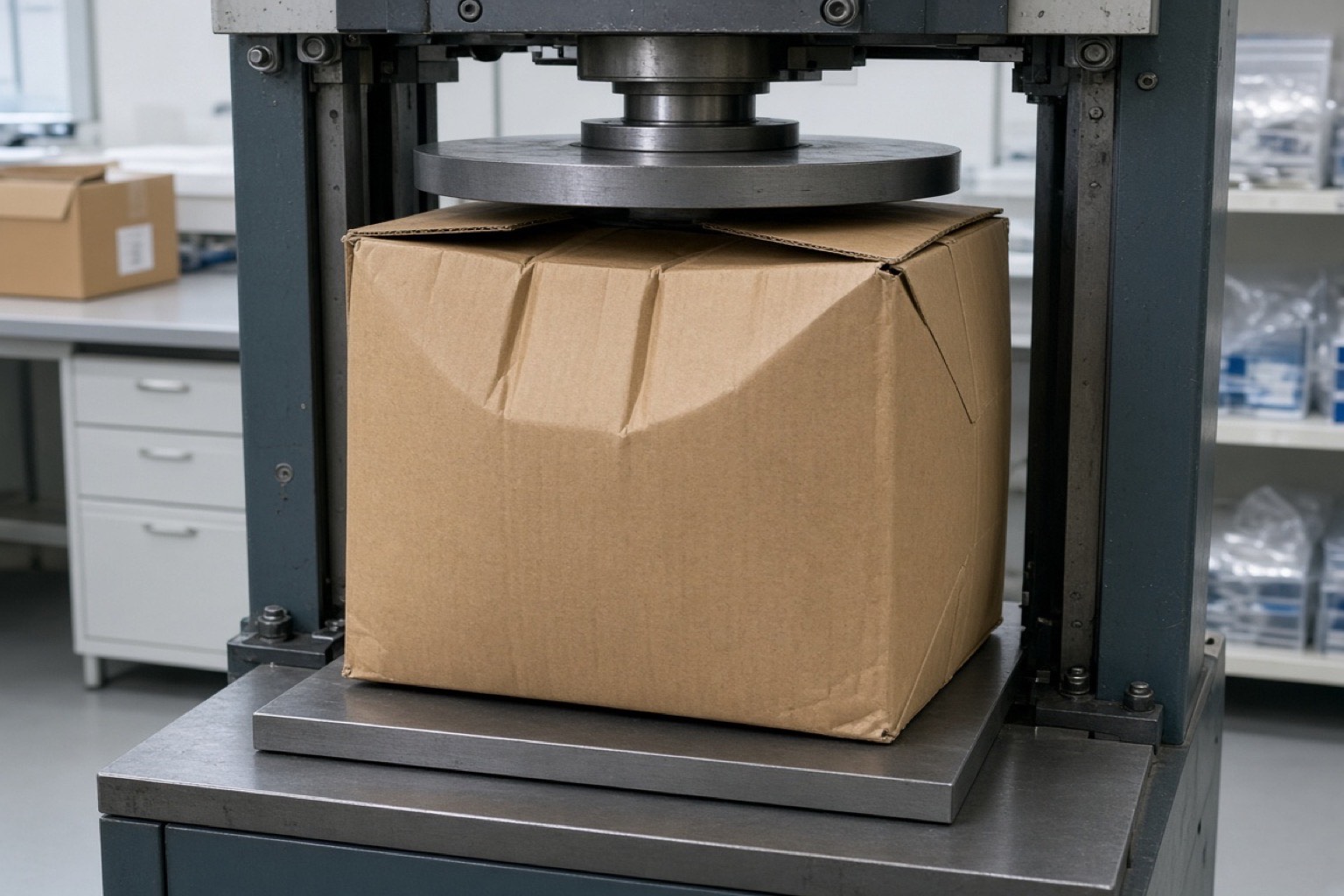
- Assemble and load it if the box carries a stack, because the assembled box is where scores and cuts combine.
And keep one folded sample in the file. It is the fastest way to answer a complaint about a fold two years later.
The judgement
Scores and dies are small manufacturing details with a large field effect, and they are decided early. A panel that cracks at the base cannot be fixed by a heavier liner — it will simply crack on a heavier liner too, at slightly higher load.
Sources
- FEFCO and ESBO standard box styles — score and cut geometry.
- TAPPI T811 and ISO 3037, edgewise crush resistance of corrugated board.
- ASTM D642, Standard Test Method for Determining Compressive Resistance of Shipping Containers, Components, and Unit Loads.
- TAPPI T402 and ISO 187, standard conditioning atmospheres: 23 °C, 50% relative humidity.
- Fibre Box Handbook (Fibre Box Association) — scoring, folding and conversion practice.
Score depth and die design are machine and board specific. Confirm on a production sample rather than a hand-made one.
Questions
- What is a score on a corrugated box?
- A compressed line pressed into the board so it folds where intended. A good score compresses the board without cutting through the liner, so the fold is clean and the panel keeps its strength.
- Why do boxes crack at the fold?
- Usually a score that is too deep, or board that is too dry or too brittle for the fold. A cracked liner is a tear that has already started, and it is a common origin of a panel failure.
- When is a die needed instead of slots?
- When the box needs a shape a slotted machine cannot produce: a window, a curved panel, a self-locking feature, or a special display form. A die adds tooling and set-up, so it should be buying something specific.
- Does die-cutting weaken a box?
- It can, because a cut is a discontinuity and a score interrupts the liner. The effect depends on where the cuts sit relative to the load path. A die-cut feature on a load-carrying panel is a strength decision.
- How do I check scores in a sample?
- Fold and unfold each score several times and look at the crease. A clean fold with no liner crack is right. A white or cracked line means the score or the board condition is wrong.
Check your own boxes, free
Send the spec sheet you already have. Results in about a day; you pay only for the boxes improved.
About the author

Ashish KD Mathpal (PackPrism | PackWares)
Founder, PackPrism · packaging cost advisory
Twenty-two years in packaging, most of it on paper and paperboard: how a board carries load, why a specification is what it is, and where the cost quietly leaks out.