A box complaint arrives: what to check in the first hour
Most packaging complaints are answered with a guess. Six checks, done before anyone replies, turn a dispute into a diagnosis.
A complaint arrives, and the instinct is to answer it. The better first move is to look at the boxes, because the damage pattern tells you which of about six things happened — and five of them are not the paper.
The six checks
One: does the box match its specification? Measure it, weigh it, look at the board at a cut edge. If it is lighter than specified, the conversation is short and the supplier is involved.
Two: where is the damage? This is the most informative single observation.
| Damage | Points to |
|---|---|
| Panels bowed, bottom layer soft | Sustained load, humidity, creep |
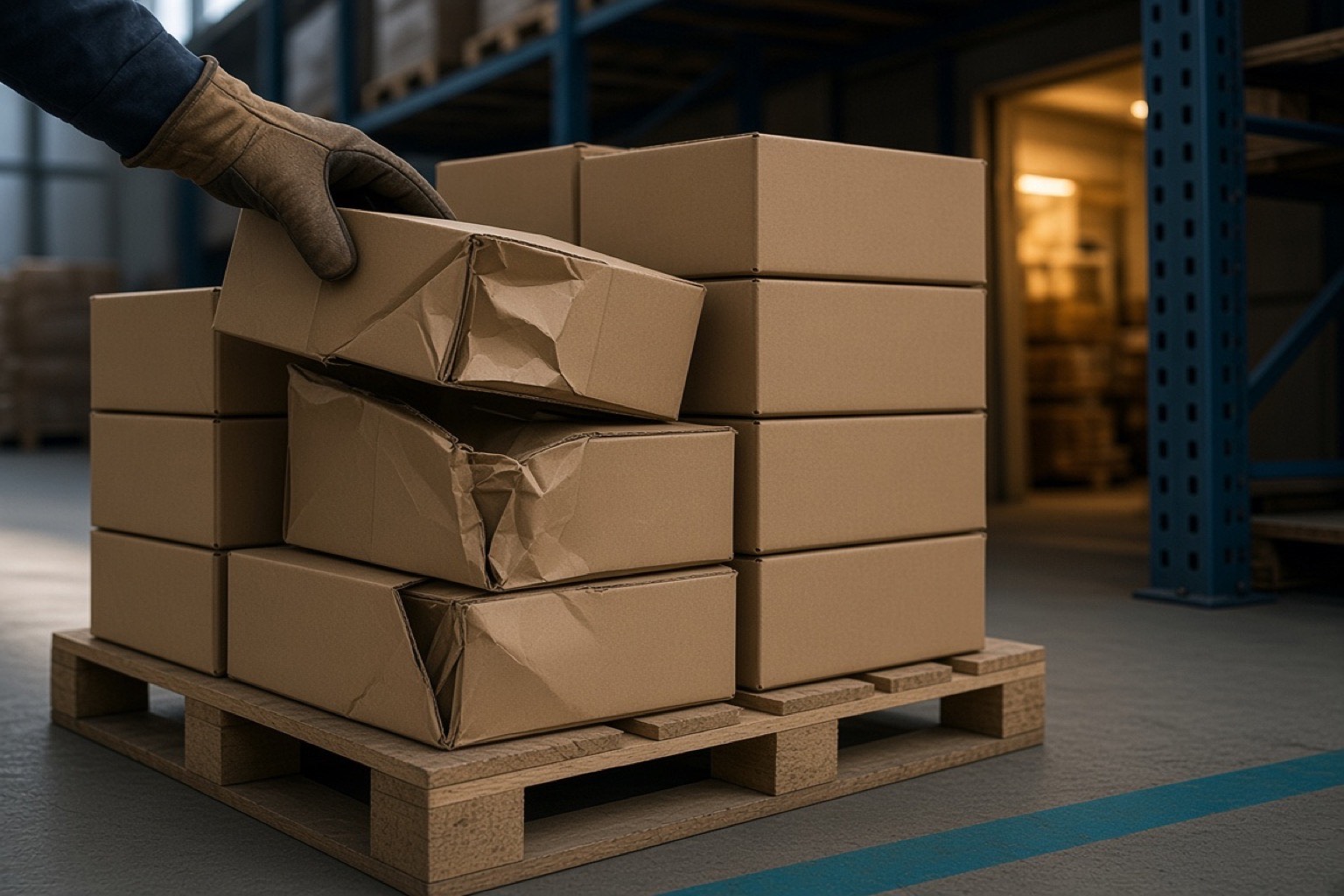
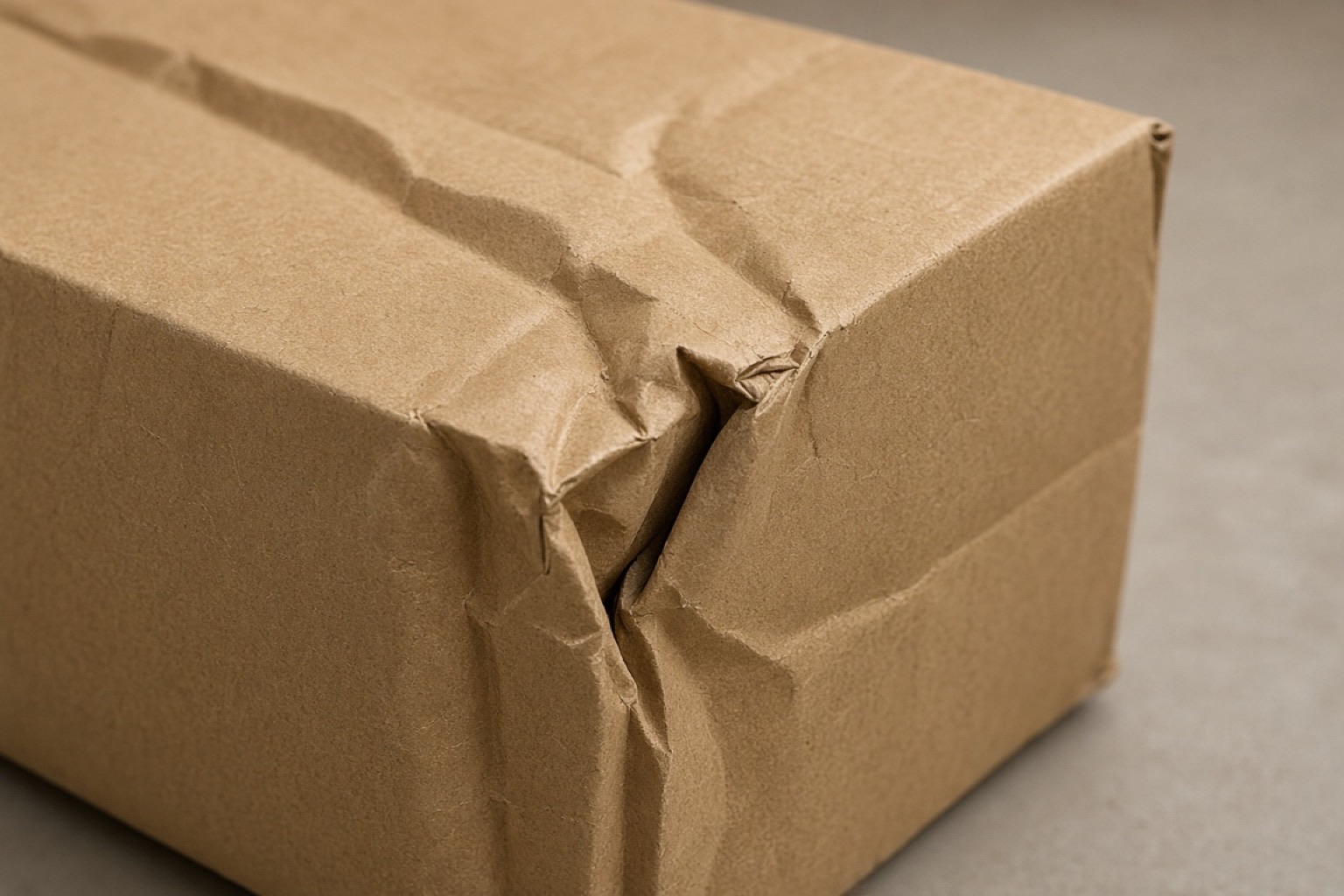
| Corners crushed | Overhang, handling, pallet pattern |
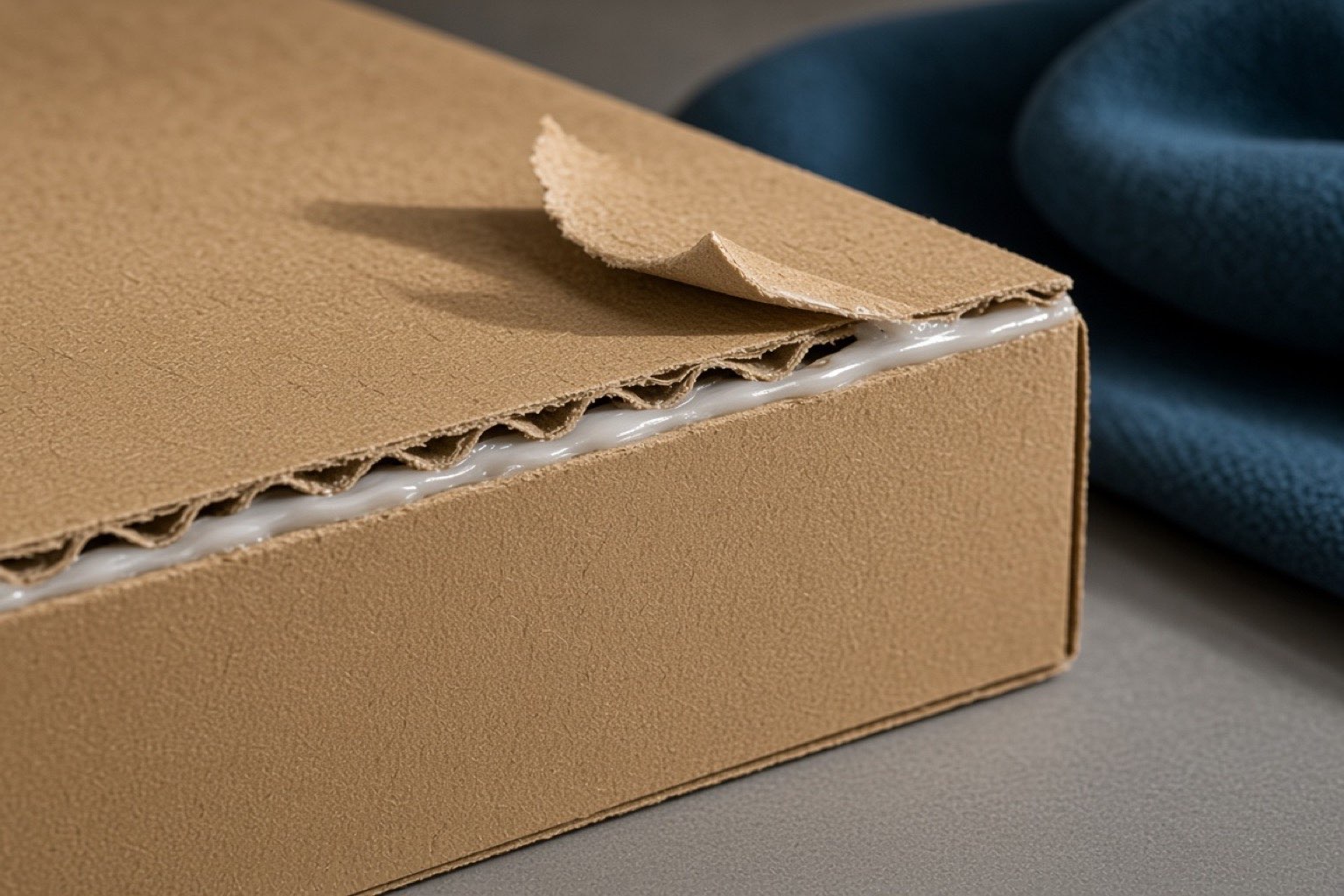
| Joint open or peeled | Glue joint, not board |
| Score cracked, panel torn at the fold | Score quality or board moisture |
| Surfaces scuffed | Transit abrasion, vibration |
| One face worse than others | Stacking against a wall, or a moisture path |
Three: how was it stored? Stack height, duration, floor contact, wall contact, and whether anything was stacked on top that was not planned.
Four: what was the humidity? A humid season changes the answer completely, and a complaint in week three of the monsoon has an obvious candidate.
Five: did anything change? Product weight, packing, pallet pattern, transport route, warehouse. Most failures follow a change, and the change is usually not in the packaging.
Six: how many failed? A single box is a handling incident. A layer is a loading problem. A whole consignment is a specification problem.
What a good reply looks like
Not an apology and not a denial. A reply that says:
- What was observed — the damage pattern and the measurements taken.
- What that indicates — the load case or the defect.
- What is being checked next — a test, a store visit, a sample.
- What happens in the meantime — replacement, containment, or a temporary pack change.
That reply buys time honestly, and it is far more credible than a position taken in the first hour.
The mistake that repeats
The commonest error is to ask the supplier for a stronger board before checking the storage case. That produces a heavier box, a higher price, and often the same failure — because the failure was overhang, or a stack that grew by two layers, or a humid corner of the warehouse.
The second commonest is to accept the first explanation offered. "The board was damp in transit" is a plausible story that a humidity logger and a retained sample will confirm or kill in an afternoon.
What to keep
Three things, cheaply, so that the next complaint takes an hour instead of a week:
- Retained samples from each significant run, labelled and stored dry.
- A photo of every failure, with a scale in the frame.
- Storage facts per SKU — stack height, duration, conditions.
Those three convert a complaint into a diagnosis without a meeting.
Sources
- ASTM D642, Standard Test Method for Determining Compressive Resistance of Shipping Containers, Components, and Unit Loads.
- ASTM D5639, Standard Practice for Selecting Performance-Based Safety Factors for Corrugated Fiberboard Containers.
- ISO 12048, Complete, filled transport packages — Compression and stacking tests using a compression tester.
- ASTM D4169, Standard Practice for Performance Testing of Shipping Containers and Systems; ISTA series.
- TAPPI T402 and ISO 187, standard conditioning atmospheres: 23 °C, 50% relative humidity.
A diagnosis should be based on the failed boxes and the storage conditions, not on a description of them. Test a retained sample before accepting a cause.
Questions
- What should I do first when a customer reports box failures?
- Get the failed boxes back, or clear photographs of them, before replying. The damage pattern identifies the load case, and without it any explanation is a guess.
- What are the first things to check?
- Whether the box matches the specification, how it was stored and stacked, what the humidity was, whether the product or packing changed, and where on the box the damage sits.
- Is it usually the supplier's fault?
- Less often than the volume of complaints suggests. Storage, stacking, overhang, humidity and product changes account for a large share, and a diagnosis that identifies one of those is more useful than a blame conversation.
- How do I tell a board problem from a stacking problem?
- Look at the damage. Bowed panels and softened bottom layers point to sustained load. Crushed corners point to overhang or handling. An open joint points to the corner. Torn or scuffed surfaces point to transit abrasion.
- When should I ask for a compression test?
- When the damage pattern points to sustained load and the box matches its specification. Then a test on a retained sample answers whether the board is short or the load case is heavier than the specification assumed.
Check your own boxes, free
Send the spec sheet you already have. Results in about a day; you pay only for the boxes improved.
About the author

Ashish KD Mathpal (PackPrism | PackWares)
Founder, PackPrism · packaging cost advisory
Twenty-two years in packaging, most of it on paper and paperboard: how a board carries load, why a specification is what it is, and where the cost quietly leaks out.