White top liner: when the print is worth the paper
A white top liner is a print decision wearing a paper specification. Understanding what it costs keeps it where it earns its place.
A white top liner is one of the few specification choices that is purely about appearance. It does not make a box stronger, cheaper or more recyclable. It makes print look right — and it is priced accordingly, on every box, for the life of the specification.
Which means it is worth being deliberate about where it appears.
What you are actually buying
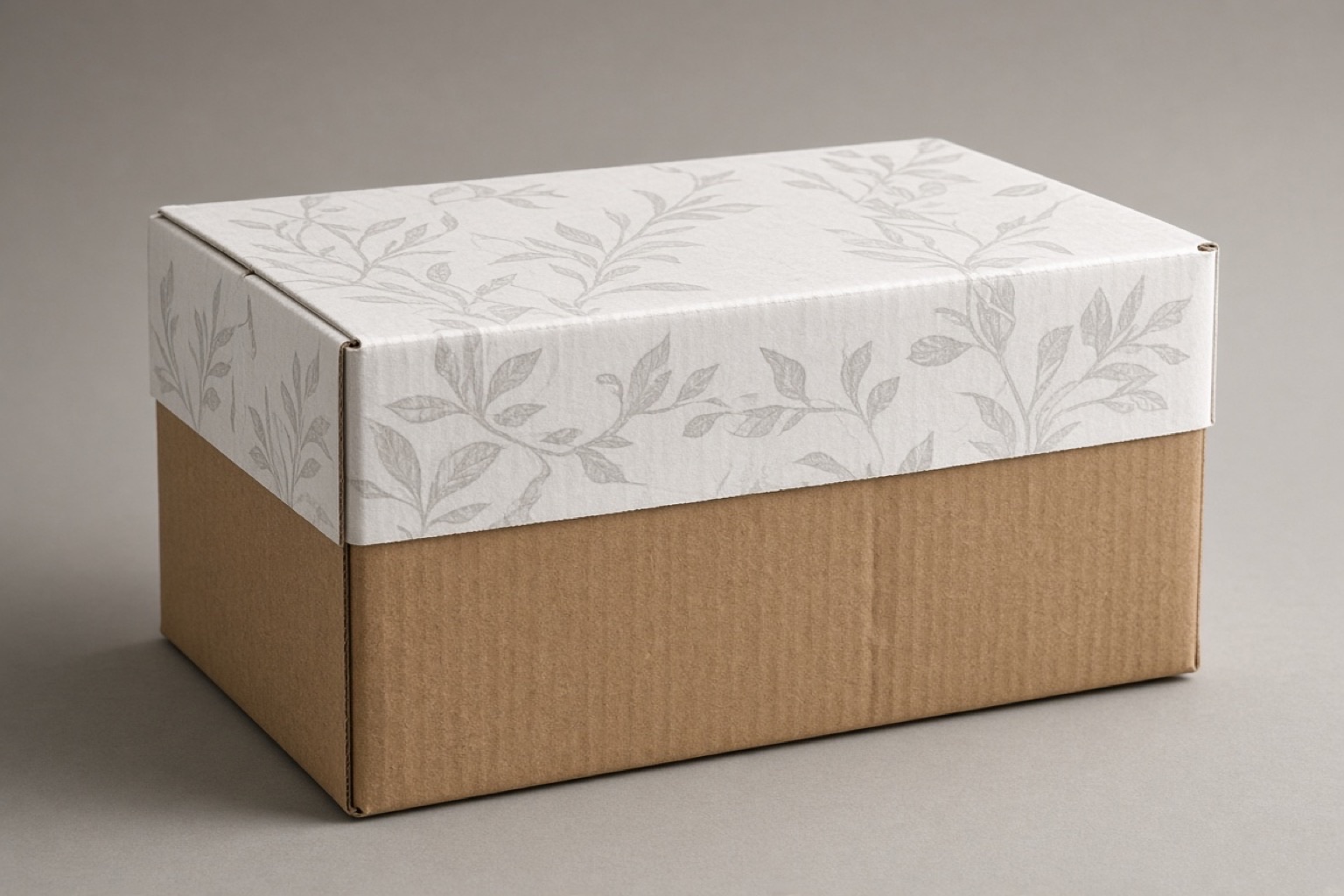
Board is normally brown on both faces because unbleached kraft is cheaper and perfectly strong. A white top liner replaces the outer liner with a brighter fibre, so only one face is white while the rest stays brown.
Three consequences:
- Print sits on a neutral surface, so colours read as intended rather than being tinted by the sheet.
- The cost rises, because the fibre costs more and the appearance requirement is tighter.
- The strength is not improved. A white liner can even differ slightly in strength from the brown grade it replaces, which is worth checking when it is substituted into an existing box.
When it earns its place
The cases where white pays for itself:
| Situation | Why white helps |
|---|---|
| Retail shelf presence | Colour accuracy and brightness carry the brand |
| Fine print and barcodes | Higher contrast, cleaner scanning at speed |
| Light-coloured designs | A brown base tints everything and dulls pale inks |
| Customer requirement | Some retailers specify it for shelf-ready packaging |
The cases where it usually does not:
- a plain shipping carton seen only by warehouse staff;
- a box whose print is one colour and one line of text;
- a box where the design deliberately uses the kraft surface;
- anywhere the print area is small.
The middle option buyers forget
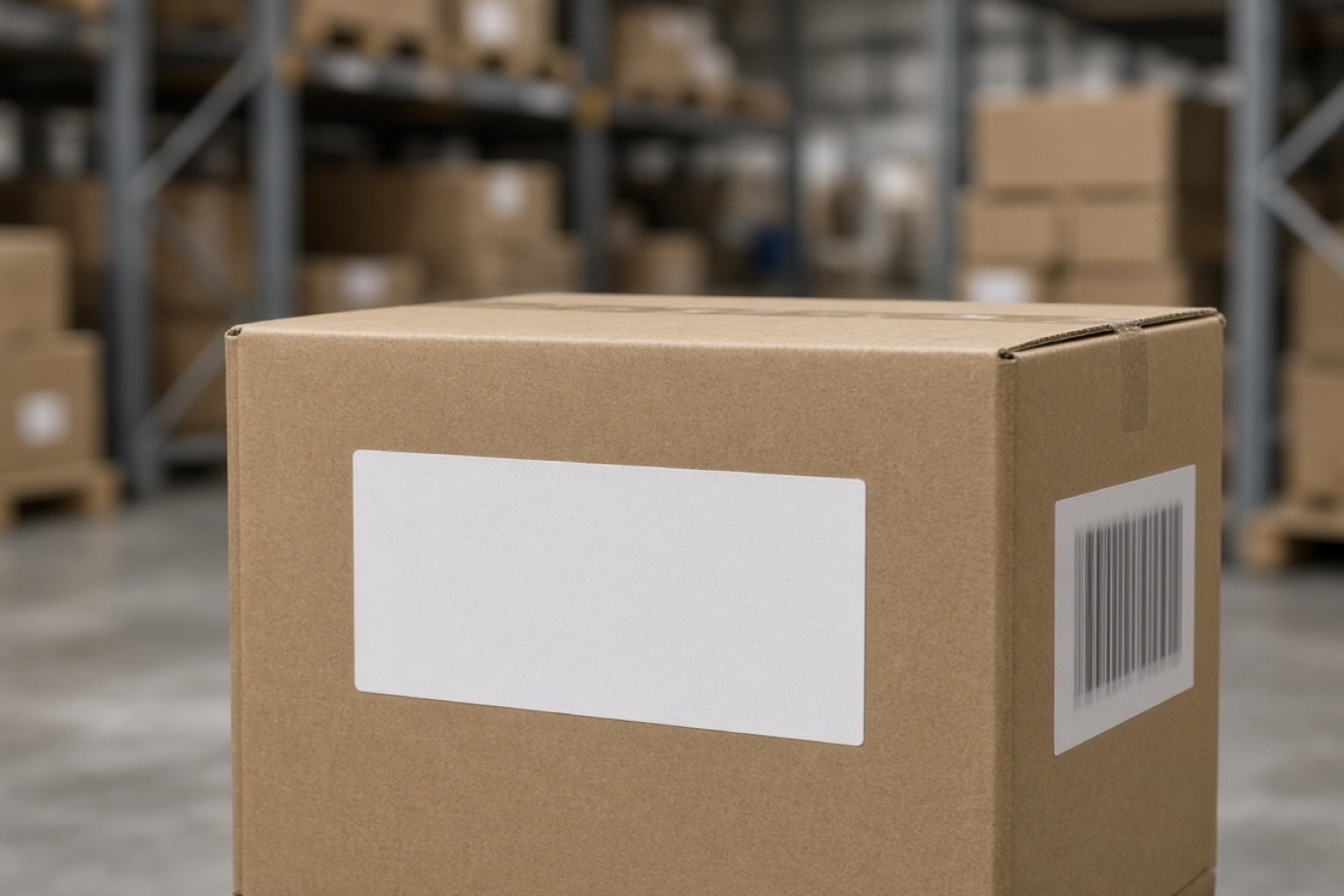
If the reason for white is a barcode, a handling mark or a small printed panel, you do not need a white box. You need a white area.
A label patch, a pre-printed label or a small whitewashed panel gives you a clean print surface at a fraction of the cost of white liner across the whole sheet. It is one of the cheapest specification changes available, and it is routinely overlooked because the conversation starts at "white or brown".
The one caution: keep print and labels away from areas that carry load, since both can interrupt the liner surface.
What to write on the specification
If you specify white, say where and how much:
- Which face is white, since a white outer and a white inner are different products.
- The shade expectation, in words, because "white" runs from cream to blue-white and the difference is visible on a shelf.
- The print coverage, since a heavy design and a small logo put different demands on the sheet.
- The strength duty, unchanged, so nobody assumes the appearance upgrade covered it.
That last line is the important one. A white liner is easy to treat as an upgrade to the whole box, and a supplier working to a tight price may take the difference out of the paper that carries the load.
The judgement
White top liner is not a wasteful choice — it is a marketing choice with a real cost, and plenty of boxes need it. What is wasteful is paying for it on boxes where nobody sees the surface, or paying for it across a whole sheet when a patch would have done.
The test is simple: look at the box in the place it is actually seen. If the answer is "a warehouse shelf", the brown board is doing its job.
Sources
- TAPPI and ISO test methods for liner and board properties: TAPPI T811 / ISO 3037 (edge crush), TAPPI T822 / ISO 12192 (ring crush).
- FEFCO and ESBO standard board construction naming.
- Fibre Box Handbook (Fibre Box Association) — liner grades, white top and print practice.
- TAPPI T402 and ISO 187, standard conditioning atmospheres: 23 °C, 50% relative humidity.
Substituting a white liner for a brown grade can change measured strength. Confirm any substitution with a compression test on the finished box.
Questions
- What is a white top liner?
- A board whose outer liner is made from white or lightly bleached fibre so that print sits on a bright surface. The inner liners and the fluting normally stay brown, so only one face is white.
- Does a white top liner make the box stronger?
- No. It changes the surface, not the structure. Strength comes from the grammages, the furnish and the flute profile, and a white liner can actually be a slightly different strength from the brown grade it replaces.
- Why does white liner cost more?
- Because bleached or brighter fibre costs more than unbleached, and because a white surface shows any inconsistency. You are paying for appearance, and usually for a tighter quality requirement around it.
- Can I print on brown kraft?
- Yes, and it is increasingly the point: a well-designed print on brown is a deliberate look. What you lose is colour accuracy and brightness, because the base sheet tints every ink laid on it.
- Is a label patch a good alternative?
- Often. If only a small area needs to carry print or a barcode, a white patch or a printed label gives you the surface without paying for white liner across the whole box. Check that the patch does not sit across a panel that carries load.
Check your own boxes, free
Send the spec sheet you already have. Results in about a day; you pay only for the boxes improved.
About the author

Ashish KD Mathpal (PackPrism | PackWares)
Founder, PackPrism · packaging cost advisory
Twenty-two years in packaging, most of it on paper and paperboard: how a board carries load, why a specification is what it is, and where the cost quietly leaks out.