GSM or BF: which number should your specification promise?
GSM and burst factor describe different things about packaging paper. Promising the wrong one is how a box gets heavier without getting stronger.
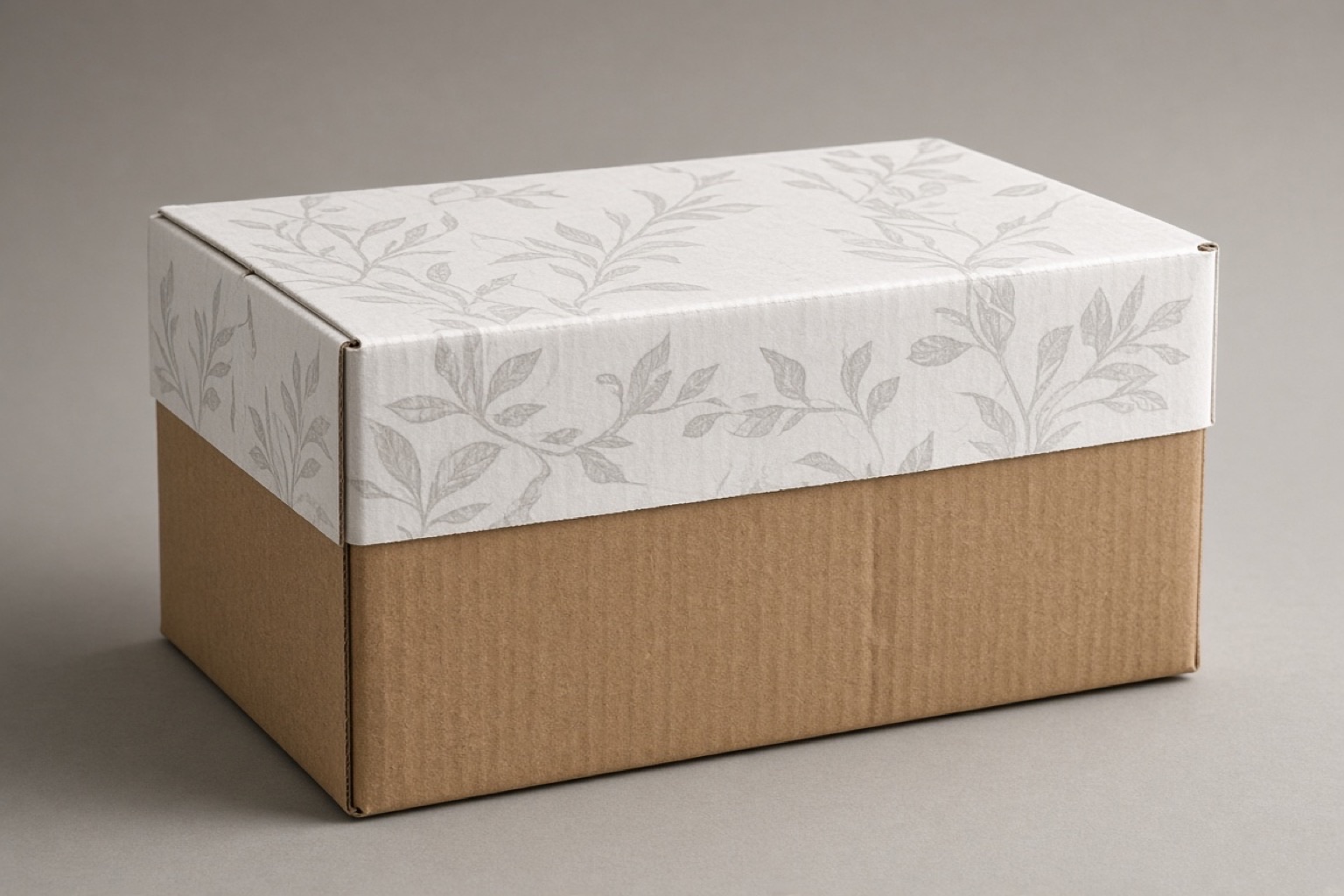
Two quotations for the same box. One says 150/120/150 – 20 BF. The other says 150/120/150 – 18 BF and is cheaper. Most buyers treat the second as a small compromise. Some suppliers will tell you it is "almost the same". It might be. It might also be a different paper entirely, made from a different furnish, that bursts acceptably and carries a stack badly.
The confusion starts because GSM and BF are both printed next to each other and both look like strength. They are not the same kind of number, and one of them is much closer to the thing that keeps your pallet standing.
What each number actually is
| Figure | What it measures | Unit | What it does not tell you |
|---|---|---|---|
| GSM | Mass of one square metre of paper | g/m² | Anything about strength or furnish |
| BF (burst factor) | Burst strength of the paper divided by its GSM | number | How the paper behaves under a stack |
| RCT (ring crush) | Load a strip formed into a ring carries on edge | kN/m | How the finished box behaves |
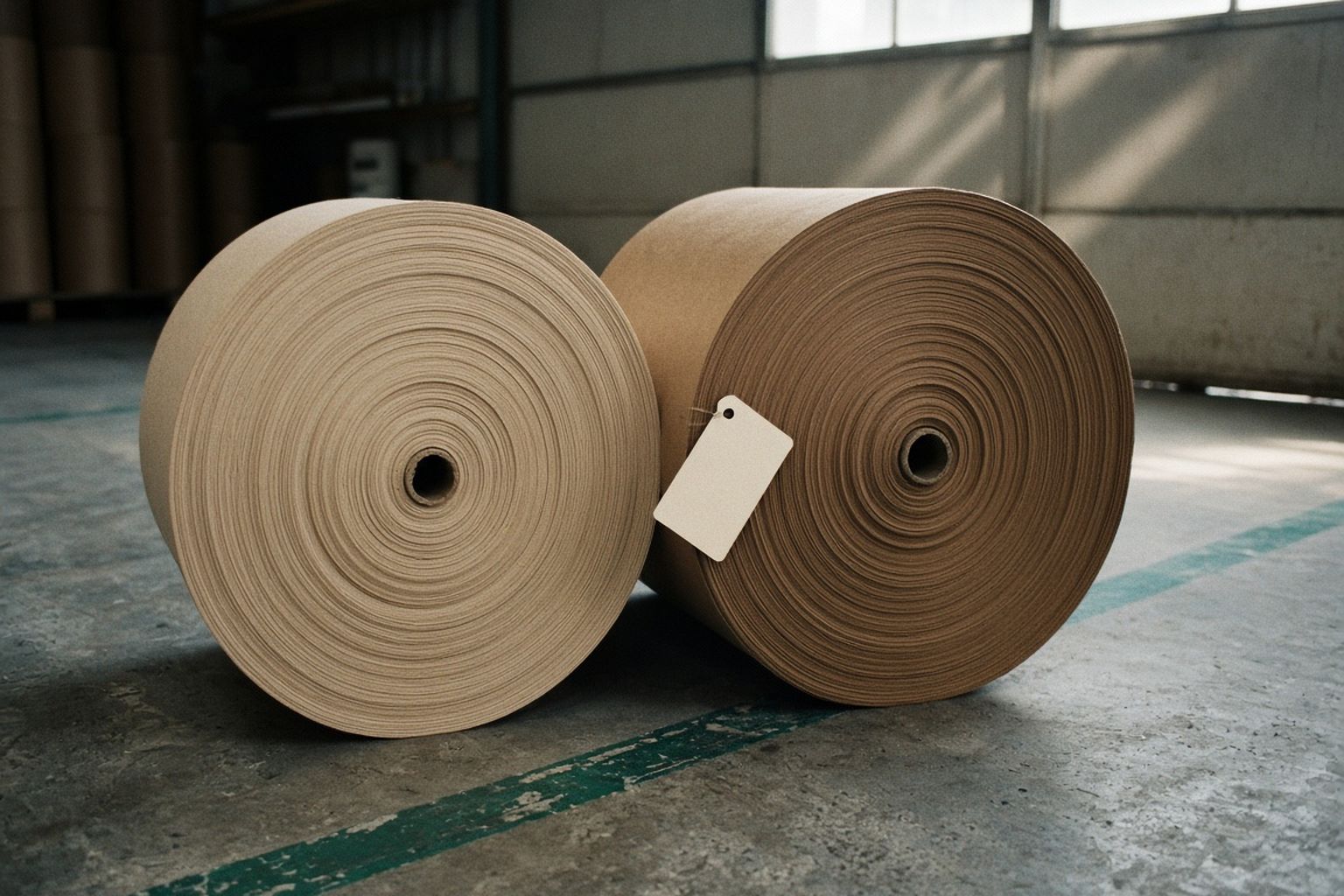
GSM is a mass. It is the number that tells a mill how much paper a board consumes, which is why it is the number that appears in quotations and drives the price. Two papers of the same GSM can differ in strength by a wide margin depending on the pulp: virgin kraft, semi-chemical, recycled, and the mix in between.
BF is a normalised burst. The burst test presses a diaphragm against the paper until it ruptures; the burst strength divided by the GSM gives the burst factor. Dividing by GSM is what makes BF comparable across weights — a heavier paper naturally bursts higher, so the ratio isolates quality. But it is still a measure of burst, and burst is a face-on, puncture-type property.
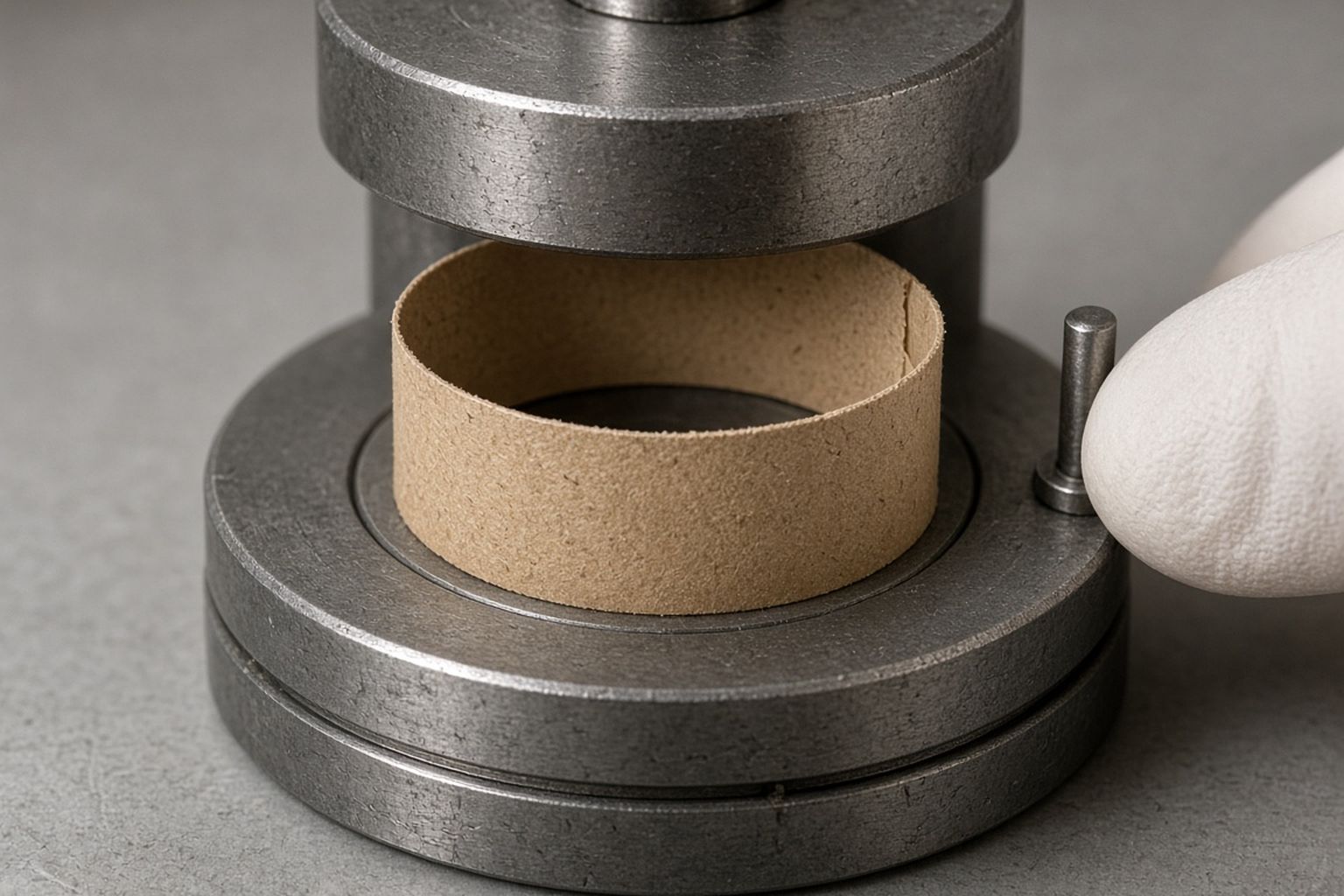
RCT is the one that corresponds to stacking. The paper strip is formed into a ring and crushed on edge, which loads the fibres the way a box wall is loaded. It is the paper-level input that box compression estimates are built from.
The trade-off, stated plainly
Here is the useful mental model, and it is the one that decides most specifications:
- Adding GSM adds paper. Cost rises roughly in step, burst rises, ring crush rises. It is the expensive way to buy strength, and it is the way most specifications use.
- Adding BF at the same GSM means a better furnish. Cost rises, burst rises, ring crush usually rises — but not in the same proportion, and not always.
- Trading GSM away while holding BF can keep burst looking fine while ring crush falls. The box passes a puncture test and fails a stack.
That third line is the trap. A specification that names only GSM and BF has no figure in it that responds to load, so a substitution that hurts stacking can look like a saving on paper.
Why BF has a ceiling
Burst factor is bounded by the furnish. Recycled fibre, however well sorted, is shorter and more broken than virgin fibre; it can be formed into a perfectly serviceable board, and it will post a respectable BF, but ring crush is where the difference shows most clearly.
This is also why a box maker will sometimes insist on a BF minimum rather than a GSM: it is the only cheap proxy for furnish quality they can put in a purchase order. It is a reasonable proxy for puncture and handling, a weak one for stacking.
What actually correlates with the box holding
The chain runs:
paper ring crush → board edge crush → box compression strength → what the stack carries.
Each arrow loses some precision, and the first one is the only point where you can buy quality directly. If the box has a stacking duty, the figure that matters at the paper level is ring crush, not BF.
There is a practical consequence worth knowing: a mill's test certificate will often list GSM, bursting strength (or BF), and sometimes ring crush in machine and cross direction. If you are specifying a board for a stack and the certificate has no ring crush, you are choosing paper on a burst number and hoping. Asking for it costs one email and often changes the conversation.
A specification that survives a substitution
Write it three ways at once:
- Layer by layer, by GSM — so the mill knows what to run and the price is comparable.
- With a BF minimum per layer — so a cheaper furnish cannot be slipped in silently. Set it from what your current paper actually achieves, not from the best number you have ever seen.
- With a strength duty — a compression figure in kgf, or an edge crush figure for the board. This is the sentence that lets a supplier propose a lighter board instead of just a cheaper one.
Add the measurement conditions (TAPPI T402 / ISO 187, 23 °C and 50% relative humidity) and you have removed most of the room for argument.
The buyer's version of the question
If you only remember one line: GSM buys paper, BF describes burst quality, ring crush predicts stacking, and the box compression test settles it. A specification that names only the first two is not wrong — it is just silent on the thing that makes pallets fall over.
Which means the conversation to have with a supplier is not "can you do 18 BF instead of 20" — it is "here is the load this box carries and the compression figure it must reach; what construction gets me there, and how will you show me?" That question has an answer. The BF one has an opinion.
Sources
- TAPPI T810 and ISO 2759, bursting strength of paper and board.
- TAPPI T822 and ISO 12192, ring crush of paper and board — the edgewise paper test that stacking performance is built on.
- TAPPI T811 and ISO 3037, edgewise crush resistance of corrugated board.
- ASTM D642, Standard Test Method for Determining Compressive Resistance of Shipping Containers, Components, and Unit Loads.
- TAPPI T402 and ISO 187, standard conditioning atmospheres: 23 °C, 50% relative humidity.
- McKee, R.C., Gander, J.W. and Wachuta, J.R., Compression strength formula for corrugated boxes, Boxboard Containers, 1963.
Paper test values are mill results under standard conditions. Confirm any substitution with a box compression test before it goes into production.
Questions
- What is GSM in packaging paper?
- Grams per square metre — the weight of one square metre of the paper. It is a mass, not a strength, and it says nothing about the furnish the paper was made from or how much load it carries on edge.
- What does BF mean on a paper grade?
- Burst factor. It is the paper's burst strength divided by its GSM, so it is a normalised measure of burst, not a count of anything. A 20 BF paper has twenty times the burst strength of its own weight; it does not promise a box strength.
- Can a higher BF paper be weaker than a lower BF paper?
- In compression, yes — sometimes. BF is a burst measure, and burst and edge crush do not track each other perfectly. A recycled furnish can post a respectable BF while reading low on ring crush, and ring crush is the paper property that stacking depends on.
- Should a specification give GSM or BF?
- Give both, layer by layer, and add the strength duty the box has to meet. GSM tells the mill how much paper to use, BF describes the burst quality, but only a strength figure tells anyone what the box has to carry.
- How do I check the paper rather than trust the grade name?
- Ask for the mill's test certificate for the reel or lot: GSM, burst, and ring crush in the machine and cross directions. Where the numbers are not offered, a single ring crush result on a sample settles more arguments than any discussion of grade names.
Check your own boxes, free
Send the spec sheet you already have. Results in about a day; you pay only for the boxes improved.
About the author

Ashish KD Mathpal (PackPrism | PackWares)
Founder, PackPrism · packaging cost advisory
Twenty-two years in packaging, most of it on paper and paperboard: how a board carries load, why a specification is what it is, and where the cost quietly leaks out.