Ring crush is the paper number that predicts your stack
Burst factor is what paper grades are sold on. Ring crush is what stacking depends on. Ask for the one that answers your question.
Ask a paper merchant for a grade and you will get a weight and a burst factor. Ask whether that paper will hold a stack and the honest answer needs a different number — one that is rarely printed on the quotation.
That number is ring crush, and it is the closest thing the paper has to a promise about stacking.
Three paper tests, three different questions
| Test | How it loads the paper | Best answers |
|---|---|---|
| Burst (Mullen) | A diaphragm pushes the flat face until it ruptures | Puncture and handling damage |
| Tensile / tensile energy | The sheet is pulled apart | Runability on the corrugator |
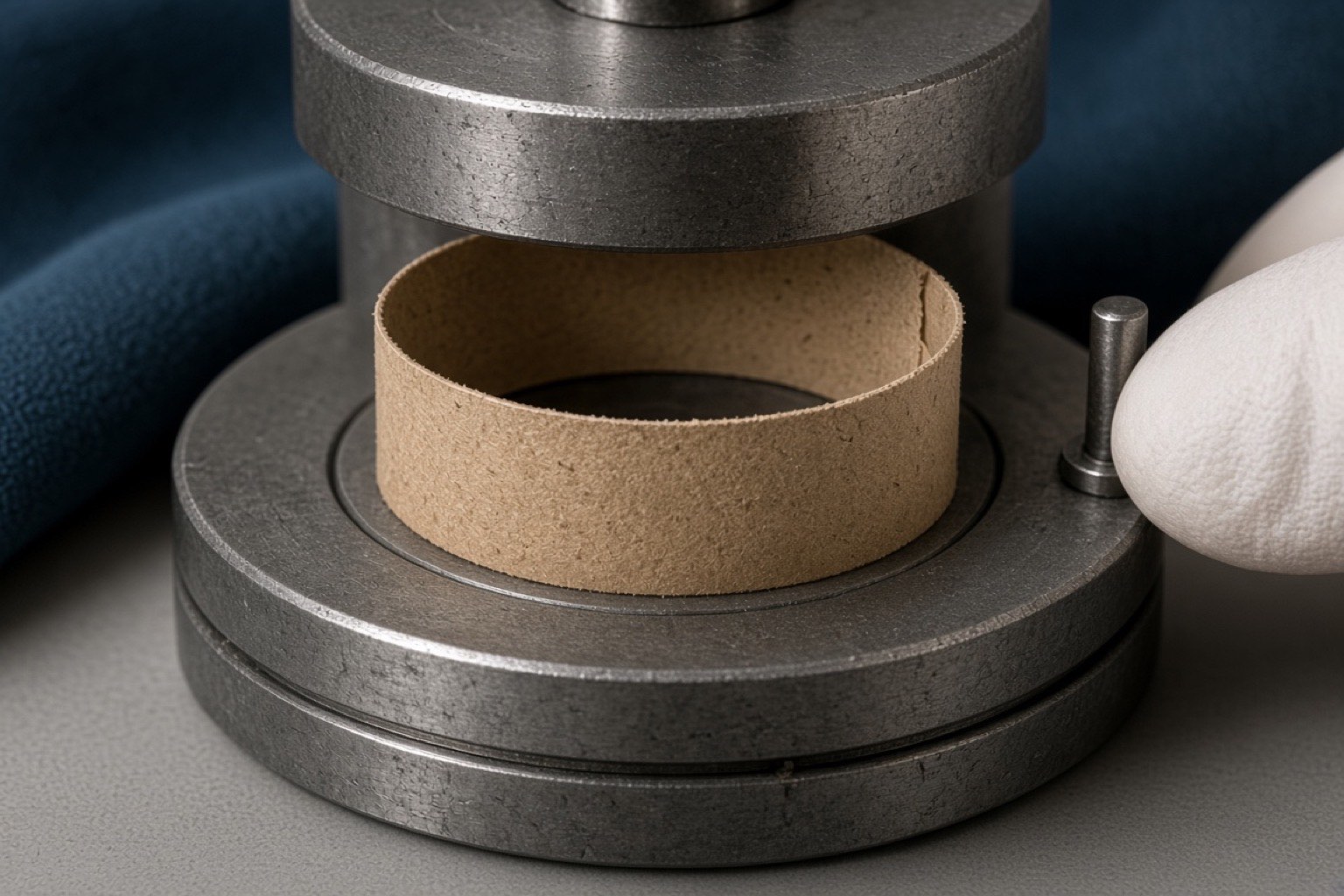
| Ring crush (RCT) | A formed ring is crushed on its edge | Load carried by a box wall |
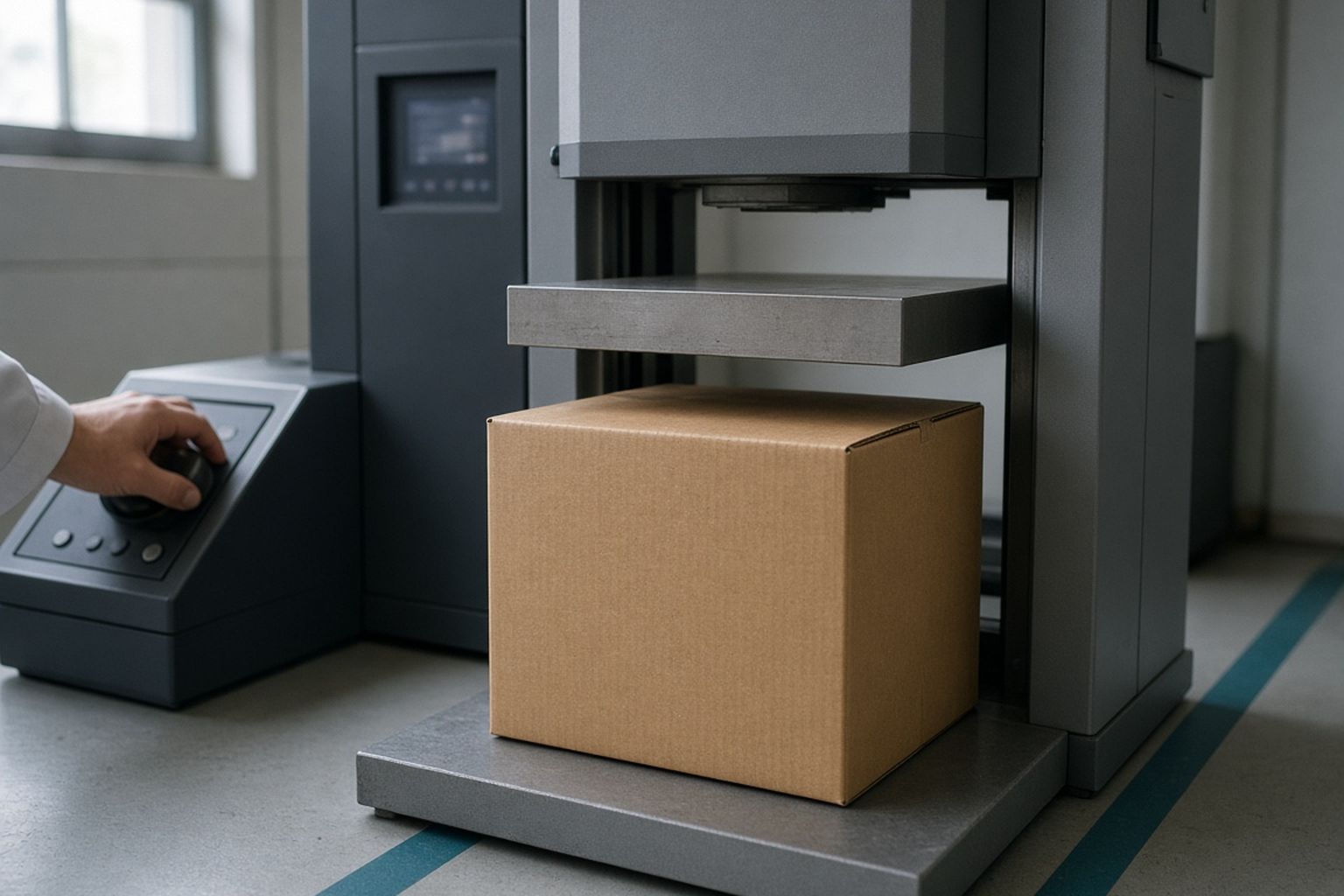
The middle column is the whole story. Burst pushes on the face. Ring crush pushes on the edge. A box in a stack loads its walls on edge, which is why ring crush and stacking relate to each other, and why burst and stacking do not.
Why grades are still sold on burst
Two practical reasons, neither of them technical superiority.
First, burst is cheap and fast and has been the trade's common language for generations. A grade described as "20 BF" tells a buyer something about the furnish without anyone needing a lab.
Second, burst factor normalises for weight — burst strength divided by GSM — which makes it comparable across paper weights. That is genuinely useful when you are comparing two grades at different grammages.
But a normalised burst number is still a burst number. It describes the face of the paper, and the face is not what carries a stack.
The chain that actually predicts a stack
Nothing about ring crush is useful in isolation, and it is worth seeing where it sits:
paper ring crush → board edge crush → box compression strength → what the stack carries.
Every arrow loses precision. Board making, flute profile, caliper and adhesive quality all affect the second step. Box dimensions, joint quality, print coverage and moisture affect the third. So a ring crush figure cannot be turned into a box number without a lot of assumptions.
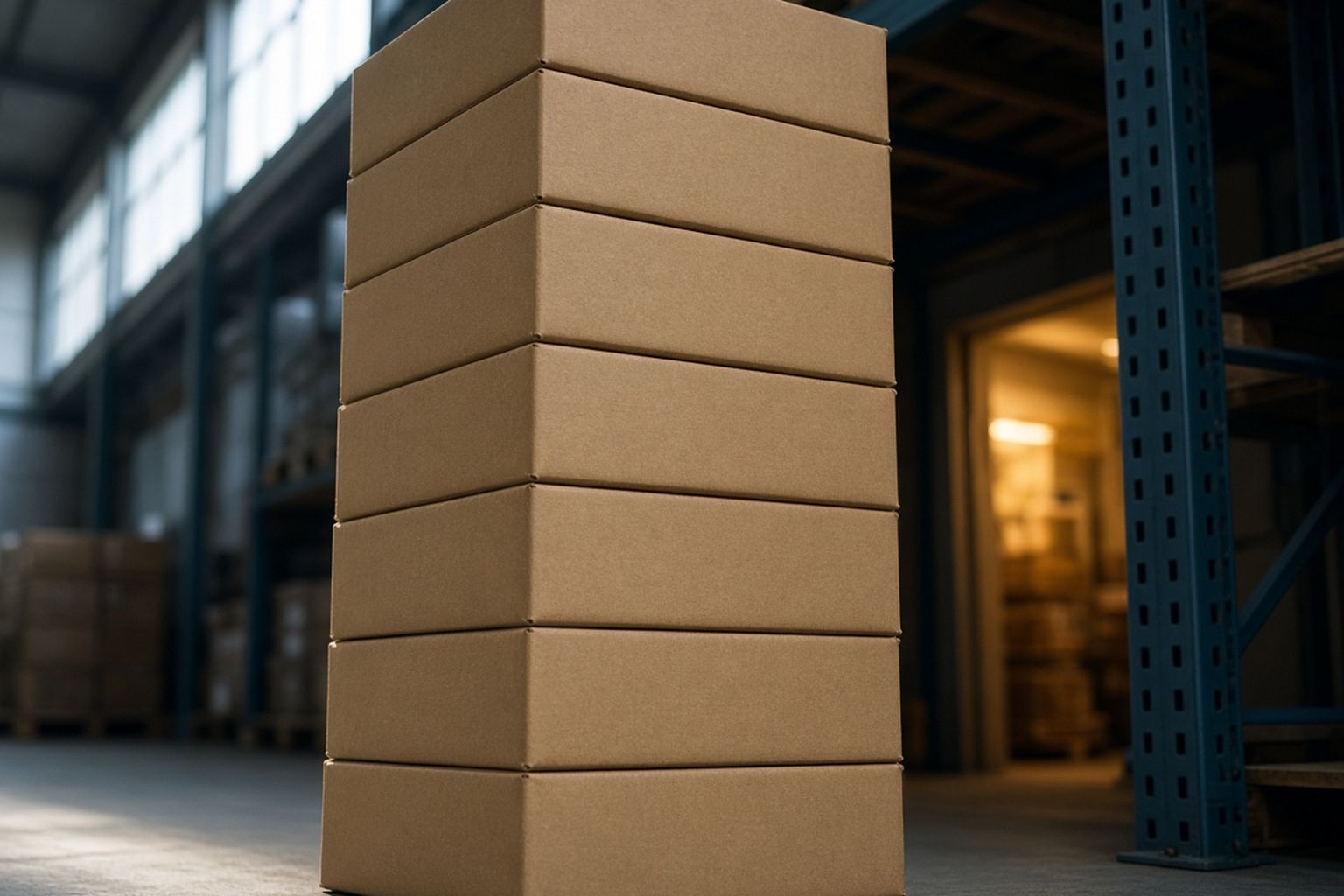
What it can do is tell you whether two papers that look identical on a purchase order are actually the same. Two grades at 150 GSM and 20 BF can differ meaningfully in ring crush if one has more recycled content or a different furnish mix — and the box made from the weaker one will be the box that bows in the warehouse.
What to ask for
One email, three requests:
- Ring crush in machine and cross direction, for the grade being offered. Paper is stronger along the machine direction; a single number can hide a weak cross direction.
- Burst factor, which you probably already get.
- The test method and sampling, so the number means something. TAPPI T822 and ISO 12192 are the common ring crush methods.
If a supplier cannot provide ring crush, that is not necessarily a red flag — it may simply be a figure they have never been asked for. It is, however, a reason to treat their strength claims as a description of burst rather than a prediction of stacking.
How to use it without over-claiming
Ring crush is a screening tool, not a guarantee.
- Use it to compare papers. If two offers are the same weight and burst but very different ring crush, you have found the difference that matters.
- Use it to explain a failure. A box that bows under a load it should have carried, made from paper with a weak cross-direction ring crush, is a coherent story.
- Do not use it as a substitute for a box test. A box compression test on the finished box settles what a paper test can only suggest.
Where this leaves a buyer
The practical position is that you are buying paper by a number that answers a question you did not ask. Burst tells you the paper will survive handling. Ring crush tells you it will carry a load. A box specification that names only GSM and BF has no figure in it that responds to stacking, which is why substitutions that look trivial on paper can fail in the warehouse.
Ask for ring crush once, for the grades you actually buy, and keep the answers. The next time a grade is substituted, you will have a figure to compare instead of an opinion to defend.
Sources
- TAPPI T822 and ISO 12192, ring crush of paper and board.
- TAPPI T810 and ISO 2759, bursting strength of paper and board.
- TAPPI T811 and ISO 3037, edgewise crush resistance of corrugated board.
- ASTM D642, Standard Test Method for Determining Compressive Resistance of Shipping Containers, Components, and Unit Loads.
- McKee, R.C., Gander, J.W. and Wachuta, J.R., Compression strength formula for corrugated boxes, Boxboard Containers, 1963.
- TAPPI T402 and ISO 187, standard conditioning atmospheres: 23 °C, 50% relative humidity.
Paper test values are mill results under standard conditions. Confirm a substitution with a box compression test before production.
Questions
- What is the ring crush test?
- A strip of paper is formed into a ring and crushed on its edge between two platens. The load it carries is the ring crush value, usually reported in kN/m. It is the paper-level property that corresponds to how a box wall carries a vertical load.
- Is ring crush better than burst factor?
- Not better in general, better for a particular question. Ring crush relates to stacking, so it is the right paper figure when the box carries a load. Burst factor relates to puncture and handling, so it is the right figure when the risk is damage in transit.
- Why do paper grades quote burst factor instead of ring crush?
- Because burst is the older, cheaper and more widely available test, and grades have been bought and sold on it for decades. Many mills can supply ring crush on request, but it has to be asked for.
- Does a high ring crush guarantee a strong box?
- No. Board making, flute profile, box dimensions, glue joint, print and moisture all sit between the paper and the box. Ring crush is the first link in the chain, not the answer.
- Should ring crush be specified in both directions?
- Ideally yes. Paper is stronger along the machine direction than across it, so a single figure can hide a weakness. Ask for machine and cross direction values where they are available.
Check your own boxes, free
Send the spec sheet you already have. Results in about a day; you pay only for the boxes improved.
About the author

Ashish KD Mathpal (PackPrism | PackWares)
Founder, PackPrism · packaging cost advisory
Twenty-two years in packaging, most of it on paper and paperboard: how a board carries load, why a specification is what it is, and where the cost quietly leaks out.