The glue joint: the cheapest part of a box and the first to fail
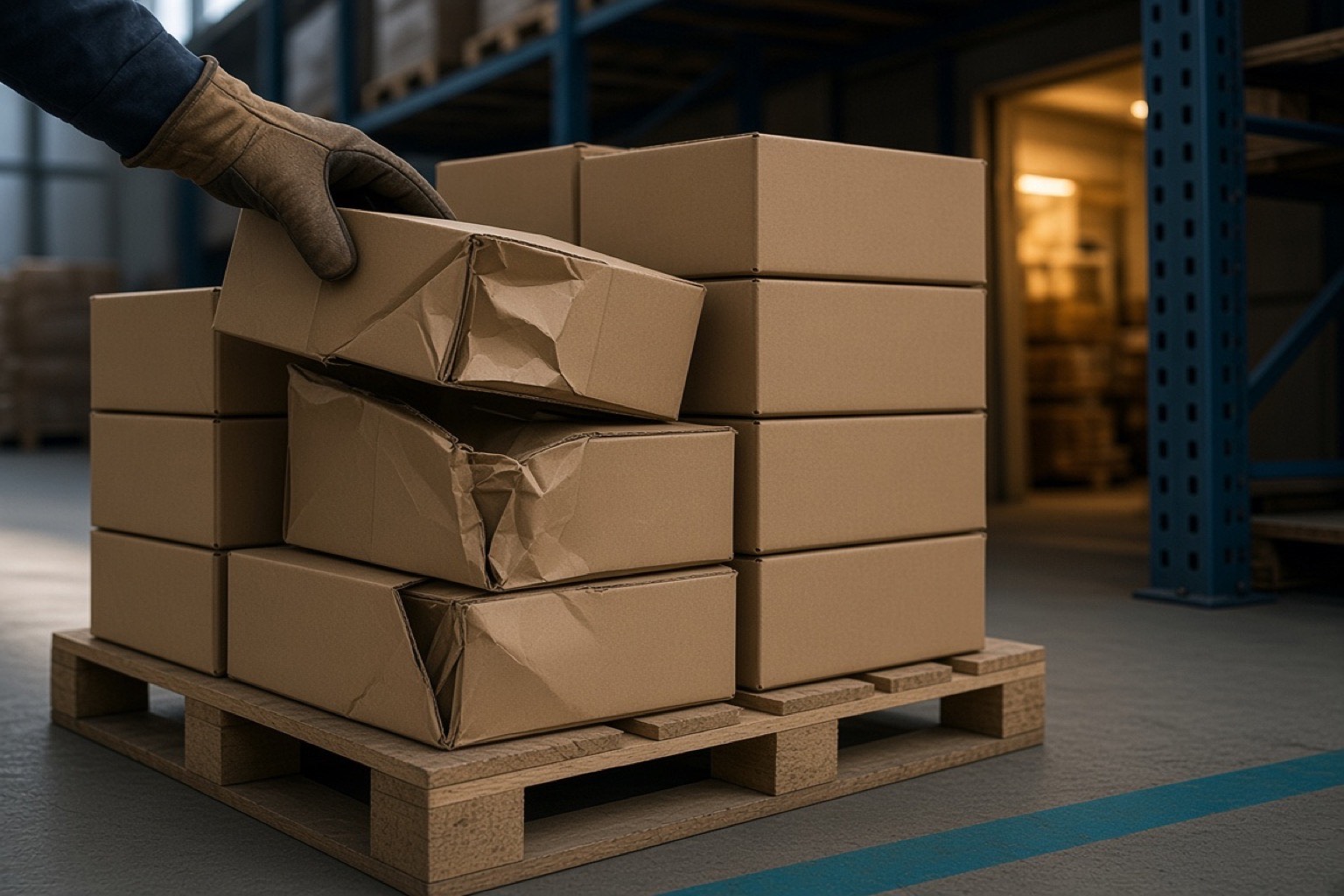
A box with good board and a poor joint fails like a box with poor board. The joint is where a stack is actually carried.
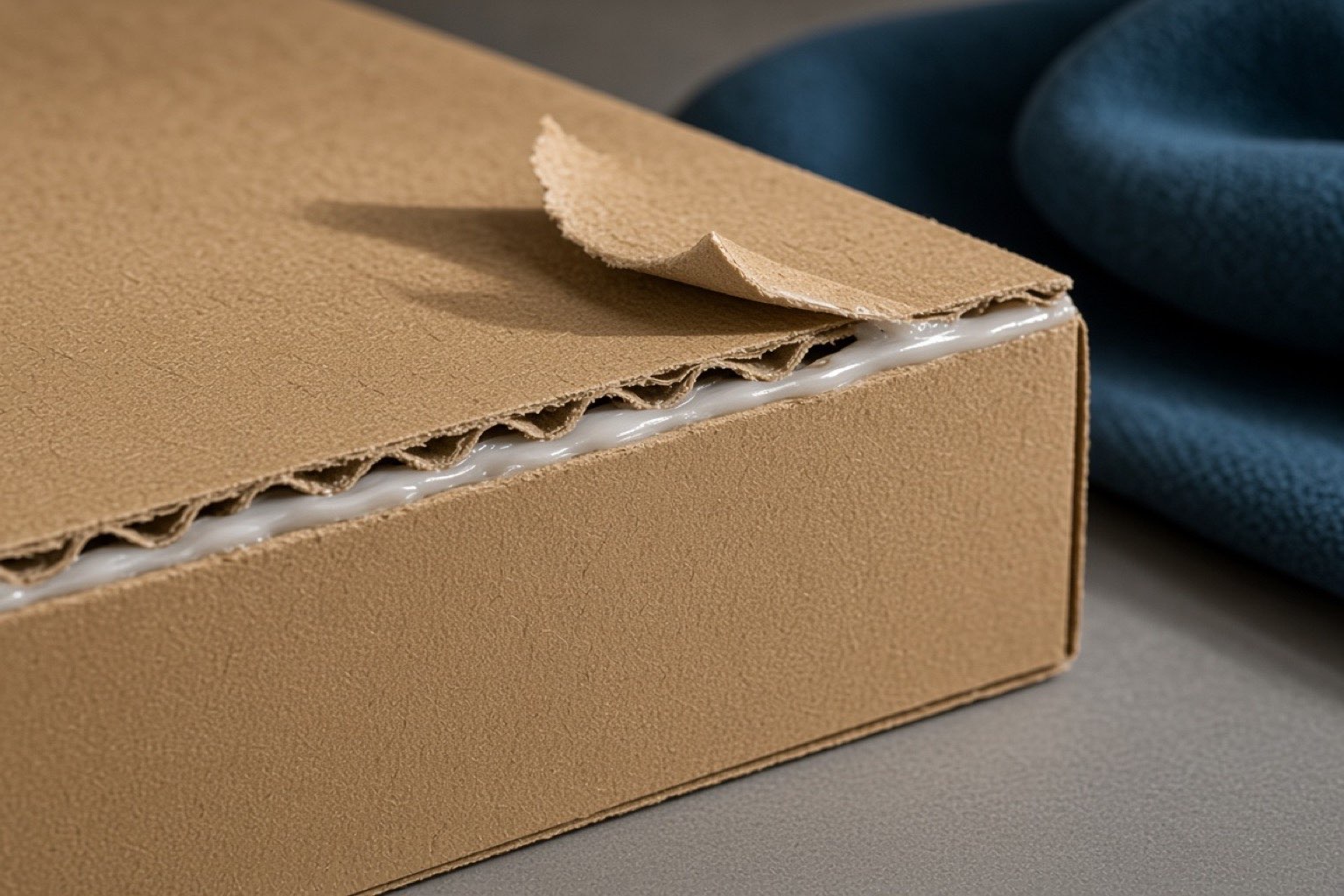
The glue joint is a strip of adhesive a few centimetres wide and a few rupees a thousand boxes. It is also the closure of a corner, and the corners are what carry the stack.
Why the corner carries the load
A stack of boxes transmits load down the vertical edges. Each box's four corners are the stiffest parts of the shape, because two panels meet there and brace each other.
The glue joint turns a folded sheet into a closed shape. If the joint is weak:
- one corner opens slightly under load;
- the load redistributes to the other three;
- each of those now carries more than its share;
- the box bows or collapses at a load well below its tested compression strength.
So a joint failure is not a cosmetic defect. It is the removal of one leg of a four-legged stool.
The five reasons joints fail
| Cause | What you see |
|---|---|
| Too little adhesive | Clean peel, no fibre pull |
| Wrong adhesive for the board | Brittle or gummy residue |
| Dust or contamination on the flap | Patchy bond, clean spots |
| Cold plant or fast line speed | Adhesive not set when the case is handled |
| Too little compression time | Joint opens in the stack, not at the machine |
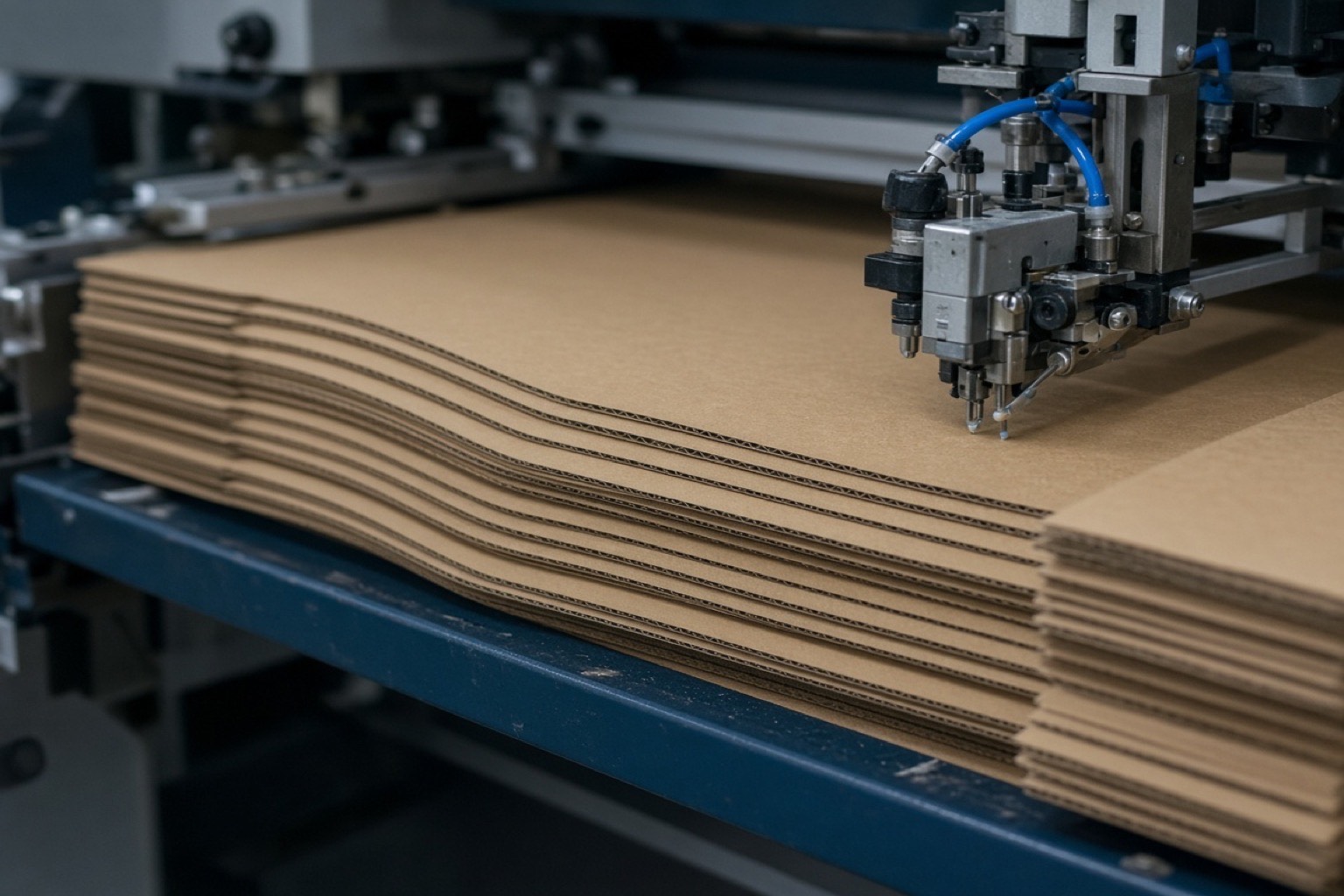
The last two are worth understanding because they are invisible at the machine and obvious a week later. An adhesive needs pressure and time to develop strength. A plant running cold, or running fast, can produce cases that look perfect and open in the warehouse.
The check that takes ten seconds
Pull the joint apart.
- Board fibres tear — the bond is stronger than the board, which is what you want.
- Clean separation — there was not enough adhesive, or it did not bond.
Do this on a sample from each delivery, not once at approval. It is the highest-value ten seconds in a box inspection, and it needs no equipment.
How it shows up in a compression test
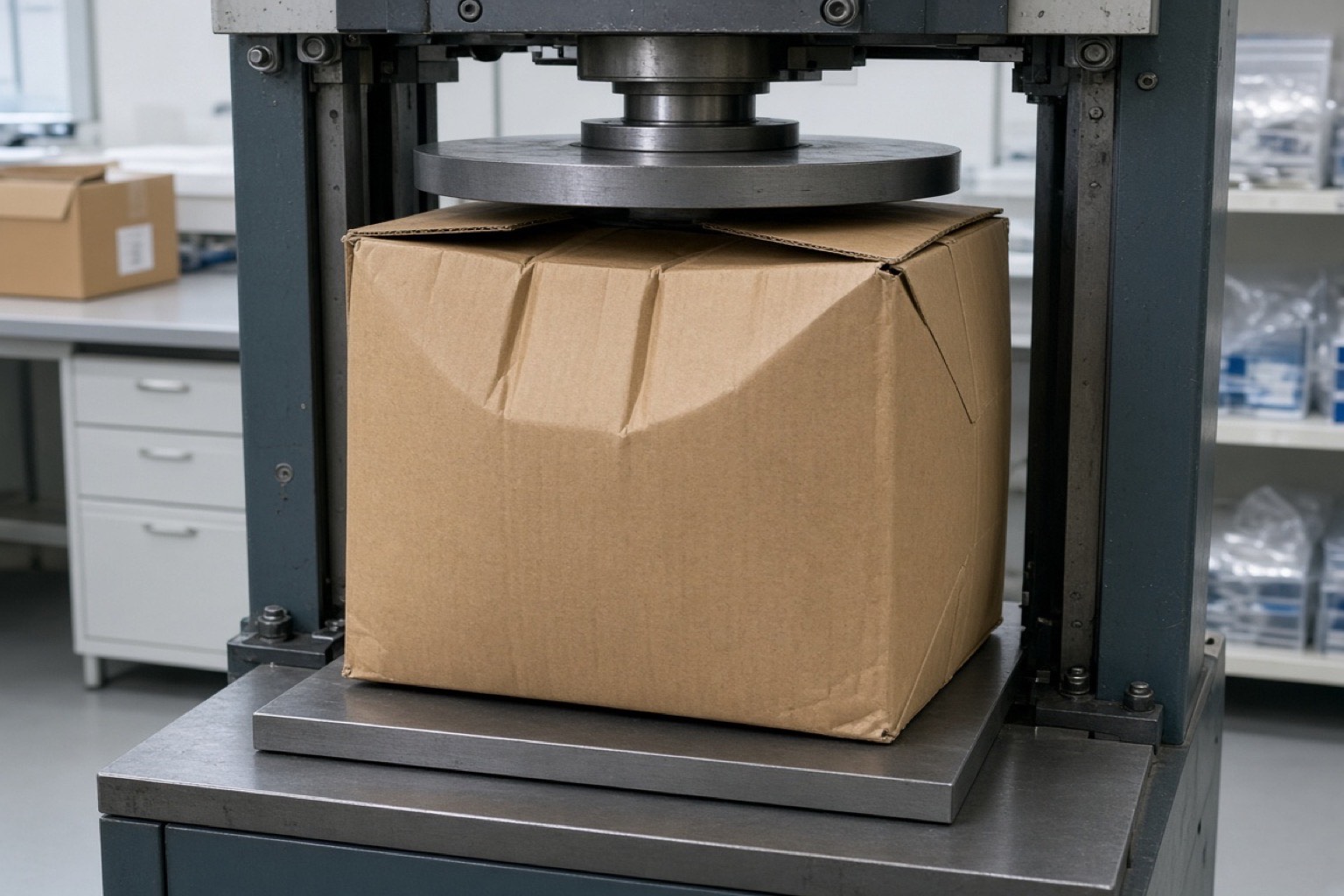
A box compression test measures the box, not the board. A weak joint drags the result down, so the number comes back short and everyone looks at the paper.
Before concluding that a board is deficient, look at the joint on the tested sample. If it separated during the test, the board was never given a fair chance.
That is also why a box can pass at the plant and fail in the field: the plant's test may have been on a case from a good part of the run, and the shipment includes the rest.
What to agree with a supplier
Four things, briefly:
- Joint width and the adhesive type.
- A bond requirement — the joint should tear the board rather than peel.
- How the joint is checked, and how often.
- A settling allowance, so cases are not stacked before the adhesive is ready.
That last one is a production scheduling matter, not a specification matter, and it is behind a surprising share of failures.
The judgement
The joint is the cheapest component in the box and the one most likely to decide a stack. It costs nothing to check and almost nothing to specify, which makes it the best value in any inspection routine.
Sources
- Fibre Box Handbook (Fibre Box Association) — adhesive application and joint practice.
- TAPPI T811 and ISO 3037, edgewise crush resistance of corrugated board.
- ASTM D642, Standard Test Method for Determining Compressive Resistance of Shipping Containers, Components, and Unit Loads.
- ISO 12048, Complete, filled transport packages — Compression and stacking tests using a compression tester.
- TAPPI T402 and ISO 187, standard conditioning atmospheres: 23 °C, 50% relative humidity.
Adhesive type and joint specification are plant-specific. Agree the bond requirement with the supplier and check it on each delivery.
Questions
- Why is the glue joint so important for strength?
- Because it is the closure of the corner, and the corners carry the stack. An open or weak joint lets one corner give way, which shifts load onto the others and can collapse the box at a fraction of its tested strength.
- What causes a glue joint to fail?
- Insufficient adhesive, the wrong adhesive for the board, a contaminated or dusty surface, a cold plant that stops the adhesive setting, or a joint that is under pressure too briefly before it is handled.
- How do I check a glue joint?
- Open a case and pull the seam apart. A good joint tears the board fibres rather than peeling cleanly. A joint that separates with no fibre pull was never properly bonded.
- Does the joint affect compression test results?
- Yes. A compression test on a box with a weak joint measures the joint as much as the board, which is one reason a box can test below its board's capability.
- Should I specify a joint width?
- It is worth agreeing one, because the joint width determines how much adhesive contact there is. A narrow joint has less to hold with and is more sensitive to machine variation.
Check your own boxes, free
Send the spec sheet you already have. Results in about a day; you pay only for the boxes improved.
About the author

Ashish KD Mathpal (PackPrism | PackWares)
Founder, PackPrism · packaging cost advisory
Twenty-two years in packaging, most of it on paper and paperboard: how a board carries load, why a specification is what it is, and where the cost quietly leaks out.