

Returns packaging: the box that has to survive twice
An e-commerce return box is opened, handled and sent back. Most packs are designed only for the journey out.
E-commerce packaging is designed for one journey: packed, shipped, opened. The product that comes back travels in whatever the customer has, which is often a torn version of the box it arrived in.
That gap is expensive, and it is rarely in anyone's specification.
Why the return journey is harder
Three reasons, all structural:
- The box has been opened. Flaps are torn, the seal is gone, and the board has been handled. Its strength on the second journey is less than on the first.
- It is packed by a customer, not a packer. No fitment, no void fill, badly closed.
- It is handled with less care. Returns are consolidated, sorted and moved in mixed loads.
So the pack that arrives in good condition has often already exceeded its design brief. The return is a second, harder test.
Three design answers
| Approach | What it requires | Best for |
|---|---|---|
| Design for reopening | A tear strip or resealable adhesive, and a box that survives opening | Products with a meaningful return rate |
| A dedicated return pack | A separate, smaller, simpler mailer sent with the product | High-value goods where protection matters |
| Accept the loss | Treat returns as a write-off risk and price it in | Low-value goods with low return rates |
The third is a legitimate choice, and it becomes the right one surprisingly often. What is not legitimate is assuming the first journey's box will do the second journey's job without any of the three being chosen deliberately.
The measurement that decides it
Two numbers:
- Return damage rate — the share of returns arriving damaged.
- Repack rate — the share of returns that had to be repacked before resale.
Both are usually available from the returns team and neither is usually in the packaging discussion. If return damage is low, the current pack is adequate and the conversation is over. If it is high, the pack is a candidate — but check whether the cause is the box or the way the customer packed it, because the fix differs.
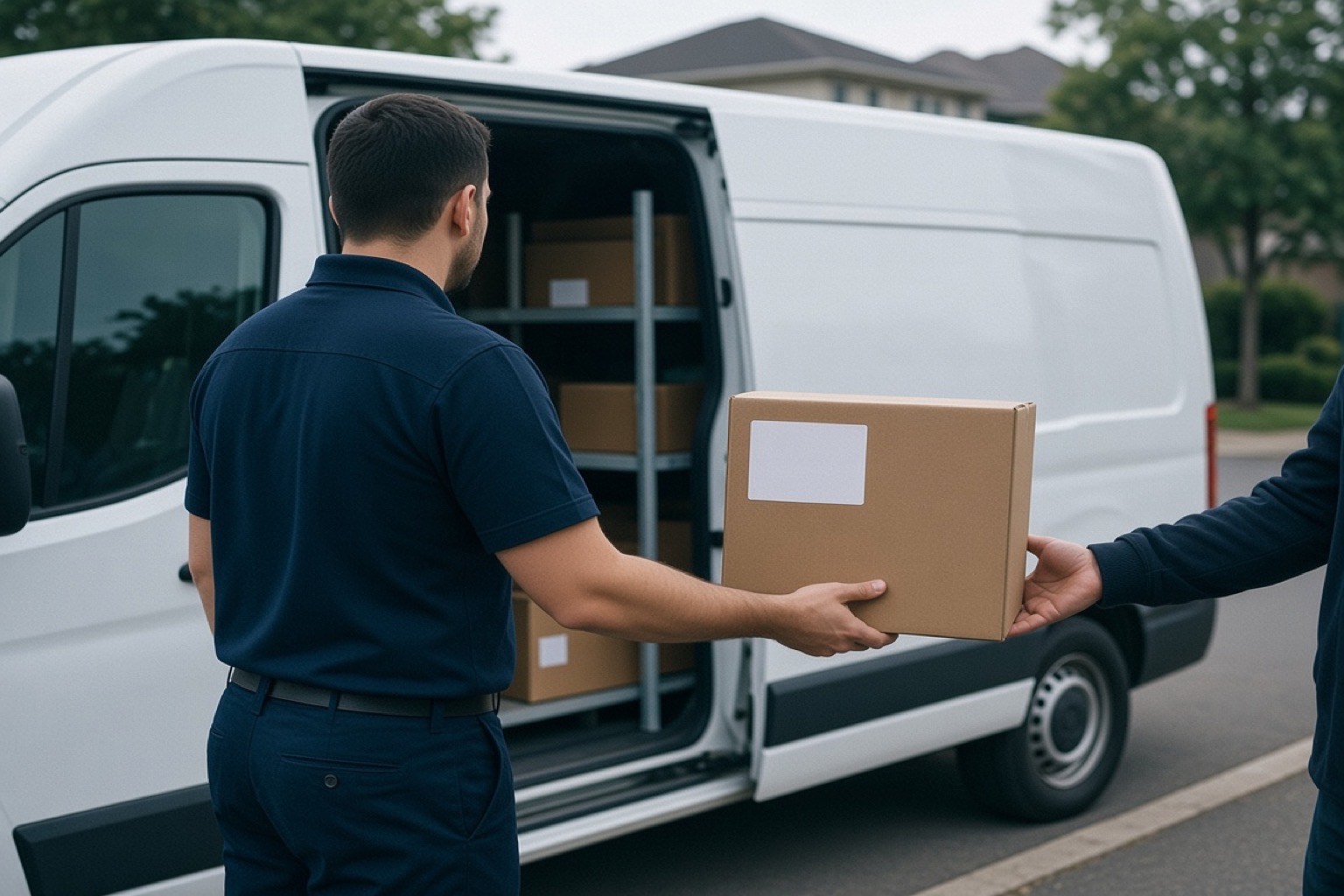
The cheap improvements
Before redesigning anything:
- A tear strip that opens cleanly, so the box is not destroyed to get in.
- A second adhesive strip inside the flap, so resealing needs no tape.
- Clear instructions for repacking, printed inside the box where the customer will see them.
- A return label that is part of the pack, rather than a separate document that gets lost.
Each of these costs very little and addresses the real failure: a customer with no way to send it back properly.
The judgement
Returns packaging is a design decision that most catalogues make by default. Making it explicitly is cheap, and the alternative is paying for the same product twice — once out, once back — with a damage write-off in between.
Sources
- ASTM D4169, Standard Practice for Performance Testing of Shipping Containers and Systems.
- ISTA series, packaged-product performance tests for distribution.
- ISO 4180, Complete, filled transport packages — General rules for the planning of performance tests.
- ASTM D642, Standard Test Method for Determining Compressive Resistance of Shipping Containers, Components, and Unit Loads.
- TAPPI T402 and ISO 187, standard conditioning atmospheres: 23 °C, 50% relative humidity.
Return handling varies by carrier and channel. Base a returns pack decision on your own measured damage and repack rates.
Questions
- Do I need different packaging for returns?
- Usually the same box can serve if it is designed to be reopened and resealed, and if it survives the return journey. The common failure is a box that is destroyed on opening, so the customer returns the product in whatever they have.
- What is the biggest cost of a poor returns pack?
- Product damage, which converts a return into a write-off, plus the labour of repacking. Both are larger than the cost of the box, which is why the box is the wrong place to save.
- Should I use a resealable strip?
- It helps if the return volume is meaningful, because it lets the customer reseal without tape. The trade is a slightly more expensive pack against fewer damaged returns.
- Does a return box need extra strength?
- It needs enough strength for the second journey and for the way returns are handled, which is often more roughly and with less care than outbound freight. Designing for a single trip and assuming the return will be gentle is optimistic.
- How do I know if my returns pack is working?
- Track the share of returns that arrive damaged, and the share that come back in a different box. Both are measurable, and both respond to pack design.
Check your own boxes, free
Send the spec sheet you already have. Results in about a day; you pay only for the boxes improved.
About the author

Ashish KD Mathpal (PackPrism | PackWares)
Founder, PackPrism · packaging cost advisory
Twenty-two years in packaging, most of it on paper and paperboard: how a board carries load, why a specification is what it is, and where the cost quietly leaks out.