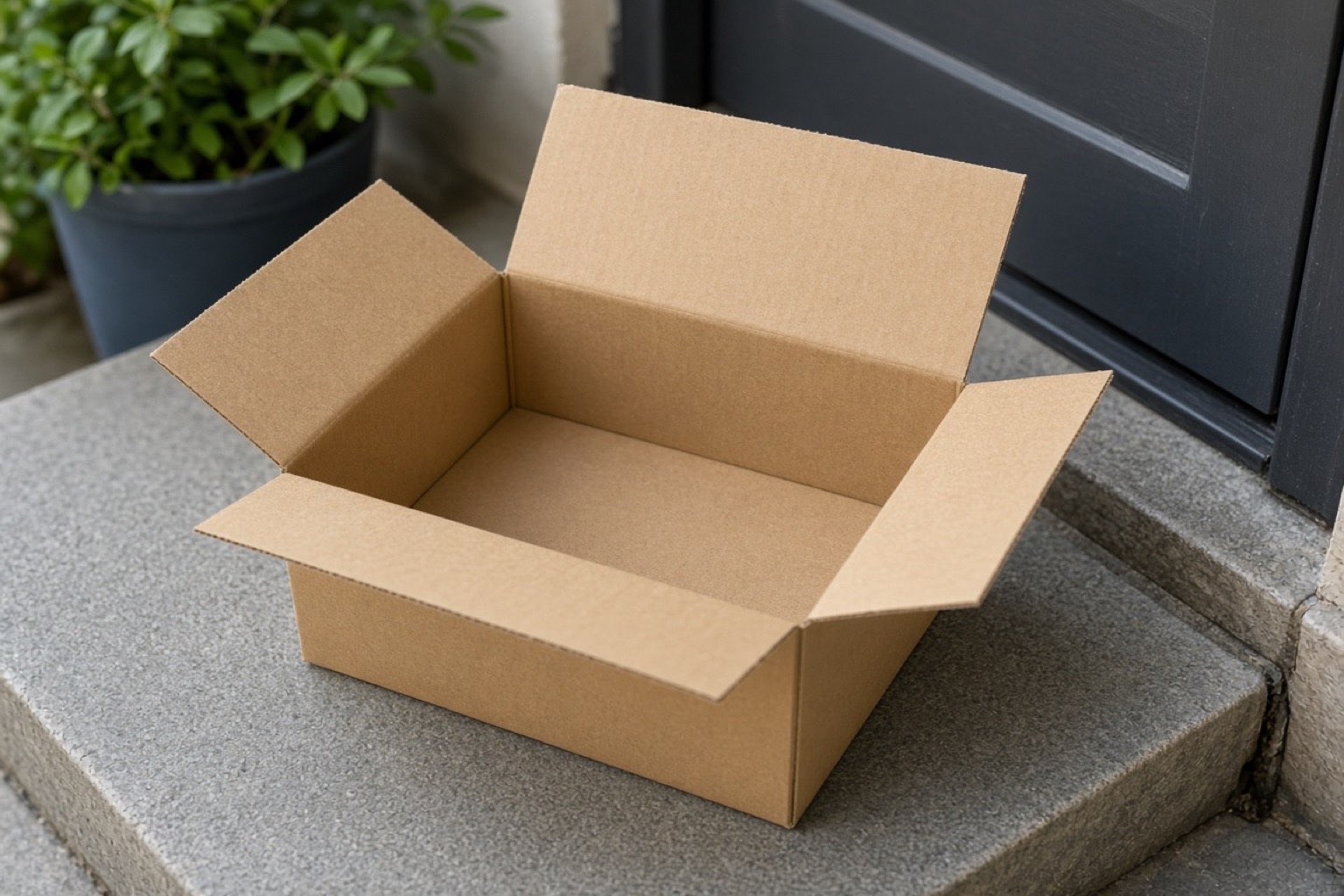
Dimensional weight: the freight charge hiding in your box size
Carriers bill the larger of actual and dimensional weight. A box with a few centimetres of air can cost more to move than to make.
A box has two prices: what it costs to buy and what it costs to move. Buyers negotiate the first and rarely calculate the second, which is why so many catalogues are optimised in the wrong direction.
How the charge is built
Carriers compare two numbers and bill the larger:
- Actual weight — what the parcel weighs.
- Dimensional weight — volume divided by a carrier-specific divisor.
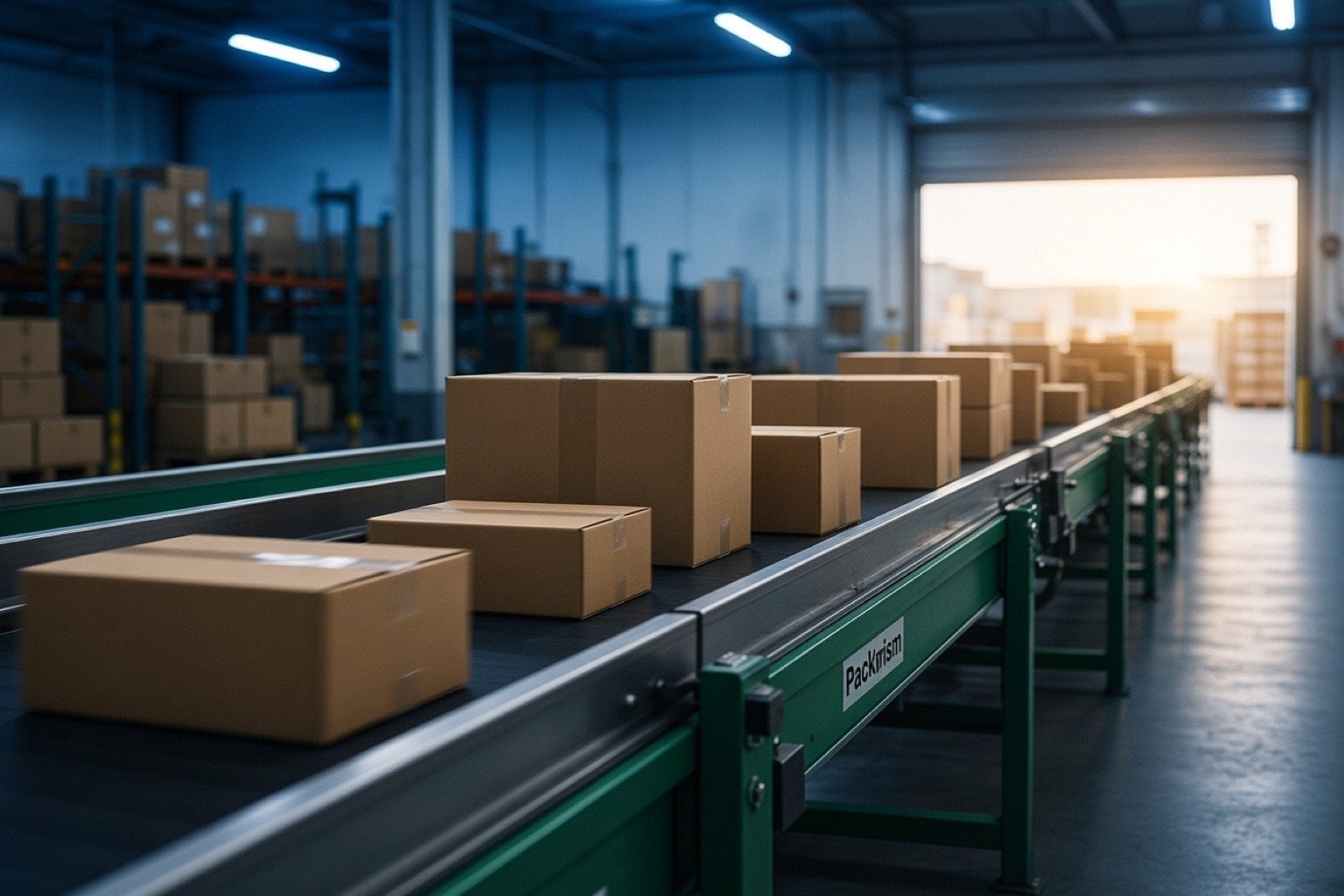
For dense products, actual weight wins and cube does not matter much. For light, bulky products — most e-commerce — the dimensional figure wins easily, and the box is being charged for the space it occupies rather than the material in it.
Why a few centimetres matter more than they look
Volume scales with all three dimensions, so a change that looks small is not:
| Change | Effect on volume |
|---|---|
| 2 cm off each of three dimensions | Several per cent, more on small boxes |
| Replacing an oversized carton with a fitted one | Often double-digit per cent |
| Removing void fill and shrinking to fit | Two savings at once: fill and cube |
That is the arithmetic that makes box size a freight decision. It is also why the same product can be profitable in one pack and marginal in another, with no change to the product.
The three-way trade
Resizing a box is a negotiation between three costs:
- Board — a smaller box uses less, so board cost falls.
- Freight — less volume, so the charge falls, often by more.
- Damage — too tight a fit removes the cushioning that absorbs impact.
The third is the constraint, and it is where discipline matters. A box that fits the product with a defined clearance and a proper inner fitment beats both an oversized box with loose fill and a box so tight the product bears the impact directly.
What to measure
Three numbers per SKU, for the top twenty by volume:
- Fill ratio — product volume divided by internal box volume.
- Dimensional weight at your carrier's divisor.
- Damage rate for that SKU.
Sort by the product of volume and order count, and work down. In most catalogues a handful of SKUs carry the cost, and the wins are concentrated there.
Where the money actually is
Three patterns show up repeatedly:
- One size for everything. Convenient to buy, expensive to ship. A short range of sizes with a rule for choosing usually beats a single size.
- Void fill as a habit. If the box is right, the fill is not needed. Fill is often a symptom of an oversized box rather than a solution.
- Length-driven pricing. Some carrier tiers change at length thresholds, so a box a centimetre over a threshold can cost more than the board saved by shrinking it.
The judgement
For heavy industrial products, board and strength dominate and freight is a secondary consideration. For light consumer parcels, it inverts: the box that costs slightly more to buy but ships in less volume is often the cheaper decision.
Knowing which of the two businesses you are in is the whole exercise.
Sources
- Carrier dimensional weight rules — the divisor and any length thresholds are set by each carrier and change, so confirm against your own contract.
- ASTM D642, Standard Test Method for Determining Compressive Resistance of Shipping Containers, Components, and Unit Loads.
- ASTM D4169, Standard Practice for Performance Testing of Shipping Containers and Systems; ISTA series.
- ISO 3394, Dimensions of rigid rectangular packages — Transport packages — modular dimension practice.
- TAPPI T402 and ISO 187, standard conditioning atmospheres: 23 °C, 50% relative humidity.
Dimensional weight divisors and thresholds are commercial terms, not standards. Use your carrier's current rules when you calculate.
Questions
- What is dimensional weight?
- A notional weight worked out from a parcel's volume, used by carriers so that a light but bulky parcel pays for the space it takes. It is length times width times height divided by a divisor set by the carrier.
- When am I charged dimensional weight?
- Usually when dimensional weight is greater than actual weight. For light products the dimensional figure is almost always the one that applies, which is why box size matters so much for e-commerce.
- Does a smaller box always reduce freight?
- Yes for dimensional weight, if the product still fits and is protected. But overshooting into a box that is too tight can raise damage, so the target is a correct fit rather than the smallest possible box.
- How much can box size change the freight bill?
- A few centimetres on each dimension changes volume by a larger proportion than most people expect, because the change is multiplicative. That is why resizing a few high-volume SKUs can move a freight budget.
- Should I optimise for board cost or freight cost?
- Look at both together. Board is usually the smaller of the two for light parcels, so a design that saves board but adds volume can cost more overall.
Check your own boxes, free
Send the spec sheet you already have. Results in about a day; you pay only for the boxes improved.
About the author

Ashish KD Mathpal (PackPrism | PackWares)
Founder, PackPrism · packaging cost advisory
Twenty-two years in packaging, most of it on paper and paperboard: how a board carries load, why a specification is what it is, and where the cost quietly leaks out.