Print and strength: where the ink costs you more than the ink
Heavy print interrupts the liner and interrupts the load path. A design can look good and cost strength it was never charged for.
Print is usually treated as a separate decision from strength: marketing chooses the design, packaging chooses the board. But print sits on the liner, and the liner carries the load.
How ink touches strength
Three mechanisms, of different sizes:
- Coverage. Ink and the pressure of printing affect the liner surface over the printed area. Broad coverage across a panel removes a small amount of the board's ability to carry load.
- Process heat and pressure. Some processes work the board harder than others, and the effect varies with the machine.
- Water-based inks and moisture. Aqueous inks add moisture at the surface, and damp board is weaker board until it dries.
None of these are dramatic individually. Together, across a panel that is already close to its duty, they can be the difference between passing and failing.
What is actually at stake
Think of it as margin:
| Effect on a panel's margin | |
|---|---|
| Small logo, one colour | Negligible |
| Light coverage on one face | Small |
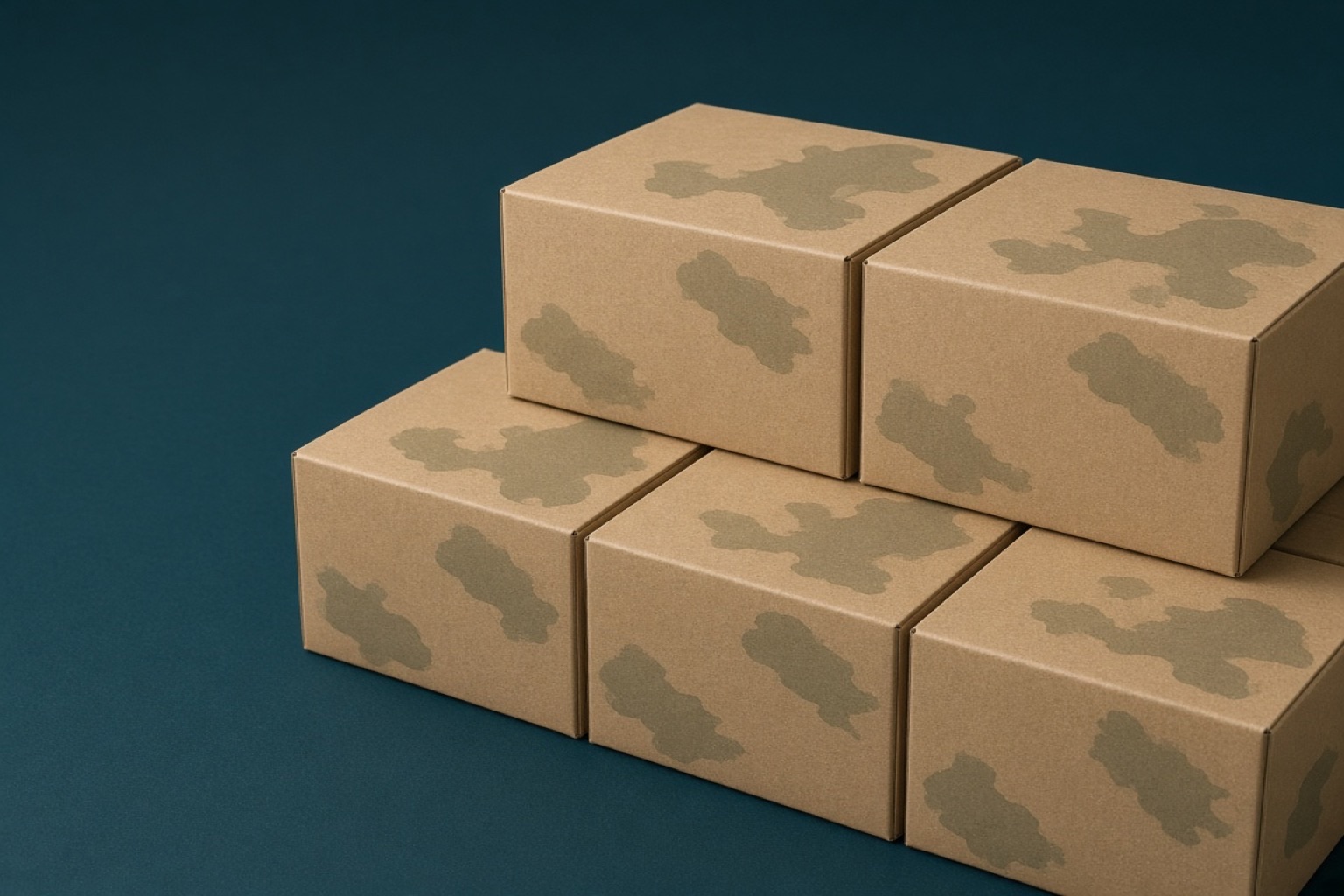
| Heavy coverage on all four sides | Meaningful |
| Full-bleed coverage top to bottom | Meaningful, and often unaccounted for |
| Heavy coverage plus a die-cut window | Meaningful and compounded |
The last two are where print decisions and strength decisions collide, and neither team usually sees the other's constraint.
The design rules worth adopting
- Keep a clear band on load-carrying panels. A margin of unprinted board at the top and bottom edges where the load transmits is the cheapest protection there is.
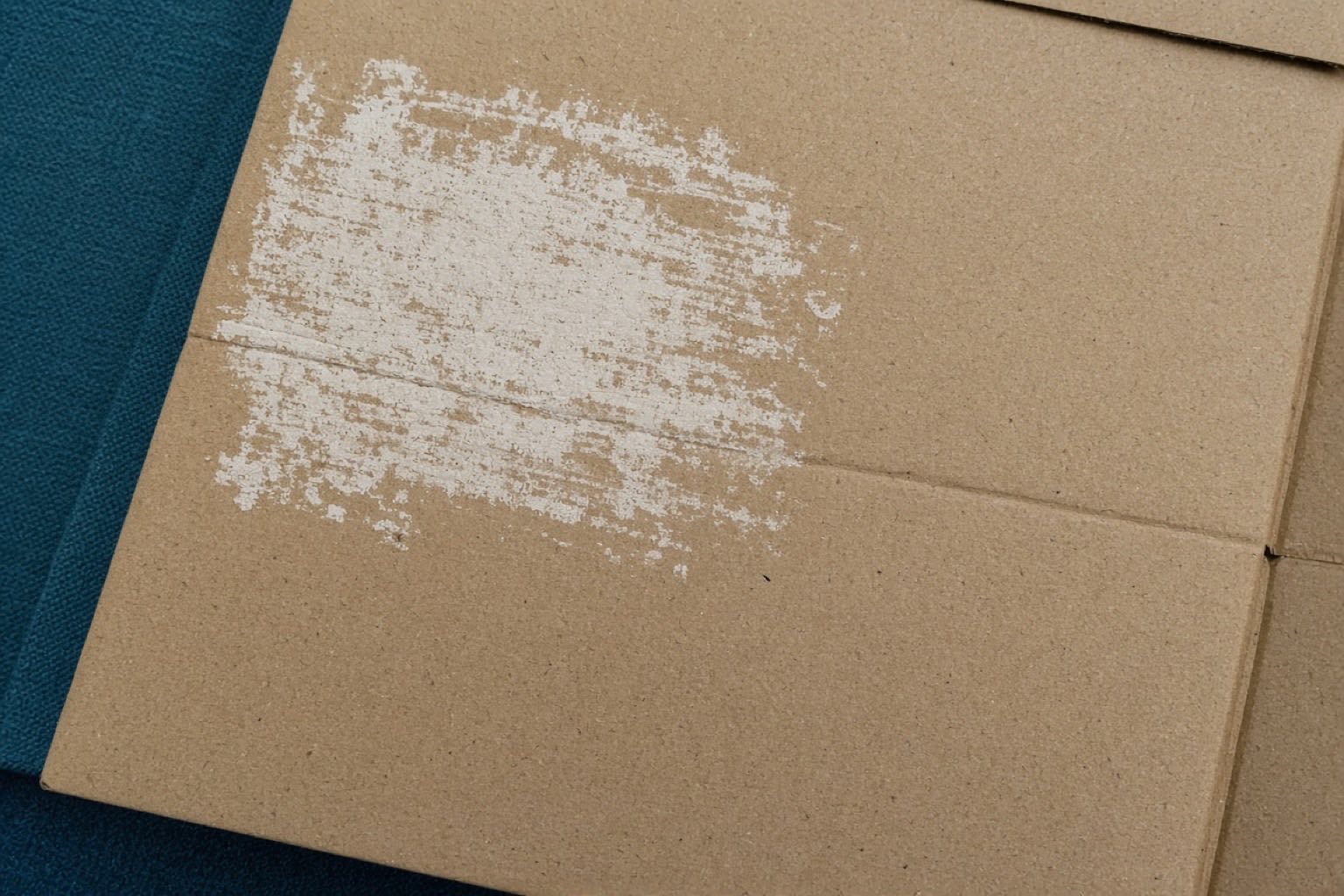
- Do not print across scores and joints. These are the areas that fold and carry, and interrupting them helps nothing.
- Treat full coverage as a design change, and test the box if it is close to its duty.
- Consider the panel that is seen. Often only one or two faces need the full treatment.
None of these constrain a design much. They do require the conversation to happen before artwork is approved rather than after a failed test.
The commercial trade
Print is not free, and neither is strength. The exchange rate runs like this:
- Fewer colours means fewer stations, less ink, less set-up. A one-colour design converted from three is often the cheapest change in a packaging review, and it does not touch the board.
- Less coverage means less ink and, at the margin, more strength.
- Less print on load panels means the option to reduce board later.
That third point is the interesting one. A design that keeps its load panels clear preserves a future saving, and a design that covers them forecloses it silently.
The judgement
Print and strength are usually run by different people with different objectives, and the interaction is nobody's responsibility. Making it someone's responsibility costs one meeting and occasionally pays for a board reduction.
Sources
- TAPPI T811 and ISO 3037, edgewise crush resistance of corrugated board.
- ASTM D642, Standard Test Method for Determining Compressive Resistance of Shipping Containers, Components, and Unit Loads.
- TAPPI T402 and ISO 187, standard conditioning atmospheres: 23 °C, 50% relative humidity.
- Fibre Box Handbook (Fibre Box Association) — printing processes and board handling.
- FEFCO and ESBO standard box styles — panel and score geometry.
The size of the print effect depends on process, coverage and the board. Test the finished box where strength is close to the duty.
Questions
- Does printing reduce box strength?
- It can. Heavy print coverage, particularly across a panel that carries load, can interrupt the liner surface and reduce compression strength. Light print in a small area has a minimal effect.
- Why does print affect strength at all?
- Because the liner is doing the work. Ink, and especially the heat and pressure of some print processes, affect the surface of the board. Wide coverage across a panel that carries a vertical load removes a little of the margin.
- Which panels matter most?
- The ones that carry the stack, which are usually the side panels in a normal orientation. Print on the top and bottom panels matters less for compression but still matters if the box is laid differently.
- Is digital printing better than flexo for strength?
- It is not automatically better, but it applies ink differently and is often used for short runs with variable artwork. Ask what the process does to the board and test if the box is close to its duty.
- Should I reduce print to save money?
- Print reduction saves ink, plates and set-up time, which are real. It may also recover strength, which can then allow a lighter board. Start with what the box needs to say, not with what it could say.
Check your own boxes, free
Send the spec sheet you already have. Results in about a day; you pay only for the boxes improved.
About the author

Ashish KD Mathpal (PackPrism | PackWares)
Founder, PackPrism · packaging cost advisory
Twenty-two years in packaging, most of it on paper and paperboard: how a board carries load, why a specification is what it is, and where the cost quietly leaks out.