Export boxes: what actually changes when the box leaves the country
Export adds a sea leg, a port dwell and a customs inspection. It does not, usually, add a legal wood-packaging requirement to a corrugated box.
Export packaging conversations tend to start with a certificate and end with a heavier box. Both instincts are mostly wrong, and both are expensive.
What export actually changes is the life the box has to survive. What it rarely changes is which regulation applies to the material the box is made from.
The ISPM-15 confusion, cleared up
ISPM-15 is the international standard for solid wood packaging material — the phytosanitary measure that stops wood-boring pests travelling in pallets, crates and dunnage. Regulated wood has to be heat-treated or fumigated and stamped with the IPPC mark, including the country code and the treatment code.
Corrugated board is a processed paper product. It is not solid wood, and it is not the regulated article. A corrugated box does not need an ISPM-15 stamp, and demanding one from a supplier produces either a puzzled email or, worse, a charge for a certificate that means nothing.
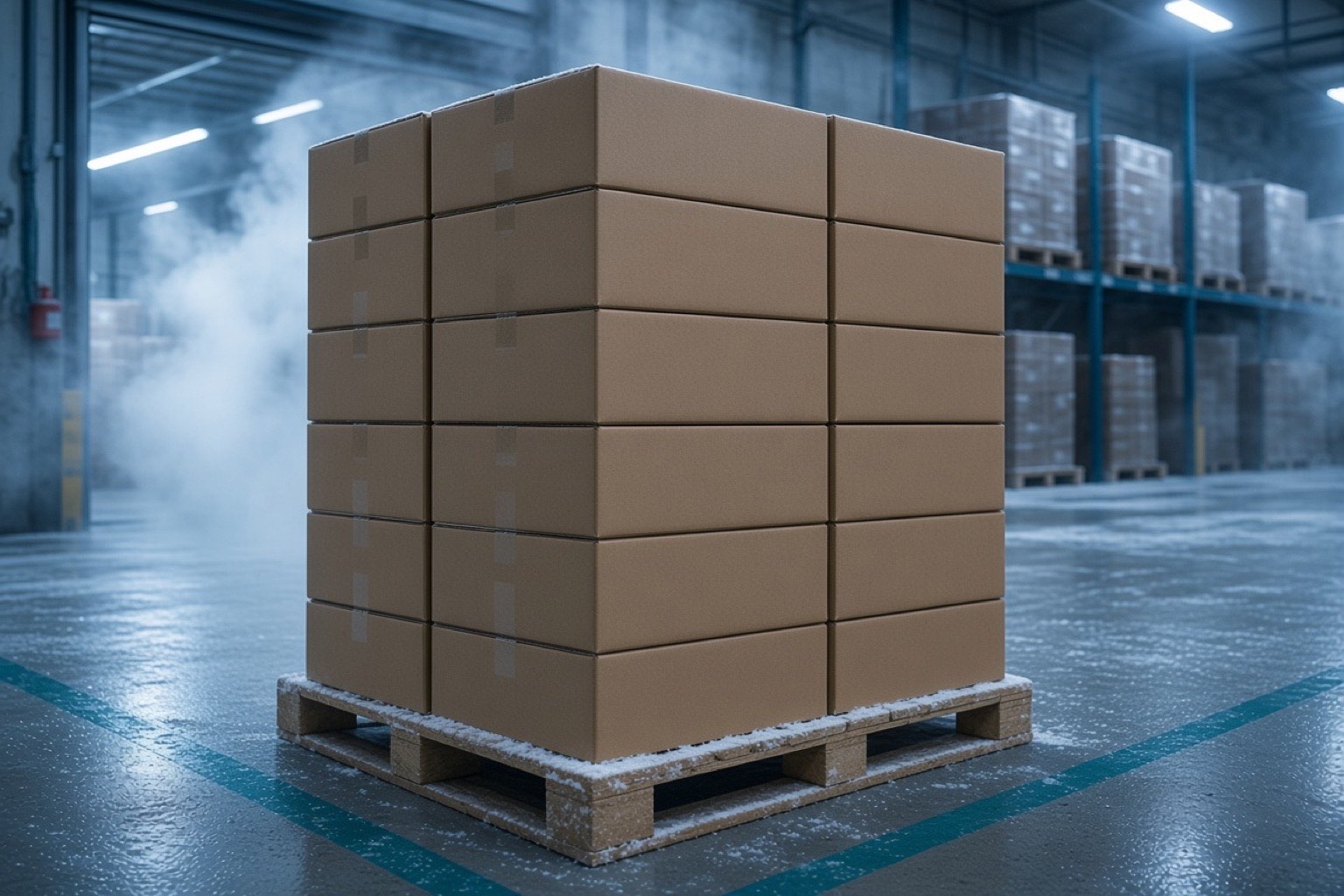
Where the regulation does bite is the pallet underneath it. Wooden pallets, crates, and the timber dunnage used to brace a load are all in scope. If your cartons travel on a wooden pallet, the pallet is the item that must be compliant — and that is a real, checkable requirement with a real mark on it.
One line worth carrying into every export review: the box is not the regulated article; the wood around it is.

What a sea leg actually does to a box
Four effects, all of them cumulative:
- Time under load. A container is packed and the boxes sit under the same load for weeks, plus a port dwell at each end. Corrugated board creeps under sustained load, so the box has to carry the stack for far longer than a domestic consignment asks.
- Humidity. Board strength falls as moisture content rises. A container is not sealed against humidity, and a humid destination port adds to it.
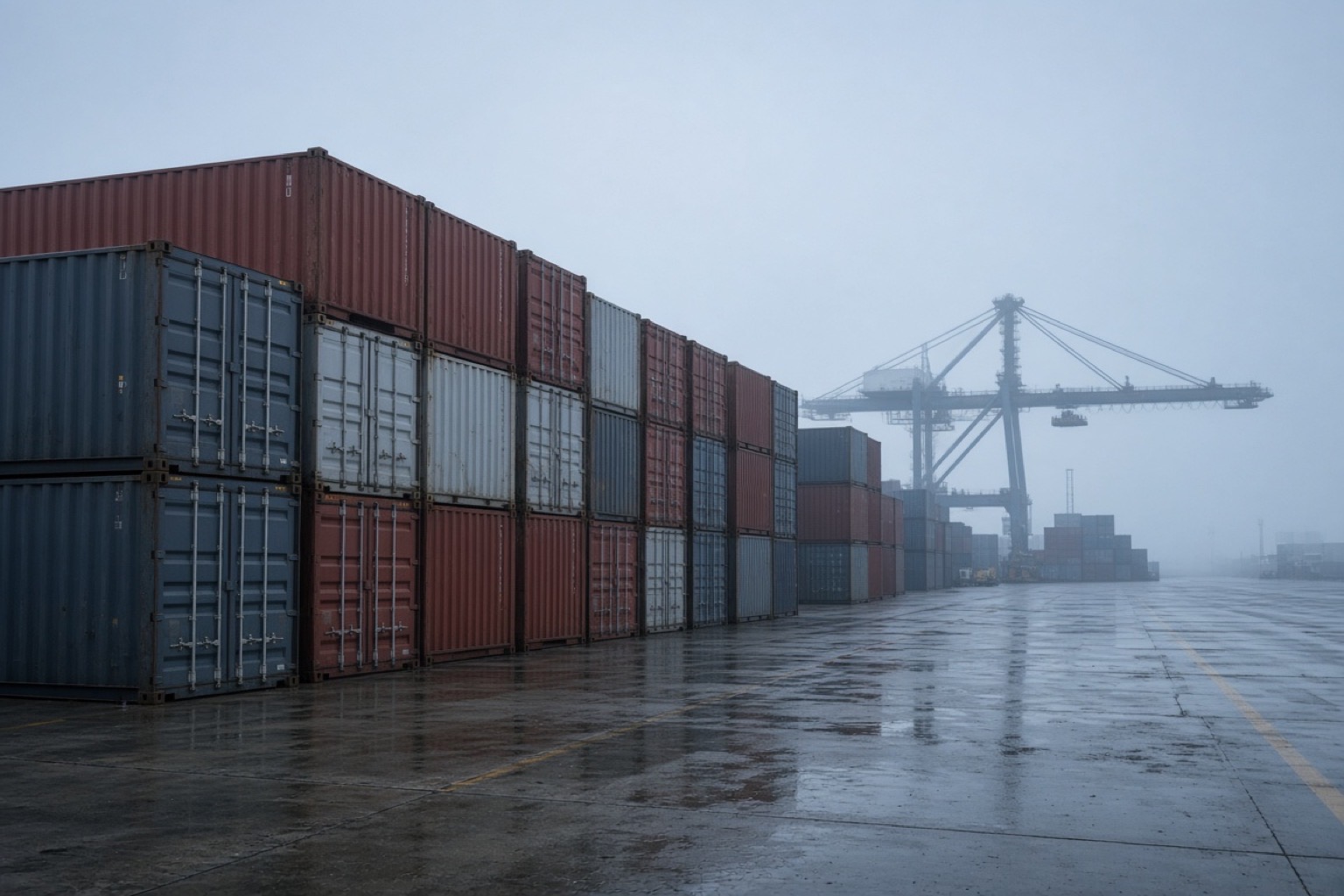
- Condensation. Day-night temperature swings condense water on the container's steel, which drips onto the load. This happens on a dry dispatch in fine weather, and it is not the supplier's fault.
- Handling. More transfers means more drops, more impacts, more stacking by people who have no reason to be gentle.
Domestic distribution has all four in some measure. Export compresses them into one journey and raises the stakes, because a failure is discovered in another country after the goods are already late.
What to change, and what not to
Change the margin, not the philosophy. The load arithmetic does not change: weight per box times the number of boxes above the bottom one. What changes is the safety factor you apply to it, because the dwell is longer and the humidity is higher.
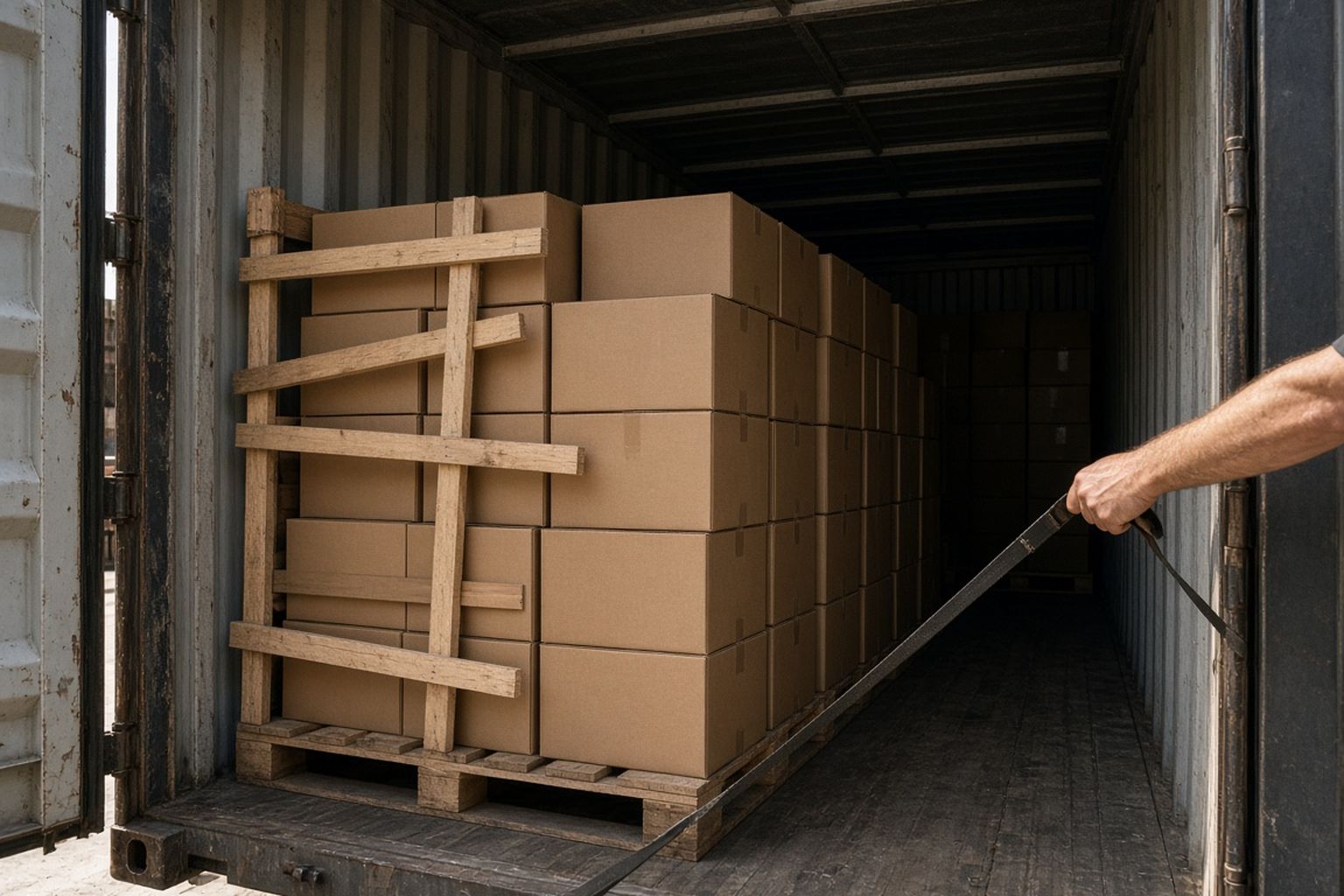
Change the pallet plan. Export pallets are often built to a different footprint, stacked higher, and braced with timber that must be compliant. The stack height in the specification should be the export stack, not the warehouse one.
Do not add a ply reflexively. A second flute costs paper on every box, for the life of the specification, to solve a problem that may be a fit issue or a stacking issue. Check the duty first.
Do not treat moisture coating as a default. It works, and it costs. Where the humidity path cannot be fixed — a long sea leg with a slow clearance — it is a considered decision. Where a pallet, a wall gap and a shorter dwell would have solved it, it is waste.
The test that replaces the argument
Export is the one place where a physical test pays for itself with a single avoided claim. The practice standards are well established:
- ASTM D4169 for a distribution cycle, chosen to match the route;
- the ISTA series for parcel and packaged-product performance;
- ISO 4180 for planning the test in the first place.
Whatever the protocol, the components are familiar: drop, vibration, compression, and often a conditioning period at high humidity before testing. A box that passes that sequence has evidence behind it. A box specified on board weight has an opinion.
What to put on an export specification
- The construction, layer by layer, with GSM and BF per layer — as for any box.
- The strength duty, with the export stack height written down and separated from the domestic one.
- The pallet: type, footprint, material, and whether it is ISPM-15 compliant.
- The route: origin, destination, approximate transit and dwell, and whether the container is a full load or consolidated.
- The test acceptance: which protocol, and what counts as a pass.
- Any moisture treatment, named, with the reason it was chosen.
That is a specification a supplier can price without guessing, and a specification you can defend when a claim arrives four weeks later.
Sources
- ISPM-15, Regulation of wood packaging material in international trade, under the International Plant Protection Convention — the standard for solid wood packaging, including the IPPC mark.
- ASTM D4169, Standard Practice for Performance Testing of Shipping Containers and Systems.
- ISTA series, packaged-product performance tests for distribution.
- ISO 4180, Complete, filled transport packages — General rules for the planning of performance tests.
- ASTM D642, Standard Test Method for Determining Compressive Resistance of Shipping Containers, Components, and Unit Loads.
- ASTM D5639, Standard Practice for Selecting Performance-Based Safety Factors for Corrugated Fiberboard Containers.
- TAPPI T402 and ISO 187, standard conditioning atmospheres: 23 °C, 50% relative humidity.
Regulatory scope and destination requirements vary by country and change. Confirm the applicable rules for your route before shipment; the summary above is practice guidance, not a customs ruling.
Questions
- Does ISPM-15 apply to corrugated boxes?
- Generally no. ISPM-15 regulates solid wood packaging material — pallets, crates, dunnage and blocking — to stop the spread of pests. Corrugated board is a processed paper product, so it is not the regulated article. The confusion costs buyers real money, because they sometimes insist on a stamp for packaging that does not need one.
- What does need ISPM-15 treatment in an export shipment?
- Any solid wood used as packaging — wooden pallets, crates, boxes and dunnage — needs to meet the standard and carry the IPPC mark with the country code and the treatment. If your cartons sit on a wooden pallet, the pallet is the regulated item.
- Do export boxes need to be stronger?
- Often, but not because a rule says so. A sea leg adds weeks of load at high humidity, container condensation, repeated handling and a port dwell. Those conditions reduce what a box carries, so the same box that is fine on a domestic route may need more margin on an export one.
- Which tests are used for export packaging?
- ASTM D4169 and the ISTA series are the common practice standards for distribution testing, and ISO 4180 sets out how to plan a performance test. Which test applies depends on the route and on what your buyer requires; always confirm against the purchase order.
- Is a moisture-resistant coating worth it for export?
- Where the humidity path cannot be fixed — a long sea leg, a humid destination, a slow customs clearance — it can be. It costs money, so it should be a decision based on the route rather than a default added to every export carton.
Check your own boxes, free
Send the spec sheet you already have. Results in about a day; you pay only for the boxes improved.
About the author

Ashish KD Mathpal (PackPrism | PackWares)
Founder, PackPrism · packaging cost advisory
Twenty-two years in packaging, most of it on paper and paperboard: how a board carries load, why a specification is what it is, and where the cost quietly leaks out.