
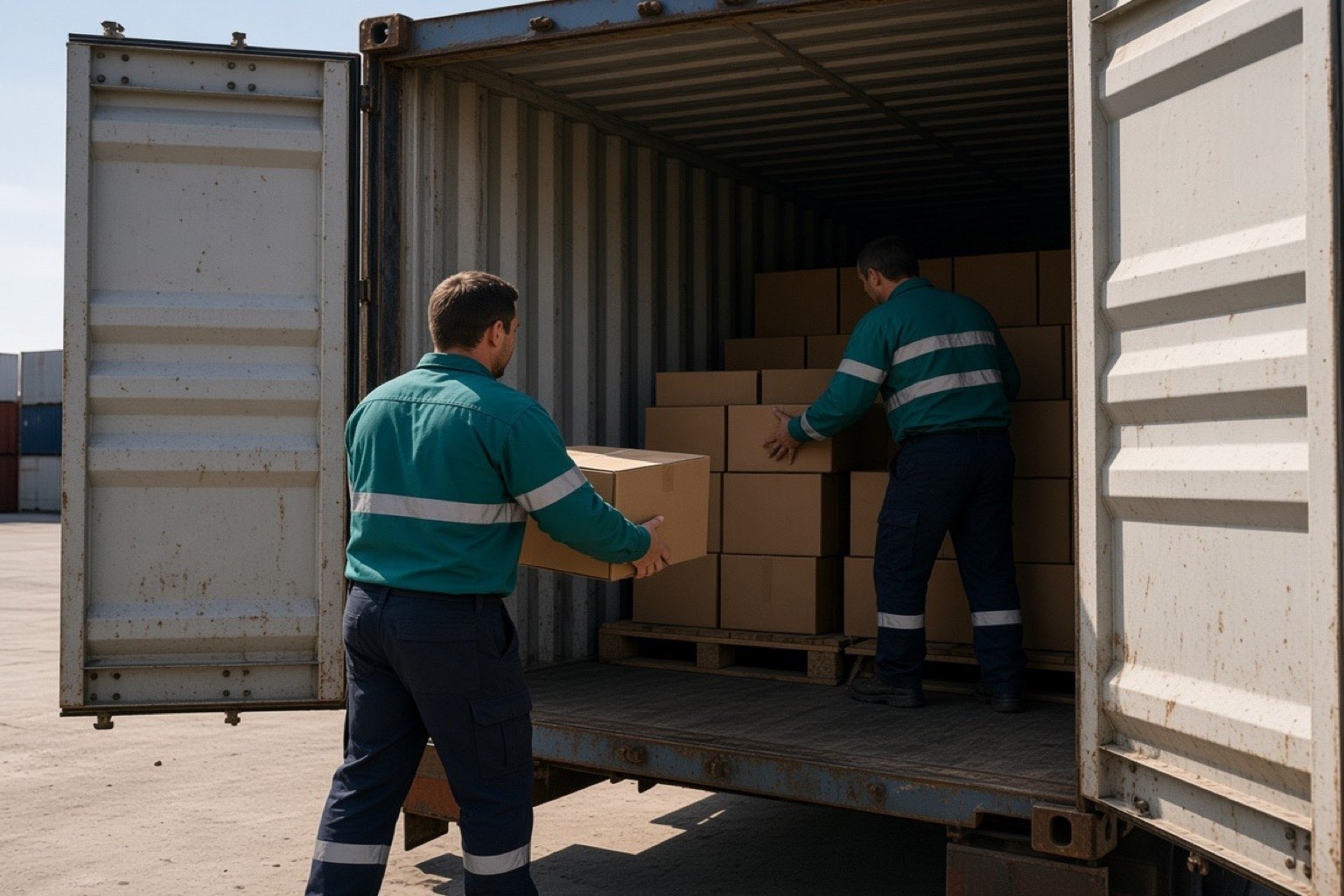
Container loading: when a box is really a cube decision
Filling a container is a volume problem with a weight ceiling. A millimetre of box height can decide whether a shipment pays.
An export shipment is a fixed amount of space you have already paid for. Whether that space arrives full or three-quarters full is usually decided months earlier, by the height of a box.
Two ceilings, not one
A container has a volume limit and a weight limit. Which one binds depends on the product:
- Dense products — tiles, liquids, hardware — hit the weight ceiling and leave cube unused. The only lever is weight per unit, and box dimensions barely matter.
- Light products — packaged goods, appliances, furniture — hit the volume ceiling with weight to spare. Here dimensions are everything.
Most exporters of consumer goods are in the second group and optimise as though they were in the first.
Why height decides
In a palletised load, the arithmetic is unforgiving:
Layers that fit = floor(usable internal height ÷ (box height + pallet height))
That floor function is the whole problem. A container loaded with pallets has an internal height, and a pallet deck consumes some of it. If the remaining height divides into 7.4 box heights, you ship 7 layers and lose the rest.
A box a few millimetres shorter can turn 7 layers into 8 — a double-digit improvement in freight per unit, from a change nobody would notice on a drawing.
The same effect applies laterally: a box a few millimetres narrower can fit an extra column, or stop a pallet from overhanging.
The specifications that block it
Three common reasons a box height never gets revisited:
- Internal dimensions are fixed by the product. Fair, but the external height then needs to be the minimum that protects it — not the minimum plus a habit.
- Flap allowance was never questioned. Flap length follows from width, but the number that ends up on a drawing is often a round number above the minimum.
- The box was sized around a pallet that was itself never checked. Pallet height varies with deck type and condition.
Each is a millimetre-level opportunity at a container level of consequence.
A quick way to size the prize
Before anyone talks about tooling:
- Take the usable internal height of your container and the height of your pallet deck.
- Divide by your current box height. Note the remainder.
- Work out what box height would add one more layer, and whether the product would still fit with its packing.
- Multiply the extra units by your annual shipments.
If step 4 is not interesting, stop. If it is, you have a business case for a conversation with your box maker, and it is a much easier conversation than asking for a price cut.
The caution
Shaving height reduces the internal volume available for the product and the fitment, and it reduces the panel height that carries load. Both need checking:
- Does the product still fit with its inner packing and any clearance it needs?
- Does the box still meet its compression duty at the new height? Shorter is usually better for stacking, but the board and the load both change.
So this is a design change, not a trim. It needs a compression check and a real pack on a real pallet before it goes into a purchase order.
The judgement
Container loading rewards the buyer who treats box dimensions as a commercial variable rather than a given. Most of the money is in height, most of the time is spent on price, and the two are decided by different people.
Sources
- ISO 668, Series 1 freight containers — Classification, dimensions and ratings.
- ISO 1496-1, Series 1 freight containers — Specification and testing.
- ISO 6780, Flat pallets for intercontinental materials handling — Principal dimensions and tolerances.
- ISO 3394, Dimensions of rigid rectangular packages — Transport packages.
- ASTM D642, Standard Test Method for Determining Compressive Resistance of Shipping Containers, Components, and Unit Loads.
Usable internal height varies by container type and condition. Measure the container you actually load rather than relying on a nominal figure.
Questions
- What is the most common container loading problem for exporters?
- Not weight but height. Most palletised loads run out of vertical space before they run out of floor, so a small reduction in box or pallet height can add a whole layer.
- Should I load the container loose or palletised?
- Loose loading uses more of the cube but costs more handling time and can increase damage. Palletised loading is faster and safer but wastes vertical space. The right answer depends on labour cost, product fragility and the destination's handling.
- How much height does a pallet add?
- A standard pallet deck takes up real height, and the crown of the pallet can leave gaps under the load. That is why some exporters reduce box height to gain a layer rather than accept a partly filled container.
- Does box dimension affect container loading more than box strength?
- For the freight bill, often yes. Strength decides whether the product arrives intact; dimensions decide whether you paid for space you did not fill. Both are specification decisions and both are usually made once and never revisited.
- What is the practical first step?
- Work out how many of your current boxes fit a container by volume and by height, then see what a small dimension change would do. It is arithmetic you can do on a spreadsheet before anyone commits to a tooling change.
Check your own boxes, free
Send the spec sheet you already have. Results in about a day; you pay only for the boxes improved.
About the author

Ashish KD Mathpal (PackPrism | PackWares)
Founder, PackPrism · packaging cost advisory
Twenty-two years in packaging, most of it on paper and paperboard: how a board carries load, why a specification is what it is, and where the cost quietly leaks out.