Your box price moved. Your specification did not. Here is why
Between the paper reel and the invoice sit deckle, trim, conversion and freight. Understanding them is how a buyer argues a price with evidence.
A price increase arrives with a sentence attached: "paper has gone up". Nine times out of ten the sentence is true. The tenth time, the increase is real but the reason is different — power, freight, a plant running full, a job that has always been under-priced and is now being corrected.
You cannot win either argument by opinion. You can win both by knowing where the price comes from, because a box price has four parts and only one of them is in your specification.
The four parts of a box price
| Part | What drives it | Can a buyer influence it? |
|---|---|---|
| Paper | Kraft rates, the board's construction, waste allowance | Yes, directly — this is the specification |
| Conversion | Running speed, machine set-up, order size, starch, power | Partly — through order size and pattern |
| Freight and handling | Distance, palletisation, delivery frequency | Yes, through logistics choices |
| Margin | Plant's order book, competitive situation | Indirectly, through alternatives |
Every quotation you receive is a single number covering all four. That is why two suppliers quoting "the same box" can be 15% apart with neither being dishonest — they may be running it on different machines, at different order sizes, or from different paper positions.
Paper, and why the construction matters more than the rate
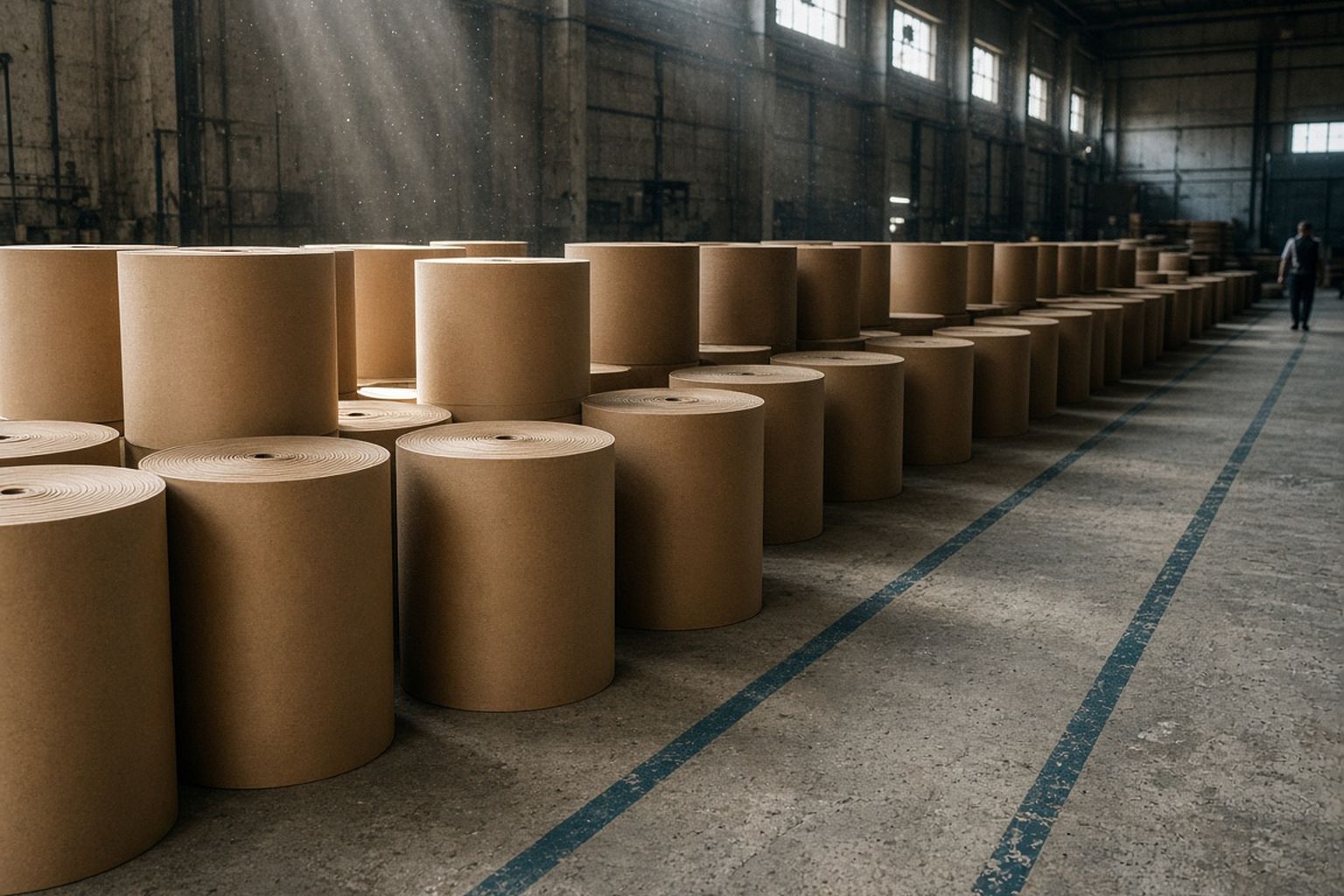
Paper is the largest part of most box prices. Your leverage there is not the rate — you do not buy paper — it is the quantity of paper the box demands.
Quantity is fixed by the construction: ply count, GSM of each layer, flute take-up, and the blank size. Two boxes with identical external dimensions and identical strength can demand different quantities of paper. That difference is where a saving lives, and it is invisible in a price comparison.
This is why a price-per-box negotiation and a specification review are different activities. The first moves margin. The second moves paper.

Trim: the cost you never see
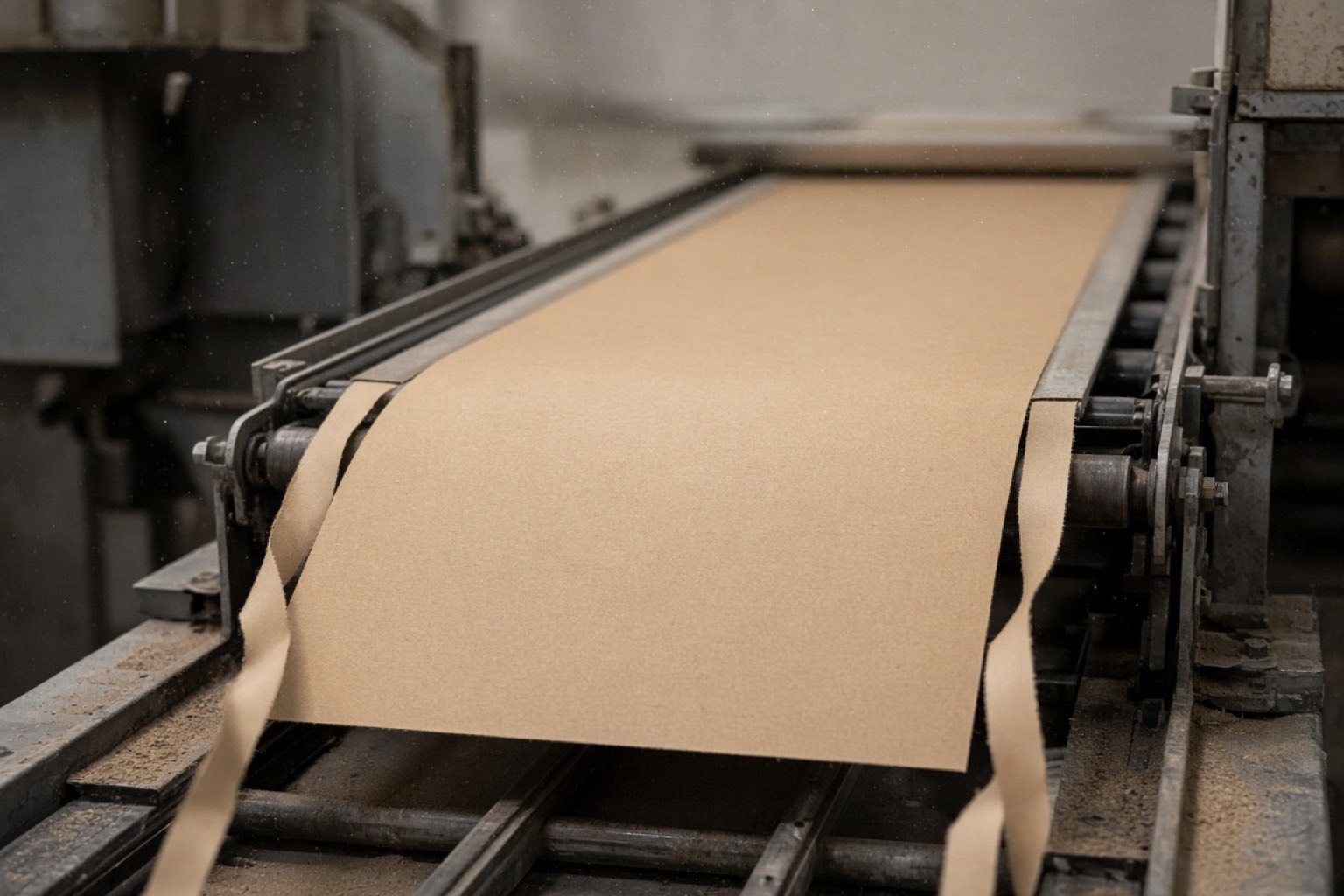
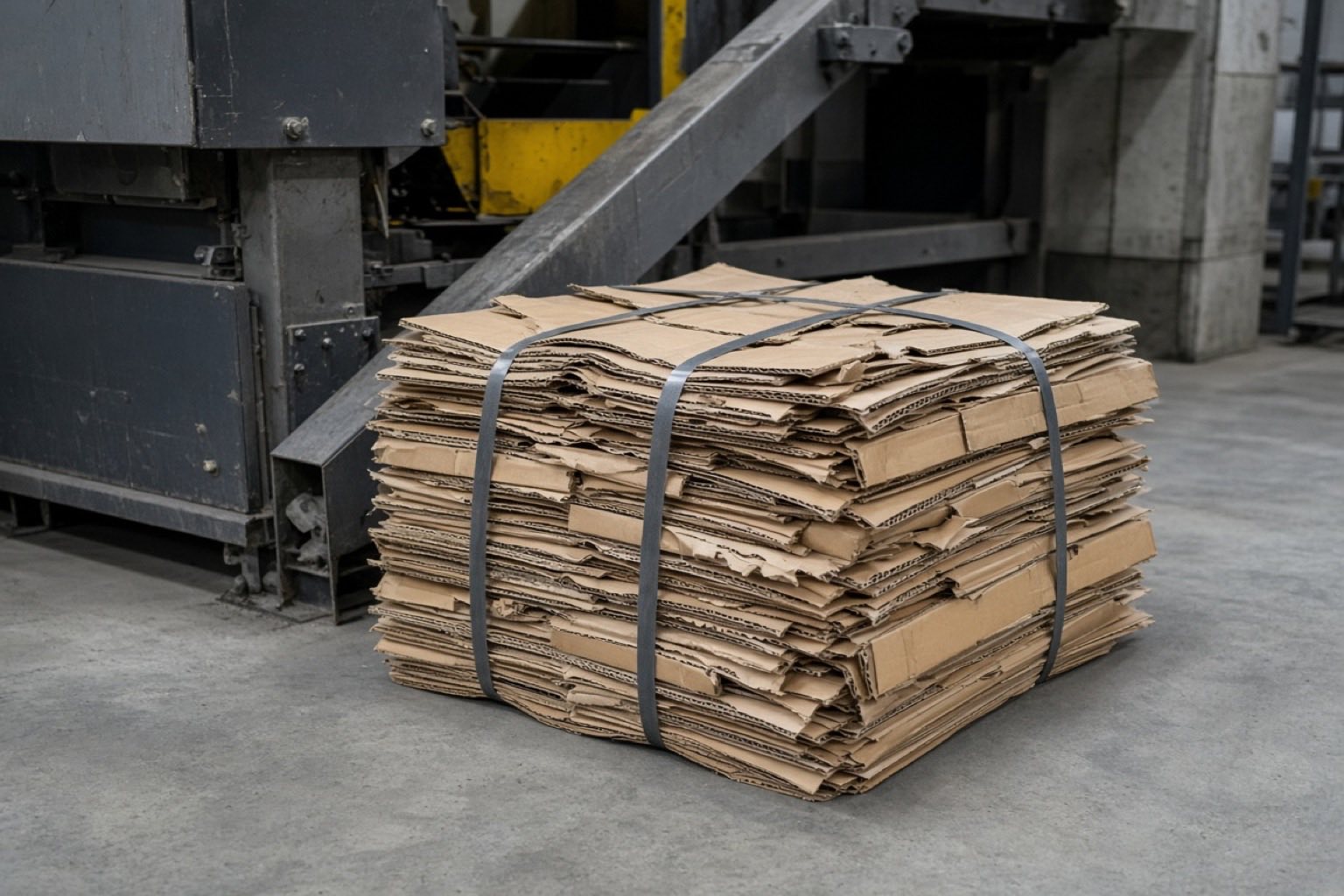
A corrugator runs a web of a fixed width — the deckle. Your box's blank has to fit into that width along with whatever else is running. Whatever does not fit is trim: board cut away and sold back as waste paper, typically at a fraction of what it cost.
Three practical consequences:
- Box size affects trim. A small change in a flap allowance or a dimension can move a blank into a better fit across the deckle. That is a real cost event inside the plant, and it is why some suppliers will quote a slightly different box size at a noticeably better price.
- Order size affects trim. A long run amortises a set-up across more boxes. A short, awkward run carries the same set-up across fewer.
- Combinations affect trim. A plant that can run your box alongside a compatible job trims less. A plant with a full schedule and no compatible partner trims more.
None of this is visible in "paper has gone up". All of it is legitimate. If a supplier cannot tell you which of these is at work, that is not proof of bad faith — but it is a reason to ask for the paper rate and the quantity separately.
The one number that makes the argument arithmetic
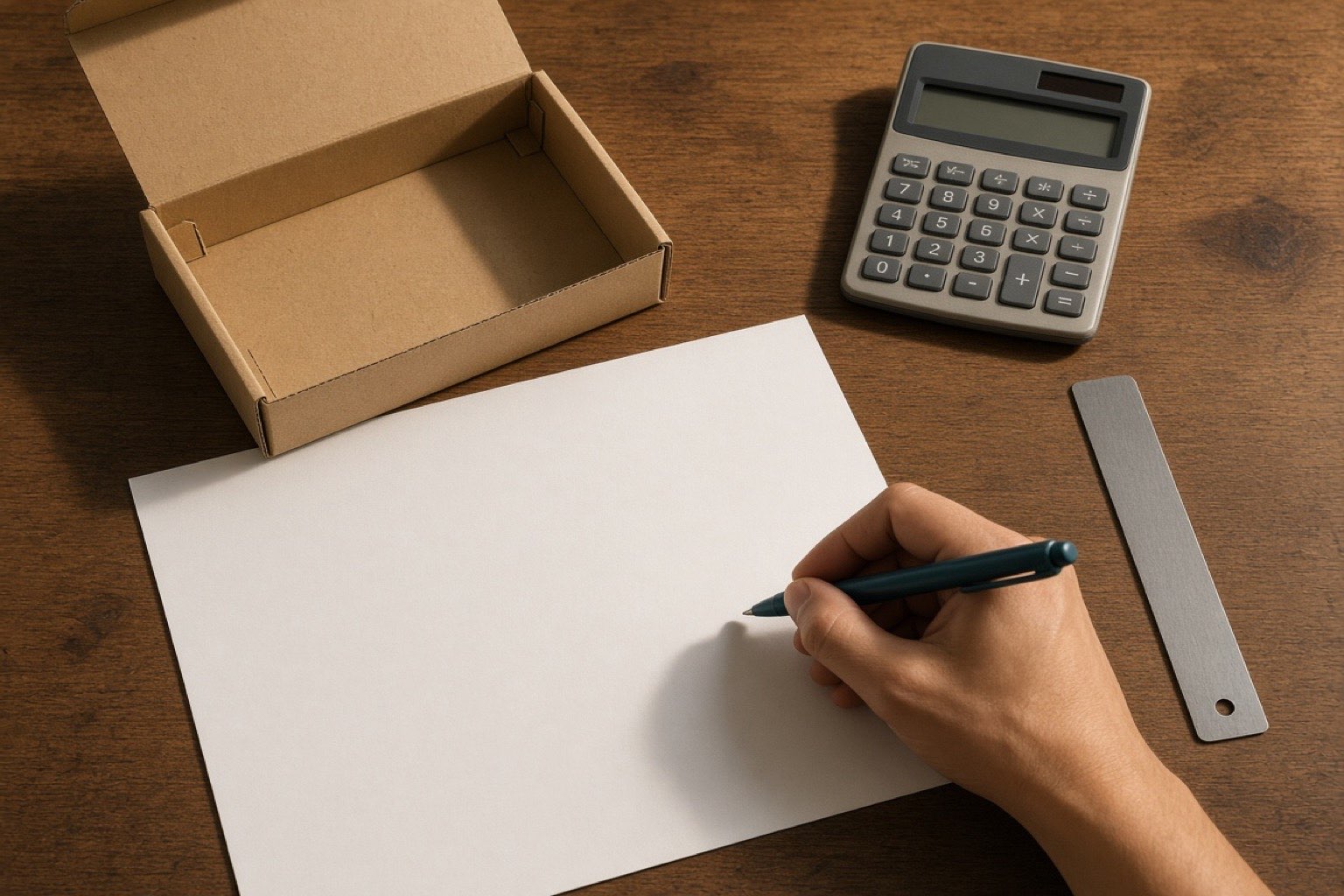
You can compute the rupee impact of a paper increase yourself, without any plant data:
Realisable paper weight per box × paper rate per kg = paper cost per box.
The weight comes from the box's blank area and the grammage of every layer, with the flute take-up accounted for. Multiply by the rate, add the plant's waste allowance, and you have the part of the increase that paper explains. Anything above that is conversion, freight or margin — which are also real, but are now a separate conversation.
That single calculation changes the tone of a meeting. "Your price went up 9% and kraft moved 4%" is a suspicion. "Your price went up 9%; this box holds 0.62 kg of paper, so the paper part of that is about 4.1%" is a question with a number in it.
What to ask, in order
- What is the paper rate you are using, and from when? Check it against a published kraft series for the grade in question.
- What is the paper weight in this box? If the answer is not available, that itself is information.
- Has anything else changed — order size, pattern, delivery frequency, machine? Price increases cluster around changes in how a job is run.
- What would make this box cheaper without making it weaker? This is the question that finds the saving, and the best suppliers answer it gladly.
Where this leaves the buyer
A price increase is rarely a lie and rarely the whole story. The useful posture is neither to accept nor to fight it, but to split it: this much is paper, this much is everything else, and this much could be designed out.
The last part is the one nobody brings to the table, and it is usually the largest. In a full run on one consumer goods specification — 120 boxes — 46 could be made cheaper under at least one strength standard without ever being made weaker, saving about ₹1.36 crore of paper a year. None of that came from negotiating harder. It came from checking whether the paper in each box was the paper its load required. The case study sets out how that run was done.
Sources
- TAPPI T811 and ISO 3037, edgewise crush resistance of corrugated board.
- ASTM D642, Standard Test Method for Determining Compressive Resistance of Shipping Containers, Components, and Unit Loads.
- ASTM D5639, Standard Practice for Selecting Performance-Based Safety Factors for Corrugated Fiberboard Containers.
- FEFCO standard box styles documentation — blank geometry and flap allowances.
- Fibre Box Handbook (Fibre Box Association) — board construction, take-up and waste practice.
Conversion and trim practice varies by plant and machine. The arithmetic above separates paper from everything else; it does not tell you what a specific plant should charge for the rest.
Questions
- Why did my box price go up if the paper price did not change?
- Because paper is not the only input, and the other inputs move too — power, starch, labour, freight and the plant's order book all feed the price. A supplier raising a price in a flat paper market is not necessarily wrong, but they should be able to say which cost moved.
- What is trim loss in a box plant?
- Trim is the board cut away so a sheet fits the corrugator's running width. A box whose size divides badly into the available width produces more trim, and trim is paper bought and then sold back as waste at a lower value. It is one reason two similar boxes can carry different prices.
- What is a deckle?
- The running width of the corrugator, set by the combination of paper widths on the machine. A job that fits an available deckle efficiently wastes less board. It is a plant constraint that a buyer never sees on a quotation.
- Should I ask a supplier to break down their price?
- You can ask how much of the price is paper, and what paper rate was used. Many suppliers will answer that much, because it is checkable against published kraft prices. A full open-book costing is a bigger ask and depends on the relationship.
- How do I challenge a price increase?
- Ask for the paper rate and the date it was applied, then compare it with a published kraft price series for your grade, and check the weight of paper in your box so you can compute the rupee impact per box yourself. That converts the argument from a feeling into arithmetic.
Check your own boxes, free
Send the spec sheet you already have. Results in about a day; you pay only for the boxes improved.
About the author

Ashish KD Mathpal (PackPrism | PackWares)
Founder, PackPrism · packaging cost advisory
Twenty-two years in packaging, most of it on paper and paperboard: how a board carries load, why a specification is what it is, and where the cost quietly leaks out.