Conversion cost: what a box maker actually spends after the paper
Paper is roughly half a box price. The rest is what happens in the plant. Knowing the pieces makes a price argument possible.
Every conversation about a box price goes straight to paper, because paper is visible and quoted. The rest of the price — everything that turns paper into a box — is where a buyer's design choices actually do the most good.
What sits inside conversion cost
| Element | What drives it | Can a buyer affect it |
|---|---|---|
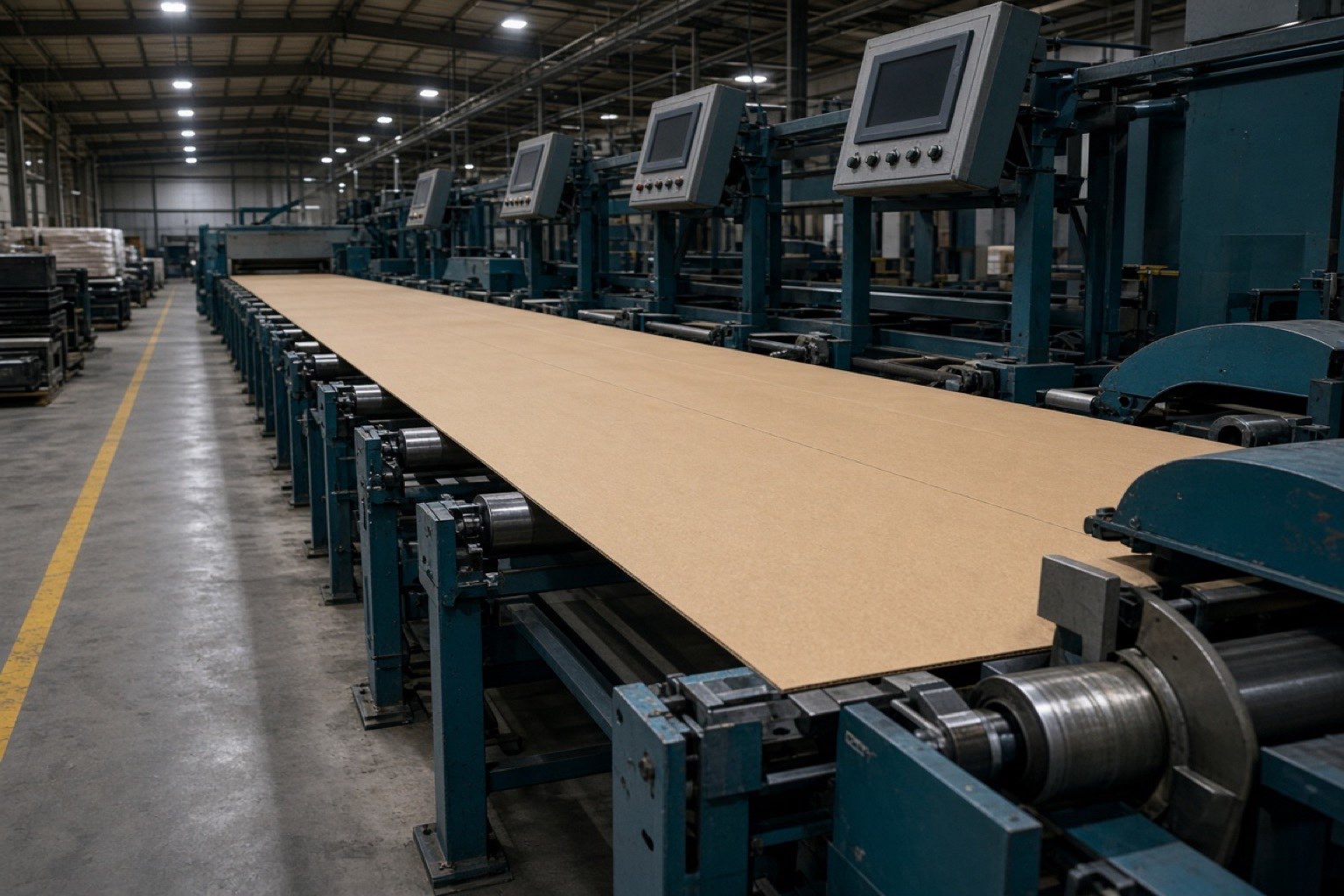
| Corrugating | Machine time, energy, adhesive | Only through board choice |
| Printing | Number and complexity of colours, set-up | Yes, directly |
| Die-cutting | Whether a die is needed, its complexity | Yes, directly |
| Gluing | Style, machine set-up | Via box style |
| Set-ups | Number of runs, not number of boxes | Yes, via order pattern |
| Labour and overhead | Plant cost base | No |
| Margin | Commercial | Negotiation |
The rows marked yes are the interesting ones, because they are design and ordering decisions rather than price arguments.
Set-ups are the quiet multiplier
A plant does not pay for set-ups per box. It pays per run. So the cost lands hardest on short runs with many changes.
Three patterns that inflate conversion cost without anyone noticing:
- Small, frequent orders of the same box instead of fewer larger ones.
- A large catalogue of similar sizes, each needing its own set-up.
- Print changes on every order, so the press is re-prepared each time.
Consolidating orders, standardising sizes and fixing artwork for a period all reduce work at the plant. Whether that appears in your price depends on the supplier, but it is a reasonable thing to ask about, and a much better question than "can you do 5% less".
The design decisions that cost money
Four, in rough order of effect:
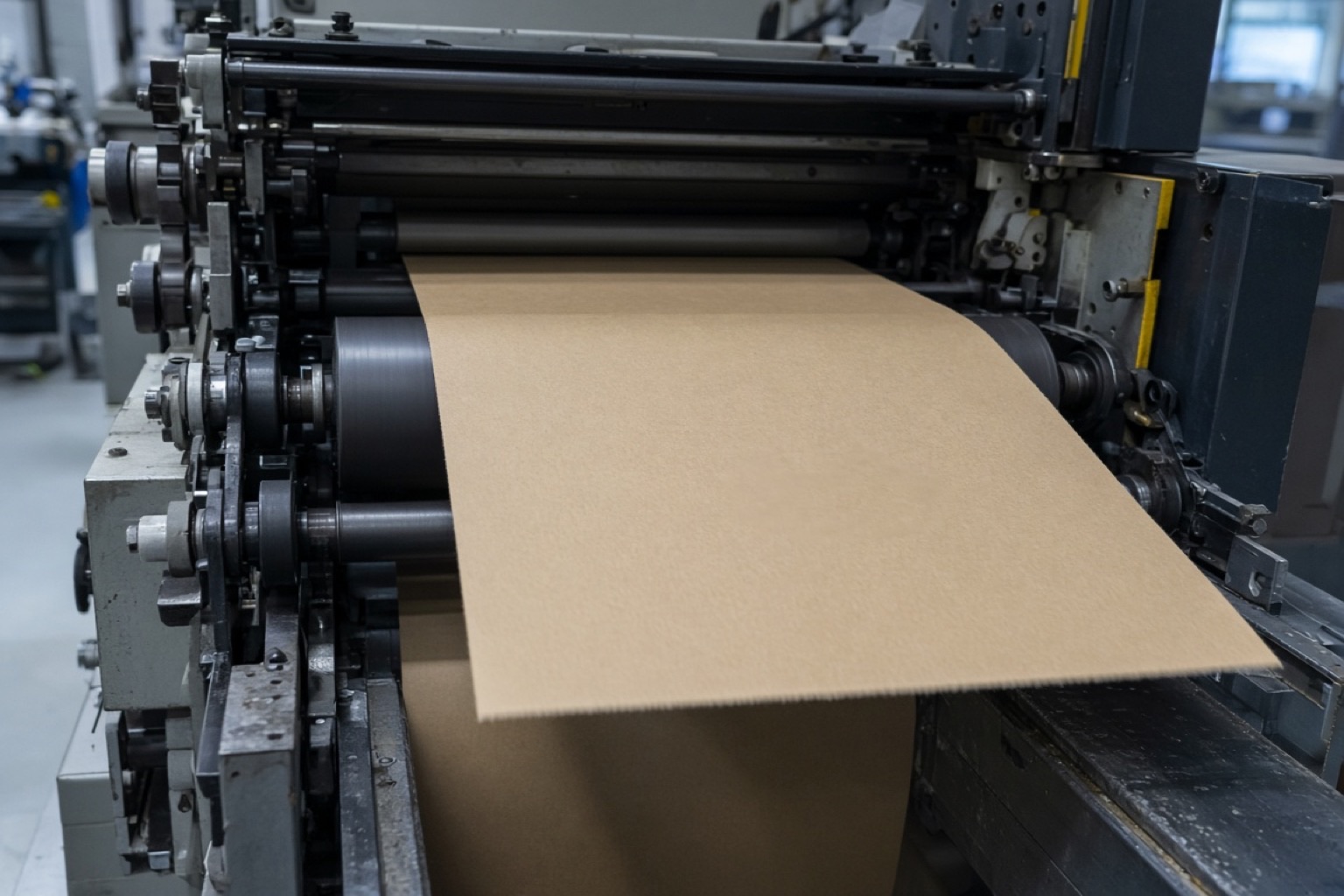
- Number of print colours. Each colour is a station and a set-up. A one-colour design converted from three is often the cheapest change available.
- Die versus slots. A die adds tooling and set-up time. If a slotted style will do the job, a die is buying presentation you may not need.
- Print coverage. Heavy coverage uses more ink and slows the press, and on a panel carrying load it can cost strength too.
- Box style complexity. More panels, more folds, more machine passes.
None of these are about paper, and all of them show up in the price.
What a buyer should conclude
Two things.
First, that a price comparison between two suppliers is only meaningful if the conversion scope is the same. A quote for a plain slotted case and a quote for a die-cut printed box are not comparable, even at the same internal dimensions.
Second, that the cheapest specification is usually the simplest one that does the job — not the lightest board. A design that removes a print station or avoids a die saves conversion cost without any risk to strength, which makes it a safer place to start than a paper reduction.
The judgement
Paper is the biggest number and the most argued over. Conversion is the number a buyer can change by deciding what the box needs to be. Start there, get the design right, and the paper conversation becomes much shorter.
Sources
- FEFCO and ESBO standard box styles — construction and machine implications.
- Fibre Box Handbook (Fibre Box Association) — board making, conversion processes and set-up practice.
- TAPPI T811 and ISO 3037, edgewise crush resistance of corrugated board.
- TAPPI T402 and ISO 187, standard conditioning atmospheres: 23 °C, 50% relative humidity.
Conversion cost structures differ by plant, machine and order book. Use these categories to structure a conversation with a supplier, not to estimate their margin.
Questions
- What is conversion cost in a box price?
- Everything the plant spends turning paper into a box: corrugating, printing, die-cutting, gluing, energy, labour, machine time, set-ups, overhead and margin. It is the part of a price that sits above the paper.
- What share of a box price is paper?
- It varies with the board and the market, but paper is usually the largest single element. A working assumption of roughly half is a reasonable starting point and should be checked against a specific specification.
- Why does a small order cost so much more per box?
- Because set-ups do not scale. Preparing a corrugator, a printer and a die-cutter takes time that is spread across the run, so a short run carries the same set-up over fewer boxes.
- Which conversion step should I care about most as a buyer?
- Print and die-cutting, because both add set-ups and both add cost per box. A design that removes a print pass or avoids a die costs less to convert without touching the paper.
- Can I negotiate conversion cost directly?
- You can influence it: longer runs, fewer changes, simpler print, standard dies. Halving the number of set-ups per year is a real saving to the plant, and it is reasonable to expect some of it to be reflected.
Check your own boxes, free
Send the spec sheet you already have. Results in about a day; you pay only for the boxes improved.
About the author

Ashish KD Mathpal (PackPrism | PackWares)
Founder, PackPrism · packaging cost advisory
Twenty-two years in packaging, most of it on paper and paperboard: how a board carries load, why a specification is what it is, and where the cost quietly leaks out.