
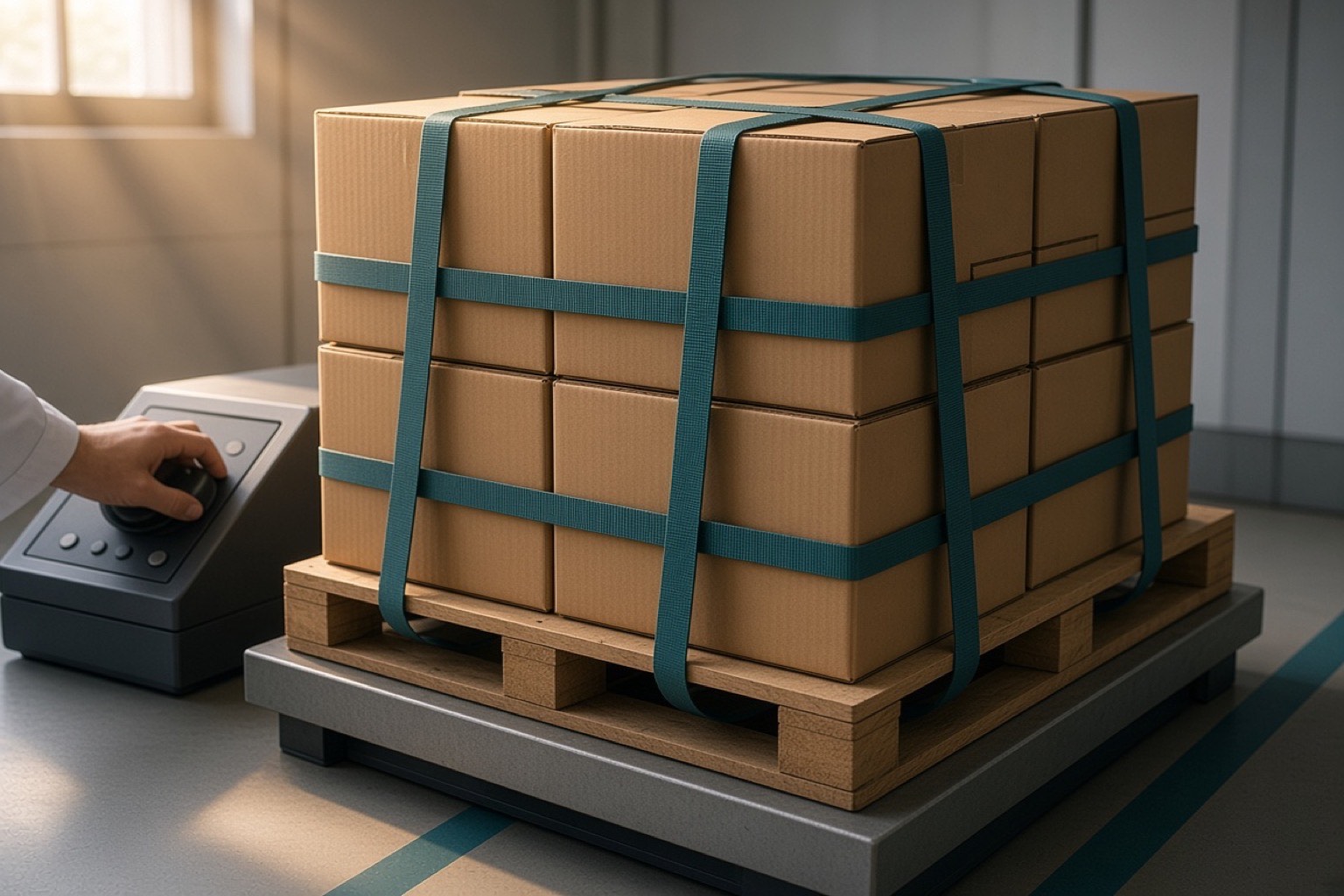
What a vibration test proves about your box
Vibration is the test that finds the damage a compression test cannot see. It simulates the road, not the warehouse.
Compression tests ask whether a box can carry a load while standing still. Vibration tests ask something different: whether the box and its contents survive being driven across a country.
Most packaging failures that reach a buyer's desk are the second kind, and most packaging specifications only ever address the first.
What vibration does that a drop does not
A drop is one event with a large amount of energy in a very short time. Vibration is thousands of small events over hours. Different mechanism, different damage:
| Effect | What it looks like | What it is |
|---|---|---|
| Settling | The load sinks and loosens | Product and pack compacting under repeated movement |
| Abrasion | Corners rubbed, board scuffed through | Boxes fretting against each other and the pallet |
| Fatigue | Bottom layer softens and bows | Sustained cyclic load on the board |
| Contents migration | Product shifted, inner pack opened | Repeated small displacements inside the box |
None of these show up in a compression test. All of them show up at the customer.
Why the bottom layer takes it
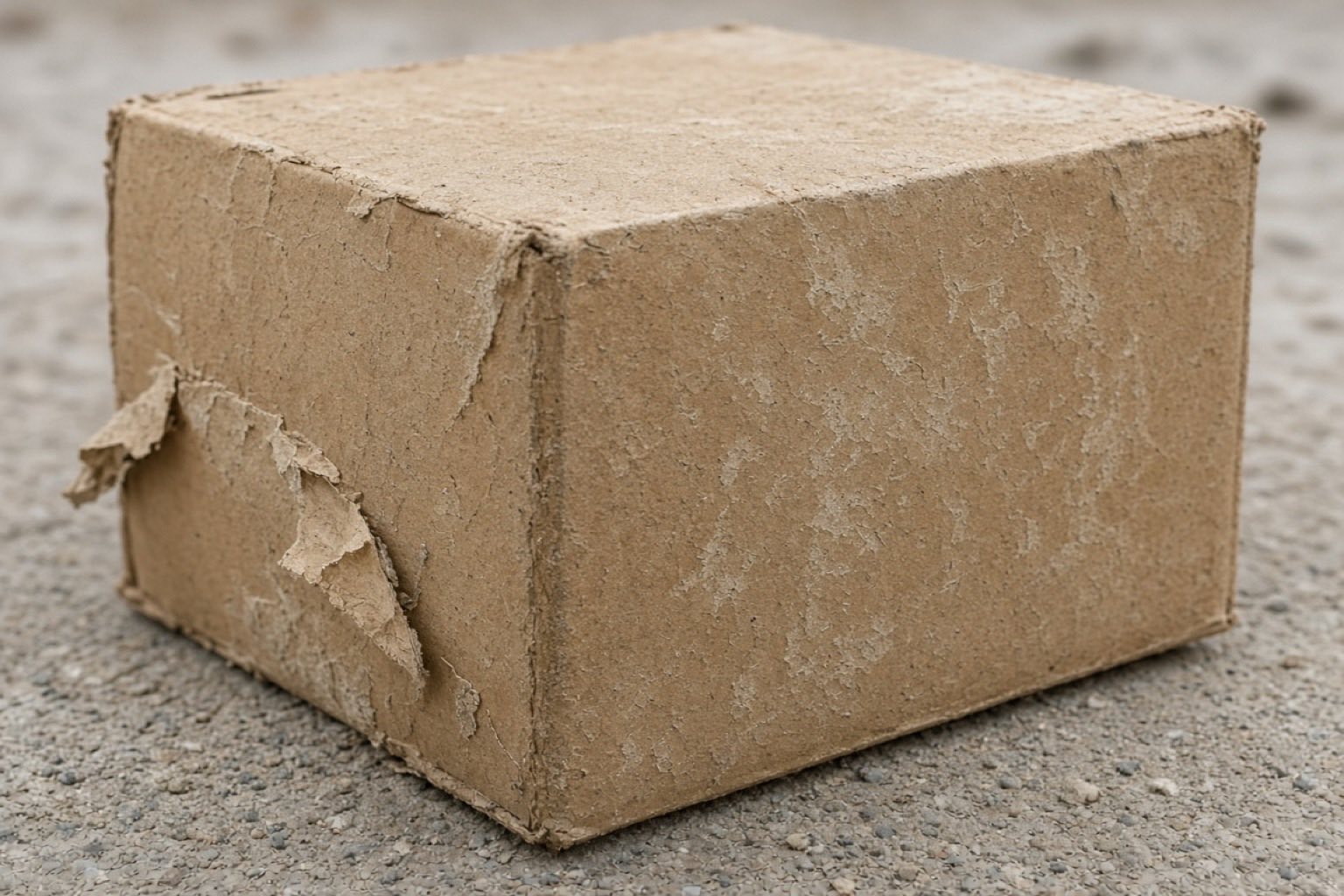
The bottom box carries the load and sits against the pallet, so it collects the vibration from the vehicle floor with the least cushioning between it and the source. Over a long journey that produces the familiar sight of a pallet whose top layers are pristine and whose bottom layer is soft, scuffed and bowed.
This is also why "the box was fine when it left" is usually true. It was fine. It was not fine for four days on a road.
The two levers a buyer actually has
One: the pack inside the box. Vibration damage is often about movement, not board. A product that can shift will shift, and every shift puts energy into the pack. Inner fitment, dividers and a correct internal dimension do more than a heavier liner.
Two: the stack and the pallet. A pallet that is strapped tightly and stacked squarely transmits less fretting than a loose one. Overhang makes it worse. So does a load that is tall relative to its footprint.
Board strength matters, but it is third. This is the useful insight from vibration testing: a lot of transit damage is a fit and stacking problem that got blamed on paper.
How to test without a laboratory
Full vibration tables are specialised, and a small buyer will not own one. Three practical routes:
- Ask your box maker. Some plants have a vibration table, and a supplier who can show a result is worth more than one who cannot.
- Use an external test house for a one-off validation of a design, a pallet pattern or a new product. One test on one design is cheap against a claim.
- Run a road trial. Ship a real pallet on a real route with a data logger, and inspect the pack on arrival. Crude, but it tests the actual distribution rather than a simulation of it.
Reading the result
A vibration test rarely gives a single pass or fail. It shows you where the damage starts:
- Abrasion at contact points — bracing and stacking, not board.
- Bottom layer softened — the safety factor for transit is thin; check duration and humidity.
- Product loose inside — internal dimensions and fitment.
- Print scuffed away — surface treatment or a change of contact material.
Each points at a different fix, and only one of them is "buy stronger board".
When it is worth doing
Not every box needs a vibration test. It earns its cost when:
- the product is fragile, heavy, or expensive to replace;
- the route is long, multi-leg, or partly on poor roads;
- a packaging change removes material that may have been absorbing movement;
- a marketplace or customer requires evidence of performance.
That list is shorter than most packaging budgets assume, and longer than most specification reviews consider.
Sources
- ASTM D999, Standard Test Methods for Vibration Testing of Shipping Containers.
- ASTM D4169, Standard Practice for Performance Testing of Shipping Containers and Systems.
- ISTA series, packaged-product performance tests for distribution.
- ISO 4180, Complete, filled transport packages — General rules for the planning of performance tests.
- ASTM D642, Standard Test Method for Determining Compressive Resistance of Shipping Containers, Components, and Unit Loads.
- TAPPI T402 and ISO 187, standard conditioning atmospheres: 23 °C, 50% relative humidity.
Vibration profiles and durations must match your real distribution to be meaningful. Treat a result as evidence about the route tested, not about every route.
Questions
- What does a vibration test actually simulate?
- The repeated, low-amplitude movement of a vehicle in motion, and the way that movement causes a load to settle, rub and fatigue over hours. It is a different mechanism from a drop, which is a single high-energy impact.
- Which standard covers vibration testing of packaged goods?
- The ISTA series and ASTM D4169 both define vibration profiles for distribution cycles, and ASTM D999 covers vibration testing of shipping containers directly. Which one applies depends on the route and the requirements of the party asking for the test.
- Why does a box fail vibration but pass compression?
- Because vibration damages the pack in ways compression does not test: it lets the load settle and shift, abrades board where boxes rub, fatigues the bottom layer over hours, and can loosen a product inside its inner packing.
- How long should a vibration test run?
- The duration should correspond to the distance and duration of the real journey, which is what the published distribution cycles encode. A ten-minute run on a long-haul route tests almost nothing; the value is in matching the profile and the duration to the trip.
- Can I skip vibration testing if I have never had a complaint?
- That is a reasonable position until it fails, at which point the cost is a claim in another city. Vibration is worth testing when a product is fragile, when the route is long, or when a packaging change removes material that may have been absorbing movement.
Check your own boxes, free
Send the spec sheet you already have. Results in about a day; you pay only for the boxes improved.
About the author

Ashish KD Mathpal (PackPrism | PackWares)
Founder, PackPrism · packaging cost advisory
Twenty-two years in packaging, most of it on paper and paperboard: how a board carries load, why a specification is what it is, and where the cost quietly leaks out.