
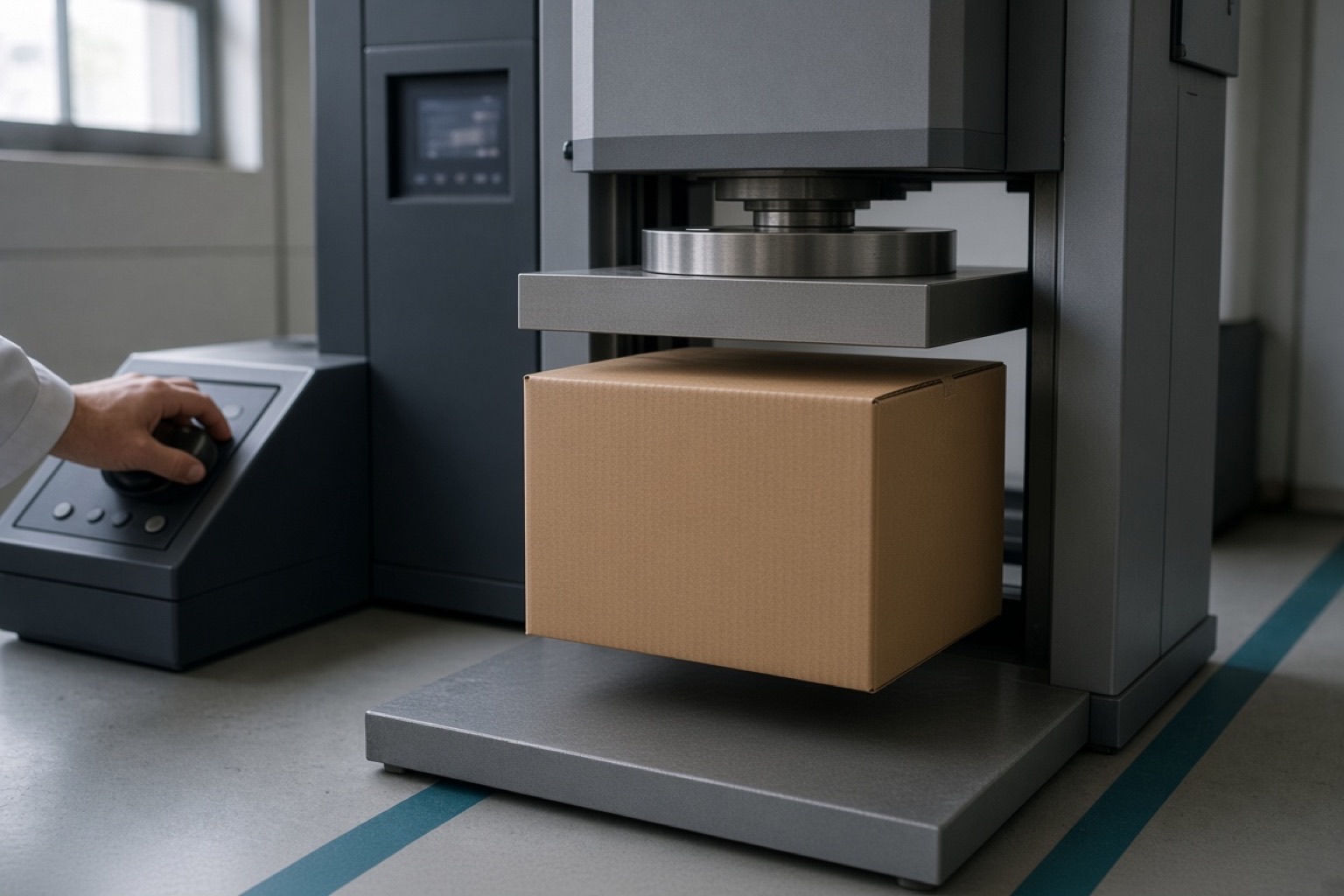
The drop test: what it proves, and what it quietly ignores
A drop test answers one question well: can the pack survive a fall. It says nothing about stacking, humidity or the journey in between.
A drop test is the most intuitive packaging test there is: drop the box, open the box, see whether the product survived. That intuition is why it is popular, and why it is often asked to answer questions it cannot.
What it measures
The drop test measures one thing: whether the pack protects the contents through a single high-energy impact from a specified orientation and height.
That is genuinely valuable. It finds:
- corners and edges that collapse;
- inner packing that lets the product move;
- closures that open;
- products that crack, dent or shatter.
It is the right test for handling damage, and for anything a courier will do to a parcel.
What it does not measure
| Not measured | Why it matters anyway |
|---|---|
| Sustained load | A stack is a different stress, applied for weeks |
| Humidity | Board test strength is measured at 50% relative humidity |
| Vibration | Hours of movement cause abrasion and fatigue |
| Repeated handling | One drop is not a distribution cycle |
| Time | Creep weakens a box under load as weeks pass |
The table is the reason a pack can pass a drop test and still fail in the field. It passed the test it was given. It was never given the others.
Why corners and edges matter most
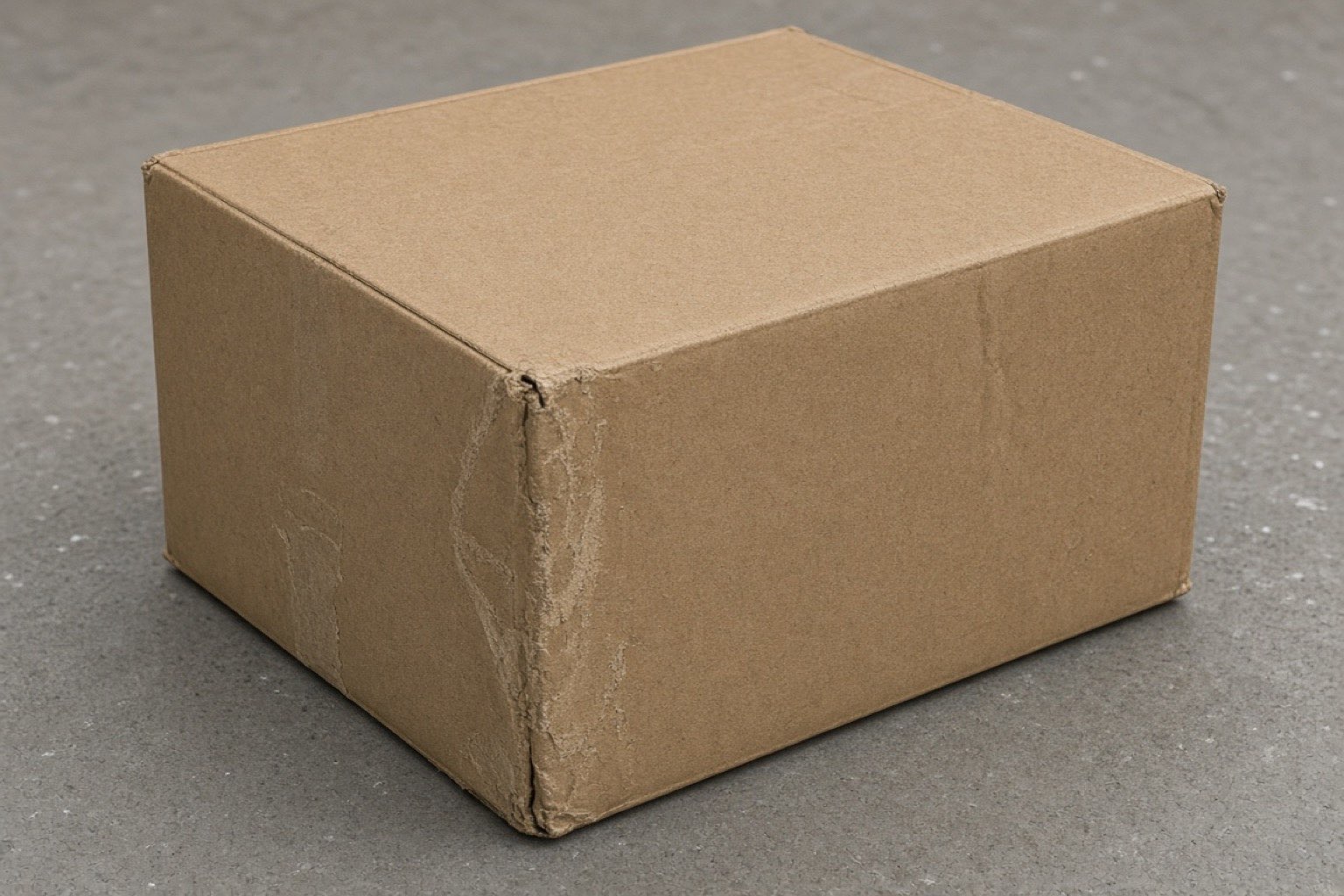
Energy in an impact is concentrated where the area is smallest, so a corner hit puts far more stress per square millimetre into the board than a flat face hit. A corner is also where the box's construction is least continuous — the joint and the score lines meet there.
That is why serious drop procedures specify orientations and sequences rather than "drop it once from waist height". Repeated drops also accumulate: a corner that survives one impact can fail on the third, and a courier will manage more than three.
How it fits into a real qualification
Useful practice, in order:
- Define the route. Parcel, palletised road freight, or sea container — each has a different dominant stress.
- Condition the samples. 23 °C and 50% relative humidity, overnight, per TAPPI T402 and ISO 187. Testing dry samples is testing a box you will not ship.
- Run the sequence for that route. Drop, vibration, compression — not drop alone.
- Test the real contents. A dummy load with the wrong mass distribution gives a comforting result and a false one.
- Test more than one pack. Corrugated varies; a single pass is an anecdote.
The commercial point
A drop test on its own is cheap, and it is the one test a small buyer can often run in-house with a tape measure, a hard floor and a camera. Doing it properly — sequence, conditioning, real contents — costs little more and turns a demonstration into evidence.
What it will not do is justify a lighter board on its own. A pack can pass drops comfortably and still be short on compression strength, which is a separate test and a separate failure mode. If you are using a test to decide whether a paper reduction is safe, the test that decides it is the compression test, and the drop test is the one that keeps you honest about handling.
Sources
- ASTM D5276, Standard Test Method for Drop Test of Loaded Containers by Free Fall.
- ASTM D4169, Standard Practice for Performance Testing of Shipping Containers and Systems.
- ISTA series, packaged-product performance tests for distribution.
- ISO 2248, Packaging — Complete and filled transport packages — Vertical impact test by dropping.
- ISO 4180, Complete, filled transport packages — General rules for the planning of performance tests.
- TAPPI T402 and ISO 187, standard conditioning atmospheres: 23 °C, 50% relative humidity.
The drop heights, orientations and sequence must match your distribution to mean anything. A pass describes the test performed, not the whole journey.
Questions
- What drop heights are used in packaging tests?
- The height depends on the weight of the pack and the distribution cycle: heavier packs are tested from lower heights and small parcels from higher ones. Published procedures such as ASTM D5276 and the ISTA series set out the height for each weight band.
- Why do drop tests use corners and edges rather than flat faces?
- Because a corner or edge concentrates the impact into a small area, so it is the most severe orientation and the one that finds weak construction. Flat drops are also tested, but a pack that survives flat drops can still fail on a corner.
- Does a drop test tell me anything about stacking strength?
- No. A drop is a single impact with high local energy; stacking is a sustained load over time. A box can pass drops and fail in a stack, or the reverse, because the two test different properties.
- How many drops should a test include?
- A meaningful test covers each face and the vulnerable edges and corners, usually in a defined sequence, because damage accumulates across drops. Tests that drop a box once are demonstrations rather than measurements.
- Can I use a drop test to justify a lighter board?
- Only if the lighter design passes the same sequence with the same contents. And it is worth pairing with a stacking check, because a design that passes drops can still be short on compression strength.
Check your own boxes, free
Send the spec sheet you already have. Results in about a day; you pay only for the boxes improved.
About the author

Ashish KD Mathpal (PackPrism | PackWares)
Founder, PackPrism · packaging cost advisory
Twenty-two years in packaging, most of it on paper and paperboard: how a board carries load, why a specification is what it is, and where the cost quietly leaks out.